Autor: φιλαλήθης

  • Bearing God’s Name – Part 5

    Bearing God’s Name – Part 5

    By Christian / Carmen Joy Imes


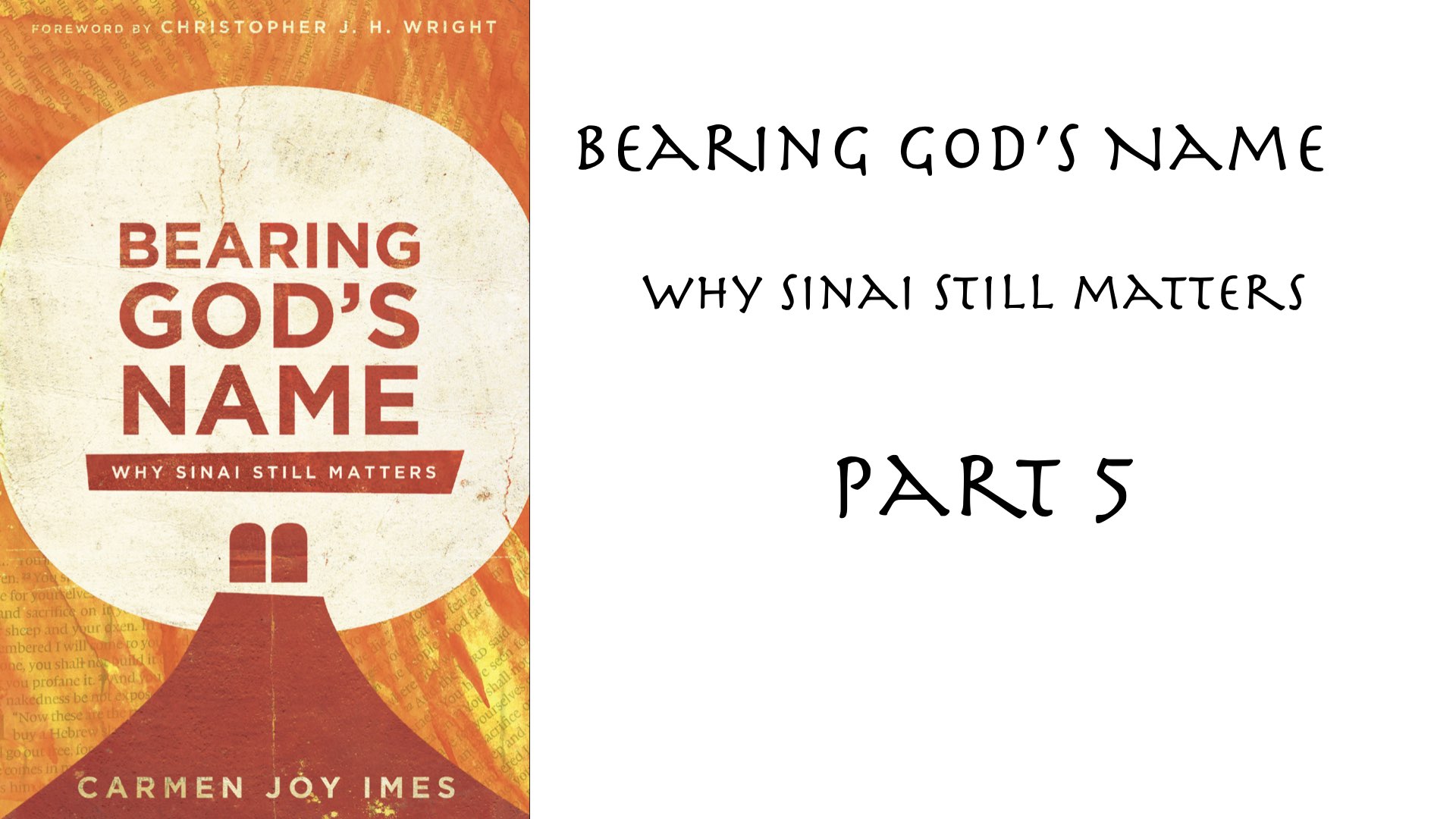
    In this series, we are looking at thoughts from the book Bearing God’s Name – Why Sinai still matters by Carmen Joy Imes.

    In view of what we have looked at in the first 4 parts, the question arises all the more: was that the end of the covenant between God and the Israelites? But then what about the promise he had already made to Abraham that this would be a blessing for all people?

    Who let you in? – Gentiles and the Mission of God

    In 1 Peter 2:9-10 we find the answer, although it could easily be missed by someone who only knows the New Testament. But now that we have already dealt with this topic in the Old Testament, we can recognize what came to the minds of Jewish Christians in the first century when they heard this passage:

    And now you’ve become a chosen race, a royal priesthood, a holy nation, and a people who were specially selected to announce the virtues of the One who called you out of darkness and into His wonderful light. So, although you haven’t always been a nation, you’re now a nation of God! And although you once knew no mercy, you’re the ones who are now being shown mercy!

    1 Peter 2:9-10 2001 Translation

    Do the words sound familiar? We have quoted them before:

    Now, if you’ll listen to what I say and keep My Sacred Agreement, you’ll be a special people to Me that will be higher than all other nations! ‘And because the whole earth is Mine, you’ll become My holy nation and a Kingdom of Priests.’ ‘Now, [go] and tell this to the children of IsraEl!’

    Exodus 19:5-6 2001 Translation

    By naming the titles from the covenant and thus referring to Exodus 19:5, we also have a reference to Yahweh’s segullah – his personal, special property But to whom are the words in 1 Peter addressed? To the disciples of Jesus in Asia Minor, who are Gentiles! That is why we also read: „In the past you were not his people.“.

    But 1 Peter goes one better: „you are a chosen race“. γένος (genos) „offspring, race, people, nation“ Where does this come from and to whom did it refer exclusively until now?

    Then, all the wild beasts will give praise to Me… Even ostrich daughters and those who are chained. ‘For, into their deserts, I will bring water… Yes, rivers into [all the] dry places For My chosen people to drink. For, they are the people I purchased, And they should describe all My virtues!

    Isaiah 43:20,21 2001 Translation

    The reason for being chosen is still the same: to bear God’s name and thus proclaim his glory.

    And there is another reference, namely to Hosea. Hosea was to name a son as follows: „And he said: Give him the name Lo-Ammi [The name Lo-Ammi means ’not my people‘], for you are not my people, and I am not one of you [It is possible that „I am not one of you“ in Hebrew is an allusion to the explanation of the name of God YHWH in Exodus 3:14 („I will be“)]!“ (Hosea 1:9 Züricher) Only later was he to change this: „And I will sow them for myself in the land, and I will have mercy on Lo-Ruchamah, and to Lo-Ammi I will say, ‚You are my people,‘ and they will say, ‚My God! (Hosea 2:25 Züricher) Peter argues: If God re-adopts his rebellious people, why shouldn’t he do the same with people from the Gentiles?

    1 Peter 2:9 therefore contains a bold formulation: λαὸς εἰς περιποίησιν (laos eis peripoiēsin) „a people for his personal possessions“. Whereby the Greek λαὸς (laos) and the corresponding Hebrew ‚am were previously used in the Scriptures exclusively for Israel. But now the Gentiles also have the same commission: „If you are insulted because of the name of Christ, you are blessed, for the Spirit of glory and of God rests on you. …However, if you suffer as a Christian, do not be ashamed, but praise God that you bear that name.“ (1 Peter 4:14,16 NIV)

    When Peter speaks of a „royal priesthood“ and „holy nation“, his wording corresponds exactly to the Greek translation of Exodus 19:5,6. But not so with „treasured possession“. Carmen Imes writes about this:

    Peter doesn’t use the Greek word that translates the Hebrew segullah in every other passage (periousios), which would highlight the uniqueness of the treasure itself. Instead, Peter emphasizes the process of becoming Yahweh’s possession by using a slightly different phrase (eis peripoiēsin) found only in Malachi 3:17. This slight shift in phrasing opens up a profound theological possibility.

    Peter’s citation of Malachi is significant because it is the only Old Testament passage where the term segullah refers to a righteous remnant, rather than the entire nation of Israel. In light of Israel’s covenant unfaithfulness, the prophet Malachi had envisioned a future day when Yahweh would select a new segullah made up only of those who fear his name. Malachi had said, “‘They will become mine,’ says Yahweh of Armies, ‘On the day when I prepare a segullah’” (3:17, author’s translation).

    By quoting Malachi directly, Peter shows us that he sees this very promise as having been fulfilled in the believing community made up of both Jews and Gentiles.

    Imes, Carmen Joy. Bearing God’s Name: Why Sinai Still Matters (English Edition)

    How does Peter come to this conclusion? This is not explained further in 1 Peter. But for the apostle Peter it was clear according to the account in Acts. According to Peter’s vision in Acts 10, he should no longer call anything unclean that is no longer unclean for God. And if God has poured out his Spirit on the Gentiles, then they are part of his people. There is no longer any difference between Jews and Gentiles. The only difference that now exists is the one in Malachi 3:17,18 concerning God’s segullah: not everyone in the community automatically belongs to God’s segullah.

    “On the day when I act,” says the Lord Almighty, “they will be my treasured possession. I will spare them, just as a father has compassion and spares his son who serves him. And you will again see the distinction between the righteous and the wicked, between those who serve God and those who do not.

    Malachi 3:17,18 NIV

    And Peter argues accordingly at the meeting in Jerusalem according to Acts 15:

    God, who knows the heart, showed that he accepted them by giving the Holy Spirit to them, just as he did to us. He did not discriminate between us and them, for he purified their hearts by faith.

    Acts 15:8,9 NIV

    And James agrees with him:

    Simon [Peter’s Aramaic name] has described to us how God first intervened to choose a people for his name from the Gentiles.

    Acts 15:14 NIV

    This must have come as a surprise to his listeners: Because until now, a clear distinction had always been made between „God’s people“ and the Gentiles. Either you are part of Yahweh’s people or you are not. And James justifies this with a quote from Amos 9:12, the text in the Old Testament, which indicates that Gentiles will be included in the covenant without converting to Judaism. Carmen Imes explains this text:

    The Hebrew reads, “that they may possess the remnant of Edom and all the nations upon whom my Name will be invoked” (author’s translation). This could imply military domination. The Greek Septuagint reads, “that the remnant of humankind, and all the Gentiles who are called by my name, may earnestly seek me.” Rather than military domination, the Greek translation suggests global conversion. Still, both versions refer to the Gentiles as those “over whom my Name is invoked,” which is the principal point on which James depends. In Hebrew, “Edom” and “humankind” are almost identical, as are “possess” and “seek,” which partly explains the Greek translation.

    Imes, Carmen Joy. Bearing God’s Name: Why Sinai Still Matters (English Edition)

    With what the apostles, the elders and the whole assembly in Jerusalem then decide, they do not set aside Sinai. What they abolish are the laws whose purpose was to distinguish the Israelites ethnically from the Gentiles. What this may have meant for the Gentile disciples when they heard of the decision can perhaps be better understood if we look at Carmen Ime’s formulation:

    You’re invited! You can follow Jesus just as you are. We discovered that hundreds of years ago the prophets looked ahead to this day, speaking of you who bear Yahweh’s name—Gentiles who belong. Welcome to the family!

    Imes, Carmen Joy. Bearing God’s Name: Why Sinai Still Matters (English Edition)

    This is also the goal of Paul’s ministry, as he says in Romans 1:5-8, for example, by incorporating well-known formulations from the Old Testament. And Paul is not preaching a new gospel either, as we have seen in the series „The new perspective on Paul„.

    Our mission

    What does this mean for us today? Carmen Imes sums it up like this:

    Because of the faithfulness of Jesus, we can be marked with God’s name and participate in his mission to bring blessing to all nations.

    Rather than asking if we have to obey Old Testament law, we need to ask what our relationship is to Israel’s covenant.

    Because of the life, death, and resurrection of Jesus, Israel’s Messiah, we have been granted membership in the covenant. We have been incorporated into his renewed covenant community. His sacrifice ushered in a new era. That reality, paired with our changed cultural situation, means that many of the Old Testament laws no longer function for us as they did for Israel. Obeying them by the letter would not uphold the purpose for which they were given.

    The need for a temple has disappeared, fulfilled in Christ, and therefore sacrifices are no longer necessary.

    Laws that were designed to keep Israel separate as an ethnic group have also been set aside.

    As members of his new covenant community, we have the privilege — the grace — of living as his treasured people.

    Far from irrelevant or obsolete, the Old Testament story tells us who we are. It tells us whose we are. And that changes everything.

    Imes, Carmen Joy. Bearing God’s Name: Why Sinai Still Matters (English Edition)
  • Gottes Namen Tragen – Teil 5

    Gottes Namen Tragen – Teil 5

    Von Christian / Carmen Joy Imes


    In dieser Serie befassen wir uns mit Gedanken aus dem Buch Bearing God’s Name – Why Sinai still matters (Gottes Namen tragen – warum der Sinai noch immer wichtig ist) von Carmen Joy Imes.

    In Anbetracht dessen, was wir in den ersten 4 Teilen betrachtet haben, stellt sich um so mehr die Frage: War es das nun mit dem Bund zwischen Gott und den Israeliten? Aber was ist dann mit der Verheißung, die er schon Abraham gegeben hatte, dass dies ein Segen für alle Menschen würde?

    Wer hat euch denn reingelassen? – Heiden und Gottes Mission

    In 1. Petrus 2:9-10 finden wir die Antwort, obwohl sie jemand leicht übersehen könnte, der nur das Neue Testament kennt. Da wir uns nun aber mit diesem Thema im Alten Testament schon beschäftigt haben, können wir das erkennen, was Juden-Christen im ersten Jahrhundert beim Hören dieser Passage in den Sinn kam:

    Aber ihr seid ein ausgewähltes Geschlecht, eine königliche Priesterschaft, ein heiliges Volk, das Gott sich selbst erworben hat. Er hat euch aus der Finsternis in sein wunderbares Licht gerufen, damit ihr verkündigt, wie unübertrefflich er ist. Früher wart ihr nicht sein Volk, aber jetzt seid ihr Gottes Volk, früher gab es für euch kein Erbarmen, aber jetzt erfahrt ihr seine Barmherzigkeit.

    1. Petrus 2:9-10 NEÜ

    Kommen uns die Worte bekannt vor? Wie haben sie schon einmal zitiert:

    Wenn ihr nun auf mich hört und meinen Bund haltet, dann sollt ihr unter allen Völkern mein persönliches Eigentum sein. Denn mir gehört die ganze Erde. Ihr sollt mir ein Königsvolk von Priestern sein, eine heilige Nation!‘ Das sollst du den Israeliten sagen!

    2. Mose 19:5,6 NEÜ

    Duch die Nennung der Titel aus dem Bündniss und damit dem Bezug auf 2. Mose 19:5 haben wir auch einen Bezug auf Jahwes segullah – sein persönliches, besonderes Eigentum Doch an wen sind die Worte in 1. Petrus gerichtet? An die Jünger Jesu in Kleinasien, die Heiden sind! Daher haben wir auch gelesen: „Früher wart ihr nicht sein Volk.“.

    Aber 1. Petrus legt noch eins drauf: „ihr seid ein ausgewähltes Geschlecht“. γένος (genos) „Nachkommen, Rasse, Volk, Nation“ Wo kommt das her und auf wen bezog sich das bisher ausschließlich?

    Die Tiere des Feldes werden mich preisen, die Schakale und Strauße, weil ich Wasser gegeben habe in der Wüste und Ströme in der Einöde, um mein Volk zu tränken, mein auserwähltes, das Volk, das ich mir gebildet habe, damit sie meinen Ruhm verkündigen.

    Jesaja 43:20,21 Schlachter 2000

    Der Grund für die Erwählung ist immer noch der selbe: Gottes Namen tragen und so seinen Ruhm verkünden.

    Und es gibt noch einen weiteren Bezug, nämlich auf Hosea. Hosea sollte einen Sohn so wie folgt nennen: „Und er sprach: Gib ihm den Namen Lo-Ammi[Der Name Lo-Ammi bedeutet ‚Nicht mein Volk‘.], denn ihr seid nicht mein Volk, und ich gehöre nicht zu euch [Möglicherweise hörte man bei „ich gehöre nicht zu euch“ im Hebräischen eine Anspielung an die Erklärung des Gottesnamens JHWH aus Ex 3,14 („ich werde sein“).]!“ (Hosea 1:9 Züricher) Erst später sollte er das ändern: „Und ich werde sie für mich aussäen im Land, und über Lo-Ruchama werde ich mich erbarmen, und zu Lo-Ammi werde ich sagen: Du bist mein Volk!, und es wird sagen: Mein Gott!“ (Hosea 2:25 Züricher) Petrus argumentiert: Wenn Gott sein rebellisches Volk wieder adoptiert, warum sollte er das nicht auch mit Menschen aus den Heiden tun?

    1. Petrus 2:9 enthält deswegen eine kühne Formulierung: λαὸς εἰς περιποίησιν (laos eis peripoiēsin) „ein Volk für seinen persönlichen Besitz“. Wobei das griechische λαὸς (laos) und das entsprechende hebräische ‘am vorher in den Schriften ausschließlich für Israel verwendet wurde. Doch nun haben auch die Heiden den selben Auftrag: „Wenn ihr beschimpft werdet, weil ihr zu Christus gehört, seid ihr glücklich zu nennen, denn dann ruht der Geist der Herrlichkeit Gottes auf euch. … Er preise vielmehr Gott, dass er diesen Namen tragen darf.“ (1. Petrus 4:14,16)

    Wenn Petrus von einer „königlichen Priesterschaft“ und „heiligen Nation“ spricht, entspricht seine Formulierung exakt der griechischen Übersetzung von 2. Mose 19:5,6. Nicht so aber bei „kostbarem Besitz“. Carmen Imes schreibt dazu:

    Petrus verwendet nicht das griechische Wort, das das hebräische segullah in jeder anderen Passage übersetzt (periousios), was die Einzigartigkeit des Schatzes selbst hervorheben würde. Stattdessen betont Petrus den Prozess, Jahwes Besitz zu werden, indem er eine etwas andere Formulierung (eis peripoiēsin) verwendet, die nur in Maleachi 3:17 vorkommt. Diese leichte Verschiebung der Formulierung eröffnet eine tiefgreifende theologische Möglichkeit.

    Petrus zitiert Maleachi, weil es die einzige Stelle im Alten Testament ist, in der sich der Begriff „segullah“ auf einen gerechten Überrest bezieht und nicht auf das gesamte Volk Israel. Angesichts der Untreue Israels gegenüber dem Bund hatte der Prophet Maleachi einen zukünftigen Tag vorausgesehen, an dem Jahwe ein neues segullah auswählen würde, das nur aus denen besteht, die seinen Namen fürchten. Maleachi hatte gesagt: „‚Sie werden mein sein‘, sagt Jahwe der Heerscharen, ‚an dem Tag, an dem ich ein segullah bereite’“ (Maleachi 3:17, Übersetzung der Autorin).

    Indem er Maleachi direkt zitiert, zeigt uns Petrus, dass er genau diese Verheißung in der gläubigen Gemeinde, die aus Juden und Heiden besteht, erfüllt sieht.

    Imes, Carmen Joy. Bearing God’s Name: Why Sinai Still Matters (English Edition)

    Wie kommt Petrus zu diesem Schluß? In 1. Petrus wird das nicht weiter erklärt. Doch für den Apostel Petrus war das gemäß dem Bericht in der Apostelgeschichte klar. Gemäß der Vision des Petrus in Apostelgeschichte 10 sollte er nichts mehr unrein nennen, was für Gott nicht mehr unrein ist. Und wenn Gott seinen Geist auf die Heiden ausgegossen hat, dann sind sie Teil seines Volkes. Es gibt keinen Unterschied zwischen Juden und Heiden mehr. Der einzige Unterschied, der nun existiert, ist der in Maleachi 3:17,18 was Gottes segullah betrifft: Nicht jeder in der Gemeinschaft gehört automatisch zu Gottes segullah.

    „Sie werden mein persönliches Eigentum sein. An dem Tag, an dem ich eingreife, werde ich sie verschonen, wie ein Mann seinen gehorsamen Sohn verschont“, spricht Jahwe, der allmächtige Gott. „Dann werdet ihr wieder den Unterschied zwischen Gerechten und Ungerechten sehen, zwischen denen, die Gott dienen und denen, die es nicht tun.

    Maleachi 3:17,18 NEÜ

    Und entsprechend argumentiert Petrus bei der Zusammenkunft in Jerusalem gemäß Apostelgeschichte 15:

    Und Gott, der die Herzen kennt, hat das beglaubigt, indem er ihnen den heiligen Geist gab, so wie er ihn uns gegeben hat. Er hat zwischen uns und ihnen keinen Unterschied gemacht, denn er hat ihre Herzen durch den Glauben gereinigt.

    Apostelgeschichte 15:8,9 Züricher

    Und Jakobus pflichtet ihm bei:

    Simeon [Petrus aramäischer Name] hat erzählt, wie Gott von Anfang an darauf bedacht war, aus allen Völkern ein Volk für seinen Namen zu gewinnen.

    Apostelgeschichte 15:14 Züricher

    Das muss eine Überraschung für seine Zuhörer gewesen sein: Denn bisher wurde immer klar zwischen „Gottes Volk“ und den Heiden unterschieden. Entweder man ist ein Teil des Volkes Jahwes oder nicht. Und Jakobus begründet dies mit einem Zitat aus Amos 9:12, dem Text im alten Testament, der darauf hindeutet, dass Heiden einmal ohne zum Judentum zu konvertieren mit in den Bund mit eingeschlossen werden. Zu diesem Text erklärt Carmen Imes:

    Im Hebräischen heißt es: „damit sie den Rest von Edom und alle Völker, über die mein Name angerufen wird, in Besitz nehmen“ (Übersetzung des Autors). Das könnte auf eine militärische Herrschaft hindeuten. In der griechischen Septuaginta heißt es: „damit der Überrest der Menschheit und alle Heiden, die nach meinem Namen gerufen werden, mich ernsthaft suchen“. Die griechische Übersetzung suggeriert keine militärische Vorherrschaft, sondern eine weltweite Bekehrung. Dennoch bezeichnen beide Versionen die Heiden als diejenigen, „über die mein Name angerufen wird“, und das ist der wichtigste Punkt, auf den es Jakobus ankommt. Im Hebräischen sind „Edom“ und „Menschen“ fast identisch, ebenso wie „besitzen“ und „suchen“, was die griechische Übersetzung teilweise erklärt.

    Imes, Carmen Joy. Bearing God’s Name: Why Sinai Still Matters (English Edition)
    Mit dem, was die Apostel, die Ältesten und die ganze Versammlung in Jerusalem dann beschließen, schieben sie den Sinai nicht beiseite. Was sie aufheben sind die Gesetze, deren Zweck es war, die Israeliten ethnisch von den Heiden zu unterscheiden. Was das für die Jünger aus den Heiden bedeutet haben mag, als sie von dem Beschluss hörten, verstehen wir vielleicht besser, wenn wir Carmen Imes Formulierung betrachten:

    Ihr seid eingeladen! Ihr könnt Jesus folgen, so wie ihr seid. Wir haben entdeckt, dass die Propheten schon vor Hunderten von Jahren auf diesen Tag vorausgeschaut haben und von euch sprachen, die ihr Jahwes Namen tragt – Heiden, die dazugehören. Willkommen in der Familie!

    Imes, Carmen Joy. Bearing God’s Name: Why Sinai Still Matters (English Edition)
    Das ist auch das Ziel des Dienstes des Paulus, wie er zum Beipsiel in Römer 1:5-8 sagt indem er bekannte Formulierungen aus dem Alten Testament einfließen lässt. Und Paulus predigt auch kein neues Evangelium, wie wir in der Serie „Die neue Sicht auf Paulus“ gesehen haben.

    Unser Auftrag

    Was bedeutet dies für uns heute? Carmen Imes fasst es so zusammen:

    Aufgrund der Treue Jesu können wir mit Gottes Namen gekennzeichnet werden und an seiner Mission teilnehmen, allen Völkern Segen zu bringen.

    Anstatt zu fragen, ob wir das alttestamentliche Gesetz befolgen müssen, sollten wir uns fragen, wie unsere Beziehung zum Bund Israels aussieht.

    Durch das Leben, den Tod und die Auferstehung von Jesus, dem Messias Israels, sind wir in den Bund aufgenommen worden. Wir sind in seine erneuerte Bundesgemeinschaft aufgenommen worden. Sein Opfer hat eine neue Ära eingeläutet. Diese Tatsache, gepaart mit unserer veränderten kulturellen Situation, bedeutet, dass viele der alttestamentlichen Gesetze für uns nicht mehr so funktionieren wie für Israel. Sie buchstabengetreu zu befolgen, würde den Zweck, für den sie gegeben wurden, nicht aufrechterhalten.

    Die Notwendigkeit eines Tempels ist verschwunden, da sie in Christus erfüllt wurde, und deshalb sind Opfer nicht mehr notwendig.

    Gesetze, die Israel als ethnische Gruppe getrennt halten sollten, wurden ebenfalls außer Kraft gesetzt.

    Als Mitglieder seiner neuen Bundesgemeinschaft haben wir das Privileg – die Gnade –, als sein wertvolles Volk zu leben.

    Die Geschichte des Alten Testaments ist keineswegs irrelevant oder obsolet, sondern sie sagt uns, wer wir sind. Mehr noch: Sie sagt uns, wessen wir sind. Und das ändert alles.

    Imes, Carmen Joy. Bearing God’s Name: Why Sinai Still Matters (English Edition)
  • Von Hoffnung überrascht

    Von Hoffnung überrascht

    Die Grundlage für die Serie „Von Hoffnung überrascht“ ist das Buch Von Hoffnung überrascht – Was die Bibel zu Auferstehung und ewigem Leben sagt (Englische Originial Ausgabe:  Surprised by Hope: Rethinking Heaven, the Resurrection, and the Mission of the Church) von N. T. Wright.

    Erhältlich ist es über die gängigen Vertriebswege, z.B. Amazon (deutsch) Amazon (Englisch) (der Link dient nur zur Information, ich habe dadurch keinerlei Vorteile).

  • Being God’s image – Why creation still matters

    Being God’s image – Why creation still matters

    Die Grundlage für die Serie „Gottes Bild Sein“ ist das Buch Being God’s image – Why creation still matters (Gottes Bild sein – warum die Schöpfung noch immer wichtig ist) von Carmen Joy Imes.

    Erhältlich ist es über die gängigen Vertriebswege, z.B. Amazon (der Link dient nur zur Information, ich habe dadurch keinerlei Vorteile).

  • Bearing God’s Name – Why Sinai still matters

    Bearing God’s Name – Why Sinai still matters

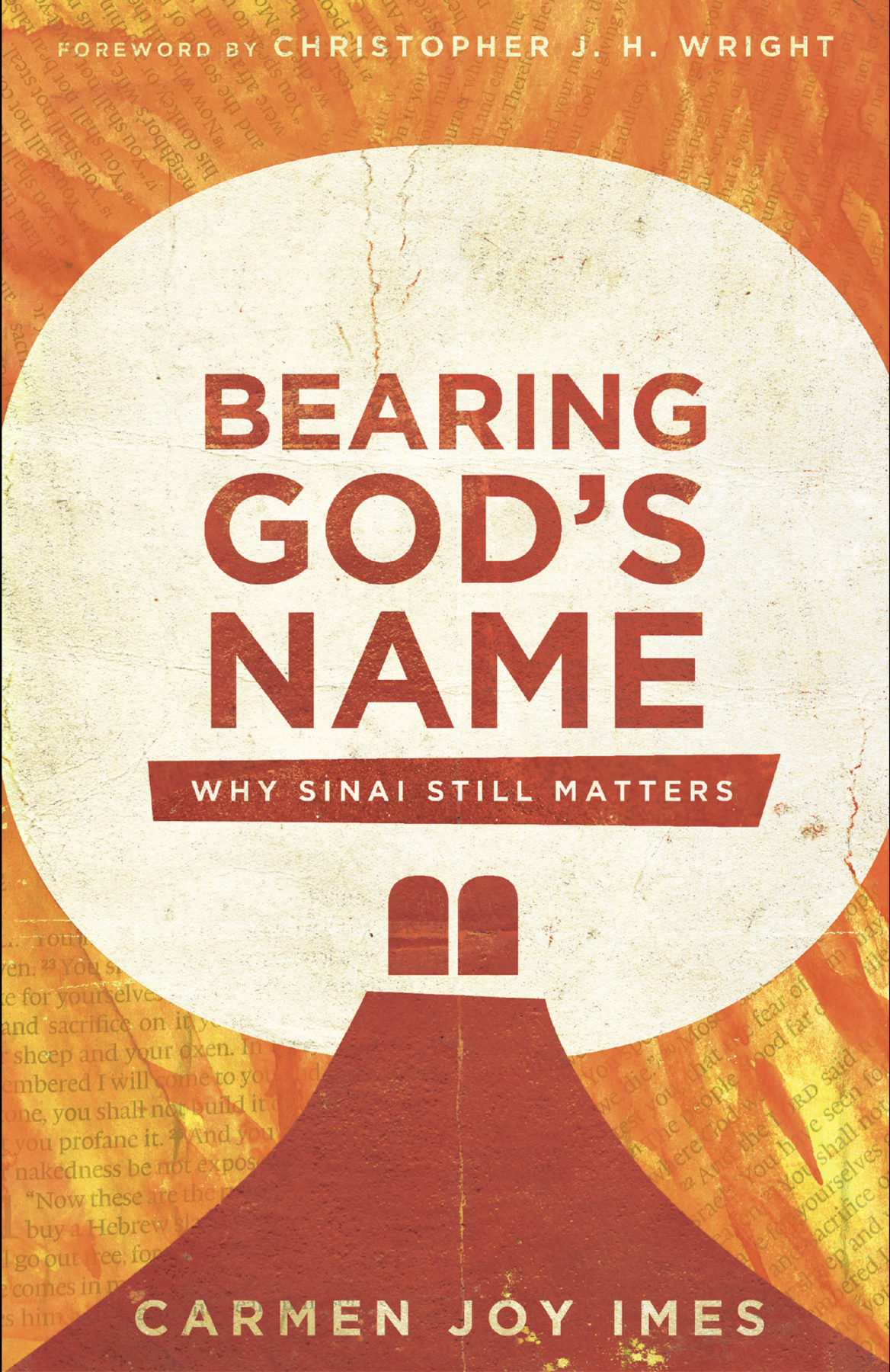
    Die Grundlage für die Serie „Gottes Namen Tragen“ ist das Buch Bearing God’s Name – Why Sinai still matters (Gottes Namen tragen – warum der Sinai noch immer wichtig ist) von Carmen Joy Imes.

    Erhältlich ist es über die gängigen Vertriebswege, z.B. Amazon (der Link dient nur zur Information, ich habe dadurch keinerlei Vorteile).

  • Bearing God’s Name – Part 4

    Bearing God’s Name – Part 4

    By Christian / Carmen Joy Imes


    In this series, we are looking at thoughts from the book Bearing God’s Name – Why Sinai still matters by Carmen Joy Imes.

    In the first three parts, we talked about how the Israelites were organized by Yahweh as a people and trained to bear his name. Their task was so that through them all nations could recognize what kind of God Yahweh is. Bearing God’s name was their free choice and they said at Sinai that they would do anything. After 40 years of wandering in the desert, the next generation did the same. And again they confirm their promise when they are in the Promised Land (Joshua 8:30-35).

    After that, we hardly read anything about Sinai, even though ‚remembering‘ is a key theme of biblical theology. This is surprising when you consider the significance of the events. But the focus should be on remembering the liberation, not a pilgrimage to Sinai or something like that.

    Is that the end of the matter? Hardly, because now comes the time when they should bear the name of God as promised, so that all nations can see that Yahweh is above all others and how superior his rule is. Carmen Imes goes into this in the second half of her book. However, I would like to mention just a few of the many interesting points here.

    Enemy #1

    Some were hostile to the Hebrews: First Egypt’s Pharaoh and his arms, then some nations on the move and finally the kings in the Promised Land. But that was not their most dangerous enemy. Their most dangerous enemy is themselves. Again and again they grumble, rebel or no longer want to enter the Promised Land. Their fear of the people is so contagious that the whole nation is in a panic. What is the problem? They refuse to trust in what Yahweh has promised them.

    This also explains why Yahweh reacts with mercy to similar situations before Sinai. His expectations of the people are low. After Sinai, he has not changed. But his expectations can rightly be higher. He had given them a year to learn to honor him and respect each other. But he sees little progress. The pattern is therefore always the same after Sinai: Grumbling and rebellion result in punishment, prayer brings relief.

    The beginning of fulfillment – and what Yahweh sees

    But finally they are in the Promised Land. The book of Joshua illustrates the fulfillment of Yahweh’s promise.

    Then all the peoples on earth will see that the name of Yahweh is invoked over you, and they will fear you.

    Deuteronomy 28:10 Carmen Imes

    However, it is already apparent here that although they have entered the Promised Land, they are not fulfilling their task of bearing the name of God. We read about the Canaanite woman Raab, who is full of faith, and in contrast also about the unfaithful Israelite Achan. The Gibeonites are more convinced that Yahweh will give the land to the Israelites than they are. „The next generation is off to a wobbly start.“

    They quickly lose sight of the fact that Yahweh has taken them from the nations to belong to him. They would rather be like everyone else. In 1 Samuel we learn that even the priests, whose job it is precisely to uphold the covenant with Yahweh, disregard their sacred duties to such an extent that Yahweh announces that this priestly line will be wiped out. Next, they want a king like the others – and they want it now, when they want it. From the book of Judges we learn that they did not fully carry out Yahweh’s commission to conquer the promised land. It follows this pattern again and again:

    Well, a messenger of Yahweh had traveled from GilGal to The Place of Tears at BethEl, to address the house of IsraEl. There he told them: ‘This is what Yahweh has said: ‘I brought you out of Egypt and into the land that I promised to your ancestors, and I said that I’d never break the Agreement that I made with you. However, I told you not to make any agreements with [the people] who live in this land, and that you were not to worship their gods! ‘Rather, [I told you to] destroy their carved images and to pull down their altars! ‘However, you haven’t listened to My voice, and you’ve done [many bad] things… Therefore, just as I told you, I won’t drive them out from in front of you, so they’ll harass you, and their gods will oppress you!’ Well, after the messenger of Yahweh said all of this to the sons of IsraEl, the people started shouting and crying…

    Judges 2:1-4 2001 Translation

    And as soon as Joshua died, this happened:

    Also, the rest of that generation was laid to rest with their ancestors. So, another generation came along that didn’t know Yahweh or of the things that He had done for IsraEl. Therefore, the sons of IsraEl started doing evil things before Yahweh, and they started serving the BaAls!

    Judges 2:10,11 2001 Translation

    Yahweh sent judges again and again to free them. But even that did not help in the long term:

    Yet, after each Judge died, they’d just go right back to being corrupt – even worse than their ancestors – by worshiping and serving other gods… And they stubbornly refused to abandon their evil ways, which made Yahweh very angry with IsraEl. So He told them: ‘Because this nation has broken the Sacred Agreement that I made with their ancestors and refused to listen to My voice, I will no longer drive away a single man from those nations among them who were allowed to stay in the land by JoShua, son of NaWeh. ‘[I’m doing this] to see whether IsraEl will ever choose to follow and walk in My ways, as did their ancestors.’

    Judges 2:19-22 2001 Translation

    Did things get better in the time of the kings of Israel? There were only a few good kings. When Solomon dedicates the temple, he says in his prayer that all nations may come to know the name of Yahweh. The fact that Yahweh fills the temple with his glory shows that he stands by his covenant with Israel.

    The first important prophet of the time of the kings is Elijah. Not only does he have to face the king and the worshippers of Baal, but in the end he has the impression that his service has been completely in vain. Interestingly, he runs all the way to Mount Sinai, where Yahweh assures him that this is not the case. He is not alone. There are still a few who do not practise idolatry.

    In the end, it was so bad that Yahweh had to exile them from the land – as he had already warned them at Sinai.

    ‘Then they entered the nations where they had been sent, And there they profaned God’s Holy Name. For the nations that lived there were saying: ‘Although these people belong to Yahweh, He has driven them out of their land!’ ‘So, for the sake of [God’s] Name, Which the house of IsraEl profaned, I spared them in all the [lands] where they went.

    ‘I will make My Name holy again, Which is being profaned among gentiles, The Name that you profaned in their midst… Then those nations will know that I am Yahweh,’ Says Yahweh the Lord, ‘When before their eyes, I’m made holy among you.

    Ezekiel 36:20,21,23 2001 Translation

    That was the low point. Instead of bearing God’s name and upholding his holy name, they profaned his name everywhere. One might even wonder whether the covenant they had broken so often still existed at all. After centuries, wasn’t the situation so hopeless that there was no point in continuing? Shouldn’t he just … start again? A new covenant?

    A new covenant – or the renewed covenant?

    Sometimes a fresh start is the best thing. Isaiah asks for this in Isaiah 63: Back to Sinai. The prophet Jeremiah speaks about this in Jeremiah 31. If you are already thinking about the New Testament, then read Jeremiah 31:31-32 carefully:

    ‘Look… The days are coming,’ says Yahweh, ‘When I’ll make an arrangement with IsraEl’s house, As well as with the houses of Judah. ‘I’ll conclude a New Sacred Agreement. That’s unlike the one that I made with their fathers. In the day that I grabbed their hands to lead them from Egypt’s land. But because they didn’t keep My Sacred Agreement, I had to let them go,‘ says Yahweh.

    Jeremiah 31:31-32 2001 Translation

    A new covenant different from the one at Sinai? Well, the covenant partners are the same. And the reason is not that the covenant from Sinai was bad, but because they broke it. Jeremiah describes the new covenant in the next two verses:

    ‘So, this is My [New] Sacred Agreement, that I will conclude with IsraEl then,’ said Yahweh, I will put My Laws in their minds, And into their hearts, I will write them. Then, they’ll be My people and I’ll be their God. ‘There’s no way they’ll then teach their neighbors and brothers. That they must learn of Yahweh; For, all will know Me from the least to the great. And when it comes to their errors and sins… I will kindly forget them!’

    Jeremia 31:33-34 2001 Translation

    The new thing is that every Israelite will be able to internalize this covenant. The covenant from Sinai was reaffirmed several times by the Israelites. Also because a new generation had grown up. But a covenant with a people, passed down from generation to generation through lineage, has not exactly worked well. This renewed covenant is therefore aimed at individuals who have a sincere desire to bear God’s name – just as Yahweh had said.

    Are we overstretching the term ’new‘ in Jeremiah 31? Well, the same prophet also uses this term in Lamentations:

    Because of the Lord’s great love we are not consumed, for his compassions never fail. They are new every morning; great is your faithfulness.

    ‘For the mercies of [God] never end, And His compassions will never fail. Each morning, they’re renewed, And on Him, we can always rely.

    Lamentations 3:22,23 NIV and 2001 Translation

    And he uses the word as a verb: „Bring us back to you, Lord, we want to return. Make our days new, as they once were.“ (Lamentations 5:21 Zurich). Similarly, Ezekiel speaks of a „new spirit“ for his people (Ezekiel 11:17-20), a „new heart“ (Ezekiel 18:31) and a „new spirit“ (Ezekiel 36:24-28).

    But doesn’t Hebrews 8 just refer to Jeremiah 31 and then say:

    So when he called it ‘new,’[Syr] He [automatically] made the former one, ‘old’… And whatever’s grown old and obsolete is soon destroyed.

    Hebrews 8:13 2001 Translation

    But let’s not let the end of the chapter stop us from looking at the context:

    But the author goes on to describe what exactly will disappear: namely, the sacrificial system. Sacrifices brought forgiveness, but they could never cleanse guilty consciences because people kept sinning. The first system of sacrifice, instituted at Sinai, was only temporary. Now that Jesus has given himself once for all, the earthly temple is not necessary. Sacrifices are redundant.

    Imes, Carmen Joy. Bearing God’s Name: Why Sinai Still Matters (English Edition)

    So did this Sinai story come to an end with the appearance of Jesus Christ? What statements do we find in the New Testament and especially in the Gospels?

    Just give me Jesus – The Gospel witness

    In the texts from the Old Testament that we have read in this series in connection with the Sinai Covenant, we have generally read the name of God Yahweh. If we now continue with the Gospels in the New Testament, we notice an enormous difference: Yahweh no longer seems to appear – at least not in the manuscripts that have come down to us. Instead, it is always about Jesus.

    But the Gospel of Matthew in particular was written in such a way that a continuity is shown here: The child Jesus is called the Christ. (Matthew 1:16), the Greek form of Messiah, the anointed one. But his name is Jesus, which has the meaning: „Yahweh saves.“ (Matthew 1:21,25). If we had heard and read the name in Hebrew or Aramaic, the language in which Matthew was possibly first written, we might already have noticed a parallel to the time of Sinai: At Sinai, Moses has a right-hand man Hoshea, whose name has the meaning, „he saves.“ (Numbers 13:8). Moses changed his name to Yeshua, which means „Yahweh saves“ (Numbers 14:6). And Jesus is nothing other than the Latin form of the Greek Iesou, which is the translation of the Hebrew Jehsua: „Yahweh saves“.

    But that is by no means all. The Gospel of Matthew was structured and written so creatively that Mount Sinai and the events play a major role. Here is just a brief overview:

    • The Gospel of Matthew is divided into 5 blocks, which imitate the 5 books of Moses.
    • Before that, there is an introduction with the story of Jesus‘ parents‘ fleeing to … where? Egypt! It is a reverse Exodus story.
    • When the situation is safe again, they return from Egypt to the Promised Land, repeating, so to speak, Israel’s exodus from Egypt and entry into the Promised Land.
    • Next we read that he is baptized in the waters of the Jordan. This reminds us that the Israelites first crossed the Sea of Reeds and then the Jordan.
    • Then Jesus is sent by the Spirit where? Into the desert. For how long? 40 days.
    • There the Isarealites were tempted to turn away from Yahweh. And that is where Jesus is tempted. And what is Jesus quoting from? „Jesus chooses precisely those chapters of Deuteronomy where Moses is reminding the Israelites of the lessons they ought to have learned in the wilderness, lessons Jesus knows by heart.“

    What lesson does Jesus teach through his answers to the temptations? „No way to success is the right way if it violates the covenant. … The Messiah has passed the test that Israel failed.“

    The Gospel of Matthew focuses on five sermons preached by Jesus. And so the first block of Jesus‘ teachings is known as the Sermon on the Mount. A mountain is the context that Matthew mentions here for a reason. And Jesus also ties in with Sinai: „Do not think that I have come to set aside the law or the ‚words of the‘ prophets. I have not come to abolish them, but to fulfill them.“ (Matthew 5:17) Someone may think that ‚fulfill‘ means that Jesus ‚fulfilled‘ a condition, so to speak, and thus abolished the law. But when the law was given to Israel at Sinai, there was never a clause like this: Should anyone ever keep the law completely, then it is abolished, finished, obsolete. Let us remember: the point was that they, as images of God, bear his name! And for the transgression of the law there was the system of sacrifices. There is no clause that ended the covenant. Therefore, the New Geneva Translation states in the footnote: „but to give full effect.“ If anyone thought that the Sinai and the law had now come to an end, Jesus teaches them something different. On the contrary, he is very uncomfortable about the fact that the Israelites have let it slide and raises the bar to the level that Yahweh had intended with the law: „Do not think that it is enough if you have not broken the law according to the letter, because Yahweh does not want you to think and feel that way in your heart!

    Is Jesus now „the prophet like Moses“ who is to come, as it says in Deuteronomy 18:15? If you consider the context of Deuteronomy 18, then you realize that Yahweh would not only send a prophet to give guidance in the face of idolatry. And that there would also be false prophets and how to recognize them. Acts 3 and 7 also apply this text accordingly. Jesus is also not just a prophet like Moses – he is greater. He is the ‚Son of Man‘, the Lord of the Sabbath, for example (Matthew 12:8)

    In the transformation scene in Matthew 17, there are again many references to Mount Sinai. It happens … on a mountain. The face of Jesus shines. A cloud, glory, the voice of God. Moses and Elijah, who both saw God’s glory – at Sinai.

    If you read further in the New Testament, you will be astonished to find that „reverence transferred seamlessly from Yahweh to Jesus, without explanation or apology.“

    And Jesus continues things the way Yahweh started them:

    But the Lord said to him:
    ‘Go on, because this man is the one I’ve chosen to carry [or to bear] my name before nations, kings, and the sons of IsraEl.

    Acts 9:15 2001 Translation

    And this was not only Paul’s task. The idea that the disciples of Jesus should ‚bear his name‘, just as the Israelites were to ‚bear the name of God‘, is found again and again in the New Testament. In James 2:7 it says: „Is it not they who blaspheme the good name proclaimed over you?“ This phrase is rather unguided in the Greek text because it mirrors the Hebrew phrase used for Yahweh’s name being proclaimed over Israel (Deuteronomy 28:10).

    x

  • Gottes Namen Tragen – Teil 4

    Gottes Namen Tragen – Teil 4

    Von Christian / Carmen Joy Imes


    In dieser Serie befassen wir uns mit Gedanken aus dem Buch Bearing God’s Name – Why Sinai still matters (Gottes Namen tragen – warum der Sinai noch immer wichtig ist) von Carmen Joy Imes.

    In den ersten drei Teilen haben wir darüber gesprochen, wie die Israeliten von Jahwe als Volk organisiert und geschult wurden, seinen Namen zu tragen. Ihre Aufgabe war es, dass durch sie alle Nationen erkennen können, was für ein Gott Jahwe ist. Gottes Namen zu tragen war ihre freie Entscheidung und sie sagten am Sinai, dass sie alles tun wollen. Nach 40 Jahren Wanderung in der Wüste tat die nächste Generation das selbe. Und nochmal bestätigen sie ihr Versprechen als sie im verheißenen Land sind (Josua 8:30-35).

    Danach lesen wir vom Sinai kaum noch etwas, obowhl doch das ‚Erinnern‘ ein Schlüsselthema biblischer Theologie ist. Das ist schon überraschend, wenn man die Bedeutung der Ereignisse berücksichtigt. Aber der Schwerpunkt sollte auf der Erinnerung an die Befreiung liegen, und nicht etwa eine Pilgerreise zum Sinai oder so etwas ähnliches.

    Ist das Thema damit beendet? Wohl kaum, denn jetzt kommt die Zeit, in der sie wie versprochen den Namen Gottes tragen sollten, damit alle Nationen sehen, dass Jahwe über allen anderen steht und wie überlegen seine Herrschaft ist. Darauf geht Carmen Imes in der zweiten Hälfte ihres Buches ein. Ich möchte hier aber nur einige der vielen interessanten Punkte erwähnen.

    Feind Nummer 1

    Feindlich gesinnt waren den Hebräern einige: Zuerst Ägyptens Pharao und seine Arme, dann einige Völker auf der Wanderung und schließlich die Könige im verheißenen Land. Aber das war nicht ihr gefährlichster Feind. Ihr gefährlichster Feind sind sie selbst. Immer wieder murren sie, rebellieren oder wollen gar nicht mehr ins verheißene Land. Ihre Angst vor den Völkern ist so ansteckend, dass das ganz Volk in Panik ist. Was ist das Problem? Sie lehnen es ab, darauf zu vertrauen, was Jahwe ihnen versprochen hat.

    Das erklärt auch, warum Jahwe auf ähnliche Situationen vor dem Sinai mit Gnade reagiert. Seine Erwartungen an das Volk sind gering. Nach dem Sinai hat er sich nicht geändert. Doch seine Erwartungen durften zurecht höher sein. Ein Jahr hatte er ihnen Zeit gegeben, zu lernen, ihn zu ehren und sich gegenseit zu respektieren. Doch er sieht wenig Fortschritte. Das Muster ist daher nach dem Sinai immer das gleiche: Murren und Rebellion hat Bestrafung zur Folge, ein Gebet bringt Hilfe.

    Der Anfang der Erfüllung – und was Jahwe sieht

    Doch schließlich sind sie im verheißenen Land. Das Buch Josua illustriert die Erfüllung des Versprechen Jahwes.

    Dann werden alle Völker auf der Erde sehen, dass der Name Jahwes über dir ausgerufen wird, und sie werden dich fürchten.

    5. Mose 28:10 Carmen Imes

    Doch schon hier deutet sich an, dass sie zwar ins verheißene Land gekommen sind, aber ihre Aufgabe nicht erfüllen, den Namen Gottes zu tragen. Wir lesen von der Kanaaniterin Rahab, die voller Glauben ist, und im Gegensatz dazu auch vom untreuen Israeliten Achan. Die Gibeoniter sind mehr davon überzeugt, dass Jahwe den Israeliten das Land geben wird als sie selbst. „Die nächste Generation hat einen wackeligen Start hingelegt.“

    Schnell verlieren sie den Blick auf die Tatsache, dass sie Jahwe sie aus den Nationen genommen hat, um ihm zu gehören. Sie wollen lieber so sein, wie alle anderen auch. In 1. Samuel erfahren wir, dass sogar die Priester, deren Aufgabe es gerade ist, den Bund mit Jahwe hochzuhalten, ihre heiligen Aufgaben so mißachten, dass Jahwe ankündigt, diese Priesterlinie auszulöschen. Als nächstes möchten sie einen König wie die anderen auch – und zwar jetzt, zu dem Zeitpunkt, zu dem sie es wollten. Aus dem Buch Richter erfahren wir, dass sie Jahwes Auftrag, das verhießene Land zu erobern nicht vollständig ausführten. Es läuft immer wieder nach diesem Muster:

    Der Engel Jahwes kam von Gilgal nach Bochim herauf und sagte zu den Israeliten: „Ich habe euch aus Ägypten herausgeführt und euch in das Land gebracht, das ich euren Vätern unter Eid zugesichert hatte. Ich hatte gesagt: ‚Niemals werde ich meinen Bund mit euch brechen, nie! Aber ihr dürft keinen Bund mit den Bewohnern dieses Landes schließen und müsst ihre Altäre niederreißen.‘ Doch ihr habt mir nicht gehorcht. Wie konntet ihr das nur tun? So muss ich euch jetzt sagen: ‚Ich werde die Bewohner dieses Landes nicht vor euch vertreiben! Sie werden euch Widerstand leisten und ihre Götter werden zur Falle für euch.‘“ Als der Engel Jahwes das gesagt hatte, schrien die Israeliten auf und begannen zu weinen.

    Richter 2:1-4 NEÜ

    Und sobald Josua gestorben war, geschah dies:

    Schließlich starb jene ganze ältere Generation und es wuchs eine neue heran, die Jahwe nicht kannte und seine großen Taten für Israel nicht miterlebt hatte. Da fingen die Israeliten an, den Baalen zu dienen, was Jahwe als sehr böse ansah.

    Richter 2:10,11 NEÜ

    Jahwe sandte immer wieder Richter, um sie zu befreien. Doch selbst das half nicht auf Dauer:

    Doch sobald der Richter gestorben war, wurden die Israeliten rückfällig und trieben es noch schlimmer als ihre Vorfahren. In ihrem Trotz hörten sie einfach nicht auf, den anderen Göttern nachzurennen, sie zu verehren und sich vor ihnen niederzuwerfen. Da flammte Jahwes Zorn gegen Israel auf. Er fasste den Beschluss: „Weil dieses Volk ständig den Bund bricht, den ich mit ihren Vorfahren geschlossen habe, weil es mir einfach nicht gehorchen will, werde auch ich kein einziges Volk mehr vor ihnen vertreiben. Die Völker, die Josua bis zu seinem Tod nicht vertreiben konnte, lasse ich im Land, um die Israeliten auf die Probe zu stellen, ob sie wie ihre Vorfahren auf meinem Weg bleiben oder nicht.“

    Richter 2:19-22 NEÜ

    Wurde es in der Zeit der Könige Israels denn besser? Es gab nur wenige gute Könige. Als Salomo den Tempel einweiht, spricht er in seinem Gebet davon, dass so alle Völker den Namen Jahwes kennenlernen mögen. Dass Jahwe den Tempel mit seiner Herrlichkeit füllt, zeigt, dass er zu seinem Bund mit Israel steht.

    Der erste bedeutende Prophet der Zeit der Könige ist Elia. Er muss sich nicht nur dem König und den Anbetern Baals gegenüberstellen, sondern hat schließlich den Eindruck, dass sein Dienst völlig umsonst war. Interessanterweise läuft er bis zum Berg Sinai, wo Jahwe ihm versichert, dass dem nicht so ist. Er ist nicht allein. Es gibt noch einige wenige, die keinen Götzendienst verrichten.

    Schließlich war es so schlimm, dass Jahwe sie aus dem Land vertreiben musste – wie er sie schon am Sinai gewarnt hatte.

    Aber wohin sie auch kamen, brachten sie meinen heiligen Namen in Verruf, denn die Leute dort sagten: ‚Das ist das Volk Jahwes, aber sie mussten aus seinem Land weg!‘ Da tat es mir um meinen heiligen Namen leid, denn die Leute von Israel entweihten ihn, wohin sie auch kamen.

    Ich werde meinen großen Namen, den ihr unter den Völkern entweiht habt, wieder zu Ehren bringen. Und wenn ich mich vor den Augen der Völker an euch als heilig erweise, spricht Jahwe, der Herr, werden auch sie erkennen, dass ich es bin – Jahwe!

    Hesekiel 36:20,21,23 NEÜ

    Das war der Tiefpunkt. Anstatt Gottes Namen zu tragen und seinen heiligen Namen hochzuhalten, haben sie ihn überall in Verruf gebracht. Man könnte sich sogar fragen, ob der Bund, den sie so oft gebrochen hatten, überhaupt noch bestand. War die Situation nach Jahrhunderten nicht so sinnlos, dass ein Weitermachen keinen sein mehr ergab. Sollte er nicht einfach … neu anfangen? Ein neuer Bund?

    Ein neuer Bund – oder der erneuerte Bund?

    Manchmal ist ein Neuanfang das Beste. Das erbittet Jesaja in Jesaja 63: Zurück zum Sinai. Der Prophet Jeremia spricht darüber in Jeremiah 31. Falls du gedanklich jetzt schon beim neuen Testament bist, dann lies aufmerksam Jeremiah 31:31-32:

    Sieh, es kommen Tage, Spruch des HERRN, da schliesse ich einen neuen Bund mit dem Haus Israel und mit dem Haus Juda, nicht wie der Bund, den ich mit ihren Vorfahren geschlossen habe an dem Tag, da ich sie bei der Hand nahm, um sie herauszuführen aus dem Land Ägypten; denn sie, sie haben meinen Bund gebrochen, obwohl doch ich mich als Herr über sie erwiesen hatte! Spruch des HERRN.

    Jeremia 31:31-32 Züricher

    Ein neuer Bund anders als der vom Sinai? Nun, die Bündnispartner sind die selben. Und der Grund ist nicht, dass der Bund vom Sinai schlecht war, sondern weil sie ihn gebrochen haben. Das Neue beschreibt Jeremia in den nächsten beiden Versen:

    „Der neue Bund, den ich dann mit dem Volk Israel schließen werde, wird ganz anders sein“, spricht Jahwe. „Ich schreibe mein Gesetz in ihr Herz, ich lege es tief in sie hinein. So werde ich ihr Gott sein und sie mein Volk. Dann muss keiner mehr den anderen belehren, niemand muss mehr zu seinem Bruder sagen: ‚Erkenne doch Jahwe!‘ Denn alle werden mich erkennen, vom Geringsten bis zum Größten“, spricht Jahwe. „Denn ich werde ihre Schuld vergeben und an ihre Sünde nie mehr denken.

    Jeremiah 31:33-34 NEÜ

    Das neue ist, dass jeder Israelit in der Lage sein wird, diesen Bund zu verinnerlichen. Der Bund vom Sinai wurde mehrmals von den Israeliten wieder bestätigt. Auch weil eine neue Generation nachgewachsen war. Doch ein Bund mit einem Volk, von Generation zu Generation durch die Abstammung weitergegeben, hat nicht gerade gut funktioniert. Dieser erneuerte Bund zielt daher auf Einzelpersonen ab, die den aufrichtigen Wunsch haben, Gottes Namen zu tragen – so wie Jahwe es gesagt hatte.

    Überstrapazieren wir damit den Begriff ‚neu‘ in Jeremia 31? Nun, der selbe Prophet verwendet diesen Begriff auch in den Klageliedern:

    Die Güte Jahwes ist nicht zu Ende, / sein Erbarmen hört nicht auf. An jedem Morgen ist es neu. / Deine Treue ist groß!

    Klagelieder 3:22,23 NEÜ

    Und als Verb verwendet er das Wort so: „ Bring uns zurück, HERR, zu dir, wir wollen umkehren. Mach unsere Tage neu, wie sie einst waren.“ (Klagelieder 5:21 Züricher). In ähnlicher Weise spricht Hesekiel von einem „neuen Geist“ für seine Volk (Hesekiel 11:17-20), einem „neuen Herz“ (Hesekiel 18:31) und „neuem Geist“ (Hesekiel 36:24-28).

    Aber wird in Hebräer 8 nicht gerade auf Jeremia 31 bezug genommen und dann gesagt:

    Indem er von einem neuen Bund spricht, hat er den ersten für veraltet erklärt. Was aber veraltet und überlebt ist, das ist dem Verschwinden nahe.

    Hebräer 8:13 Züricher

    Aber lassen wir uns hier nicht vom Ende des Kapitels davon abhalten, den Kontext zu betrachten:

    Aber der Autor fährt fort zu beschreiben, was genau verschwinden wird: nämlich das Opfersystem. Opfer brachten zwar Vergebung, aber sie konnten das schuldige Gewissen nie reinigen, weil die Menschen immer wieder sündigten. Das erste Opfersystem, das am Sinai eingeführt wurde, war nur vorübergehend. Jetzt, da Jesus sich ein für alle Mal hingegeben hat, ist der irdische Tempel nicht mehr nötig. Opfer sind überflüssig.

    Imes, Carmen Joy. Bearing God’s Name: Why Sinai Still Matters (English Edition)
    Hat sich also mit dem Erscheinen Jesu Christi diese Sinai-Geschichte erledigt? Welche Aussagen finden wir im Neuen Testament und inbesondere in den Evanglien?

    Gib mir einfach Jesus – Das Zeugnis des Evangeliums

    In den Texten aus dem Alten Testament, die wir in dieser Serie im Zusammenhang mit dem Bündnis vom Sinai gelesen haben, haben wir in er Regel den Namen Gottes Jahwe gelesen. Wenn wir nun mit den Evangelien im Neuen Testament fortfahren, fällt ein enormer Unterschied auf: Jahwe scheint nicht mehr vorzukommen – zumindest nicht in den uns überlieferten Manuskripten. Stattdessen geht es immer um Jesus.

    Gerade das Matthäus Evangelium ist aber so geschrieben worden, dass hier eine Kontinuität aufgezeigt wird: Das Kind Jesus wird der Christus genannt. (Matthäus 1:16), die griechische Form von Messias, dem Gesalbten. Aber seine Name ist Jesus, der die Bedeutung hat: „Jahwe rettet.“ (Matthäus 1:21,25). Würden wir den Namen in Hebräisch oder Aramäisch gehört und gelesen haben, in der Sprache, in der Matthäus möglicherweise zuerst geschrieben wurde, wäre uns vielleicht schon eine Parallele zu Zeit des Sinai aufgefallen: Am Sinai hat Moses Hoschea als ‚rechte Hand‘, dessen Name die Bedeutung hat: „er rettet.“ (4. Mose 13:8). Moses änderte seinen Namen auf Jeshua, was „Jahwe rettet“ bedeutet (4. Mose 14:6). Und Jesus ist nichts anderes als die lateinische Form des griechieschen Iesou, das die Übersetzung des hebräischen Jehsua ist: „Jahwe rettet“.

    Doch das ist noch lange nicht alles. Das Matthäus Evangelium wurde so kreativ strukturiert und geschrieben, dass der Berg Sinai und die Ereignisse eine große Rolle spielen. Hier nur ein kurzer Überblick:

    • Das Matthäus-Evangelium gliedert sich in 5 Blöcke, welche die 5 Bücher Mose nachahmen.
    • Davor findet sich eine Einleitung mit der Geschichte der Flucht Jesu Eltern nach … wohin? Ägypten! Es ist eine umgekehrte Exodus-Geschichte.
    • Als die Lage wieder sicher ist, kehren sie aus Ägypten ins verheißene Land zurück und wiederholen sozuagen Israels Auszug aus Ägypten und den Einzugs in das verheißene Land.
    • Als nächstes lesen wir, dass er sich in den Wassern des Jordan taufen lässt. Das erinnert uns daran, dass die Israeliten erst das Schilf-Meer und dann den Jordan durchquert haben.
    • Dann wird Jesus vom Geist wohin gesandt? In die Wüste. Für wie lange? 40 Tage.
    • Dort wurden die Isarealiten versucht, sich von Jahwe abzuwenden. Und dort wird Jesus versucht. Und woraus zitiert Jesus? „Jesus wählt genau die Kapitel des 5. Buches Mose aus, in denen Mose die Israeliten an die Lektionen erinnert, die sie in der Wüste hätten lernen sollen – Lektionen, die Jesus auswendig kennt.“

    Welche Lektion erteilt Jesus durch seine Antworten auf die Versuchungen? „Kein Weg zum Erfolg ist der richtige Weg, wenn er gegen den Bund verstößt. … Der Messiahs hat die Prüfung bestanden, in der Israel gescheitert ist.“

    Der Fokus im Matthäus-Evangelium liegt auf fünf Predigten Jesus. Und so ist der erste Block der Lehren Jesu bekannt als die Bergpredigt. Ein Berg ist der Kontext, den Matthäus uns hier nicht umsonst erwähnt. Und Jesus knüpft auch an den Sinai an: „Denkt nicht, dass ich gekommen bin, um das Gesetz oder die ‹Worte der› Propheten außer Kraft zu setzen. Ich bin nicht gekommen, um sie aufzuheben, sondern um sie zu erfüllen.“ (Matthäus 5:17) Jemand mag denken, dass mit ‚erfüllen‘ gemeint sei, dass Jesus sozusagen eine Bedingung ‚erüllt‘ hat und das Gesetz damit abgeschafft hat. Aber als das Gesetz am Sinai Israel gegeben wurde, gab es doch nie eine Klausel wie folgende: Sollte irgendjemand einmal das Gesetz vollständig halten, dann ist es abgeschafft, erledigt, veraltet. Erinnern wir uns: Es ging darum, dass sie als Bilder Gottes seinen Namen tragen! Und für die Übertretung des Gesetzes gab es das System der Opfer. Es gibt keine Klausel, mit der das Bündnis endete. Daher gibt die Neue Genfer Übersetzung in der Fußnote an: „sondern um volle Geltung zu verschaffen.“ Sollte jemand gedacht haben, dass sich das mit dem Sinai und dem Gesetzt jetzt erledigt hat, den lehrt Jesus etwas anderes. Ganz im Gegenteil geht er sehr unbequem darauf ein, dass die Israeliten es haben schleifen lassen und hebt die Messlatte auf den Stand, den Jahwe mit dem Gesetz beabsichtigt hatte: Glaubt nicht, es reicht, wenn ihr gemäß dem Buchstaben nicht gegen das Gesetz verstoßen habt, denn Jahwe möchte, dass ihr im Herzen nicht so denkt und fühlt!

    Ist Jesus nun „der Prophet gleich Mose“, der kommen soll, wie es in 5. Mose 18:15 steht? Berücksichtigt man den Kontext in 5. Mose 18, dann erkannt man, dass Jahwe nicht nur einen Propheten senden würde, um Anleitung im Angesicht des Götzendienstes zu geben. Und dass es auch falsche Propheten geben würde, und wie man sie erkennen kann. Apostelgeschichte 3 und 7 wenden diesen Text auch entsprechend an. Jesus ist auch nicht nur ein Prophet wie Moses – er ist größer. Er ist der ’Sohn des Menschen’, der Herr des Sabbats zum Beispiel (Matthäus 12:8)

    In der Umgestaltungszene in Matthäus 17 finden sich wieder viele Bezugnahmen auf den Sinai. Es geschieht … auf einem Berg. Das Angesicht Jesus leuchtet. Ein Wolke, Herrlichkeit, die Stimme Gottes. Moses und Elia, die beide Gottes Herrlichkeit sahen – am Sinai.

    Liest man weiter im Neuen Testament stellt man erstaunt fest: „Die Ehrfurcht ging nahtlos von Jahwe auf Jesus über, ohne Erklärung oder Entschuldigung.“

    Und Jesus führt die Dinge so weiter, wie Jahwe sie begonnen hat:

    „Der Herr aber sagte zu ihm: Geh hin, denn gerade er ist mein auserwähltes Werkzeug, meinen Namen zu tragen vor den Augen von Völkern und Königen und vor den Augen der Israeliten.“

    Apostelgeschichte 9:15

    Und das war nicht nur die Aufgabe des Paulus. Immer wieder findet sicht der Gedanke im Neuen Testament, dass die Jünger Jesus ‚seinen Namen tragen‘ sollten, so wie die Israeliten ‚den Namen Gottes tragen‘ sollten. In Jakobus 2:7 heißt es: „Sind nicht sie es, die den guten Namen, der über euch ausgerufen ist, lästern?“ Diese Satz ist im griechischen Text ziemlich ungelenkt, weil der die hebräische Phrase widerspiegelt, die dafür verwendet wird, dass Jahwes Name über Israel ausgerufen wird (5. Mose 28:10).

  • Bearing God’s Name – Part 3

    Bearing God’s Name – Part 3

    By Christian / Carmen Joy Imes


    In this series, we are looking at thoughts from the book Bearing God’s Name – Why Sinai still matters by Carmen Joy Imes.

    In the second part, we talked about what changed at Sinai. The Hebrews became God’s „personal property“, „his treasured possession“. However, from the cognates of the Hebrew word segullha with other languages of the time, it is clear that it was also applied to someone in a special relationship with the king. „They have a role that corresponds to their status. Their status is to be a special treasure. Their role is to be a priestly and holy community in the midst of the nations.“ (J. T. Wright, from Carmen Imes‘ book).

    This is also expressed in the ’Ten Commandments‘, which are referred to as ’10 words‘ in the Torah and are instructions rather than laws in the modern sense. The first two ‚words‘ already show what the Hebrews‘ task was: 1. worship only Yahweh. 2. represent him well. Whoever gets to know the Hebrews should get to know God. In this way they would carry the name of Yahweh among the nations.

    Now what?

    Not everything is said with ‚the Law‘. They need further, ongoing guidance from Yahweh:

    ‘{Look!} I’m going to send My messenger to you in order to keep you headed in the right direction; for he will lead you into the land that I have prepared for you. Be sure to listen to him… Obey him! He won’t give in to you, because he carries My Name.

    Exodus 23:20-21 2001 Translation

    Is that why we repeated the law in Genesis? One reason was certainly that 40 years had passed and a different generation was living than at Sinai. But it is also interesting that the structure of Deuteronomy has some similarities with ancient treaties. For example, between the great king and the vassal kings. The agreement, the covenant, between Yahweh and the Hebrews is confirmed once again.

    This is interesting because the covenant was broken by the Hebrews just after they had agreed to keep everything: Moses was not yet down from the mountain with the two tablets of stone, they violated the first commandment and made a golden calf. Moses smashing the stone tablets of the covenant was a clear sign that the covenant had been broken.

    Was Yahweh now completely surprised that the Hebrews so soon stopped keeping their words?

    Next, [Moses] took the scroll of the Sacred Agreement [that he wrote] and read it to the people.
    And they [again] said: ‘We will do and pay attention to everything that Jehovah has said.’

    Exodus 24:7 2001 Translation

    Has Yahweh now carried out the punishment for breaking the covenant justly but harshly? That is what the great kings of that time did. And according to Exodus 32, he would have been prepared to do so. This is also how many imagine the ‚God of the Old Testament‘. In fact, however, we have skipped a few chapters between chapters 24 and 32 that show something else: Grace!

    Grace? Between Exodus 24 and Exodus 32 there are 7 chapters that once again show Yahweh’s grace in the ‚law‘, in the covenant with the Hebrews. These contain detailed plans for the sanctuary. So God’s first response to the Hebrews‘ agreement was 7 chapters of instructions for His sanctuary, the means by which they can obtain forgiveness if they break the covenant. This is grace.

    And that’s not all: Genesis 1-7 contains the instructions for priests. Tiresome to read if you’re not one. But let’s not overlook the repeated refrain: „and … shall be forgiven“.

    Another side thought: Yahweh’s covenant with the Hebrews, the law, is therefore characterized by grace. A large part of the provisions revolve around how to forgive. No one is exempt. The provisions are for everyone in the people up to the high priest himself. So how could anyone think that without this they would stand righteous before Yahweh by their own works? And if the Hebrews didn’t think so, what is Paul discussing? We looked at this in the previous series „The new perspective on Paul„.

    Were the Hebrews ready for the Promised Land?

    Ready to roll

    Moses himself was of a different opinion:

    Thereafter, Moses said to Yahweh: ‘{Look!} You told me to lead these people on, but You haven’t shown me where You want me to go yet. ‘You’ve also told me that You know me better than all the rest, and that You care for me… So now, if I’ve found favor in Your eyes, show Yourself to me so I can see You. Then I’ll know that I’ve found favor in Your eyes, and I can be sure that this great nation is truly Your people.’ And [God] replied: ‘I’ll pass before you, to satisfy you.’ Then [Moses] said: ‘But if You aren’t going to [travel] with us, don’t make me go either! ‘For, how would anyone know for sure that these people and I have found favor with You, unless You go with us? [And if You should choose to go], both Your people and I’ll be glorified above all the nations of the earth.’ Well at this, the Lord told Moses: ‘I’ll do this thing that you’ve asked, because you’ve found My favor and I’ve put you above all the rest.’

    Exodus 33:12-18 2001 Translation

    Moses had internalized the lesson: without Yahweh they were nothing. „Everything they were was bcause of who he was. The same is true of you and me. What matters most about is is to whom we belong.“

    What did the Hebrews still lack? The book of Numbers. It begins with the instruction of Jahweh to number the people. Then comes the order of the camp of Israel, etc. … Hardly anyone reads Numbers. But let’s not forget: this book was not written for us, but for them!

    God’s vision takes shape concretely on the pages of Numbers. It’s practical. For people who have only known life as slaves and have had little practive at self-determination, God meets them where they are and makes their task straightforward. Follow me. Camp here. Eat this. Line up in this order.

    Imes, Carmen Joy. Bearing God’s Name: Why Sinai Still Matters (English Edition)

    The enumeration has a completely different effect. The Hebrews were simply slaves. The names of the ruling families of Egypt were remembered. But now it is quite different. It is as if Yahweh is saying to them: You no longer belong to Pharaoh. You belong to me. You are not insignificant. Your families will be remembered from now on as the beginning of a new nation.

    What are they still missing? The priestly blessing of Yahweh.

    The Lord said to Moses, “Tell Aaron and his sons, ‘This is how you are to bless the Israelites. Say to them: “ ‘ “The Lord bless you and keep you; the Lord make his face shine on you and be gracious to you; the Lord turn his face toward you and give you peace.” ’ “So they will put my name on the Israelites, and I will bless them.”

    Numbers 6:22-27 NIV

    In blessing by his name, he is seentially placing his name upon his people. Yahweh had already claimed them as his own at Sinai. Now he istitutes an official blessing to serve as a regular reminder. From this moment they are identified as his.

    It is the clearest indication in Scripture of Yahweh actually putting his name on his people.

    Imes, Carmen Joy. Bearing God’s Name: Why Sinai Still Matters (English Edition)
    As an aside, the Hebrew word eleph, which is usually translated as ‚thousand‘, is used in the census in Genesis 4. The only difference is that there are no numbers in the Hebrew text as we know them. However, the resulting large number of Hebrews of over 2 million does not agree with archaeology, the space available on their journey or, above all, with the Bible itself. In Genesis 3:43, the total number of firstborns is given as only 22,273. This gives a ratio of 1:50 and each Israeli mother should have had an average of 100 children. The word eleph is also rendered elsewhere not as 1000 but as ‚clan‘ or military unit. A number of about 10 men per eleph is consistent with other data in Genesis and historical sources. This gives a figure of perhaps around 22,000 men, women and children.

    Still an impressive amount. And more than enough for the foundation of this new nation of Yahweh. Under his leadership and with his blessing, they would continue to grow. And lest they forget all that we have discussed so far, Yahweh has a spectacular plan: every year the Israelites are to set aside a day to commemorate the last night in Egypt. This is so important to Yahweh that anyone who was unable to celebrate it should do so the following month.

    By constantly remembering all the events and what Yahweh has done for them, one thing is impressed on them: they bear Yahweh’s name.

  • Gottes Namen Tragen – Teil 3

    Gottes Namen Tragen – Teil 3

    Von Christian / Carmen Joy Imes


    In dieser Serie befassen wir uns mit Gedanken aus dem Buch Bearing God’s Name – Why Sinai still matters (Gottes Namen tragen – warum der Sinai noch immer wichtig ist) von Carmen Joy Imes.

    Im zweiten Teil sprachen wir darüber, was sich am Sinai geändert hat. Die Hebräer wurden Gottes „persönliches Eigentum“, „sein geschätzter Besitz“. Aus der Verwandtschaft des hebräischen Worts segullha mit anderen Sprachen jener Zeit zeigt sich allerdings, dass dieser auch auf jemanden angewandt wurde, der in einem besonderen Beziehung zum König steht. “Sie haben eine Rolle, die ihrem Status entspricht. Ihr Status ist es, ein besonderer Schatz zu sein. Ihre Rolle ist es, eine priesterliche und heilige Gemeinschaft inmitten der Völker zu sein.” (J. T. Wright, aus Carmen Imes Buch).

    Das kommt auch in den ‚10 Geboten‘ zum Ausdruck, die in der Torah als ‚10 Wörter‘ bezeichnet werden und die eher Unterweisungen als Gesetze im heutigen Sinne sind. Schon die ersten beiden ‚Worte‘ zeigen, was die Aufgabe der Hebräer war: 1. Bete nur Jahwe an. 2. Vertritt ihn gut. Wer die Hebräer kennenlernt, soll Gott kennenlernen. So würden sie den Namen Jahwes unter die Völker tragen.

    Und nun?

    Mit ‚dem Gesetz‘ ist nicht alles gesagt. Sie brauchen weitere, fortwährende Anleitung von Jahwe:

    Pass auf! Ich werde einen Engel vor dir her schicken, der dich unterwegs behütet und dich an den Ort bringt, den ich für dich bestimmt habe. Hüte dich vor ihm, und hör auf das, was er sagt! Lehn dich nicht gegen ihn auf! Er würde euch das nicht vergeben, denn mein Name ist in ihm.

    2. Mose 23:20,21 NEÜ

    Vermutlich möchtest du jetzt gerne erfahren, was es mit diesem Engel auf sich hat. Aber nach dieser Passage wird nur sehr wenig über ihn gesagt. Aber das ist ja auch nicht das Wichtige in dieser Passage. Yahwe sorgt für sein segullha.

    Wird deswegen das Gesetz in 5. Mose wiederholt? Ein Grund war bestimmt, dass 40 Jahre vergangen waren und eine andere Generation lebte als am Sinai. Interessant ist aber auch, dass die Struktur von 5. Mose einige Gemeinsamkeiten mit antiken Abkommen hat. Zum Beispiel zwischen dem Groß-König und den Vasallen-Königen. Das Abkommen, der Bund, zwischen Jahwe und den Hebräern wird nocheinmal bestätigt.

    Das ist schon deswegen interessant, weil der Bund von den Hebräern schon gebrochen wurde, kaum nachdem sie zugestimmt hatten, alles zu halten: Moses war mit den beiden Steintafeln noch nicht vom Berg herunter, verstießen sie gegen das erste Gebot und machten ein goldenes Kalb. Das Moses die Steintafeln des Bündnisses zerschmetterte war ein deutchliches Zeichen dafür, dass der Bund gebrochen worden war.

    War Jahwe jetzt völlig überrascht, dass die Hebräer sich so bald nicht mehr an ihre Worte hielten?

    Anschließend nahm er die Schriftrolle mit dem Bundesgesetz in die Hand und las alles dem Volk vor. Es erwiderte: „Alles, was Jahwe gesagt hat, wollen wir gehorsam tun.“

    2. Mose 24:7 NEÜ

    Hat Jahwe jetzt gerecht aber hart die Strafe vollzogen, die auf den Bruch des Bündnisses stand? So haben es damalige Groß-Könige gemacht. Und er wäre gemäß 2. Mose 32 auch bereit dazu gewesen. So stellen sich auch viele den ‚Gott des Alten Testaments‘ vor. Tatsächlich haben wir aber zwischen Kapitel 24 und 32 einige Kapitel übersprungen, die etwas anderes zeigen: Gnade!

    Gnade? Zwischen 2. Mose 24 vor 2. Mose 32 sind 7 Kapitel, die einmal mehr Yahwes Gnade im ‚Gesetz‘, im Bündnis mit den Hebräern zeigen. Diese enthalten detailierte Pläne für das Heiligtum. Gottes erste Reaktion auf die Zustimmung der Hebräer waren also 7 Kapitel mit den Anweisungen für sein Heiligtum, das Mittel, mit denen sie Vergebung erlangen können, wenn sie das Bündniss brechen. Das ist Gnade.

    Und das ist noch nicht alles: 3. Mose 1-7 enthält die Anweisungen für Priester. Anstrengend zu lesen, wenn du keiner bist. Doch übersehen wir nicht den immer wieder wiederholten Refrain: „und es wird … vergeben werden“.

    Noch ein Nebengedanke: Das Bündnis Jahwes mit den Hebräern, das Gesetz, zeichnet sich also durch Gnade aus. Ein großer Teil der Bestimmungen dreht sich darum, wie vergeben werden kann. Keiner ist ausgenommen. Die Bestimmungen sind für jeden im Volk bis zum Hohepriester selbst. Wie sollte man also auf die Idee kommen, dass man ohne dies aber durch seine eigenen Werke vor Jahwe gerecht stehen würde? Und wenn die Hebräer das nicht dachten, worüber diskutiert Paulus dann? Das hatten wir in der vorherigen Serie „Die neue Sicht auf Paulus“ betrachtet.

    Waren die Hebräer nun schon bereit für das verheißene Land?

    Fertig zum Aufbrechen

    Moses selbst war da anderer Meinung:

    Mose sagte zu Jahwe: „Du befiehlst mir, dieses Volk in sein Land zu führen, aber du hast mir nicht offenbart, wen du mitschicken wirst. Dabei hast du mir doch gesagt, dass du mich mit Namen kennst und mir deine Gunst geschenkt hast. Wenn ich also wirklich deine Gunst genieße, dann lass mich doch erkennen, was du vorhast. Ich möchte dich besser verstehen und auch weiter in deiner Gunst bleiben. Und denk bitte daran: Diese Nation ist dein Volk!“ Jahwe erwiderte: „Wenn ich mitgehe, würde dich das dann beruhigen?“ Mose entgegnete: „Wenn du nicht mitgehst, dann bring uns lieber nicht von hier weg! Woran soll man denn sonst erkennen, dass wir in deiner Gnade stehen, ich und dein Volk? Doch nur daran, dass du mit uns ziehst und uns dadurch vor allen anderen Völkern der Welt auszeichnest, mich und dein Volk!“ Jahwe erwiderte: „Auch diese Bitte werde ich dir erfüllen, denn du stehst in meiner Gunst und ich kenne dich genau!“

    2. Mose 33:12-17 NEÜ

    Mose hatte die Lektion verinnerlicht: Ohne Jahwe waren sie nichts. „Alles, was sie waren, verdankten sie dem, was er war. Das Gleiche gilt für dich und mich. Das Wichtigste ist, zu wem wir gehören.“

    Was fehlte den Hebräern noch? 4. Mose (Numeri). Es beginnt mit der Anweisung Jahews, das Volk zu zählen. Dann kommt die Ordnung des Lagers Israels usw. … Kaum jemand liest 4. Mose. Aber vergessen wir nicht: Diese Buch wurde nicht für uns geschrieben, sondern für sie!

    Gottes Vision nimmt auf den Seiten von 4. Mose (Numeri) konkrete Gestalt an. Sie ist praktisch. Für Menschen, die bisher nur ein Leben als Sklaven kannten und wenig Übung in Selbstbestimmung hatten, begegnet Gott ihnen dort, wo sie sind, und macht ihre Aufgabe ganz einfach. Folgt mir. Zelte hier. Esst das. Stellt euch in dieser Reihenfolge auf.

    Imes, Carmen Joy. Bearing God’s Name: Why Sinai Still Matters (English Edition)

    Die Aufzählung hat noch eine ganz andere Wirkung. Die Hebräer waren einfach nur Sklaven. Der Namen der herrschenden Familien Ägyptens wurde gedacht. Jetzt ist es aber ganz anders. Es ist, also ob Jahwe ihnen sagt: Ihr gehört nich mehr Pharao. Ihr gehört mir. Ihr seid nicht bedeutungslos. Eurer Familien wird von nun an als Anfang einer neuen Nation gedacht werden.

    Was fehlt ihnen noch? Der priesterliche Segen Jahwes.

    Jahwe befahl Mose, Aaron und seinen Söhnen zu sagen: „So sollt ihr die Israeliten segnen. Sagt: Jahwe segne dich / und behüte dich! Jahwe lasse sein Angesicht leuchten über dir / und sei dir gnädig! Jahwe wende dir sein Angesicht zu / und gebe dir Frieden! So sollen sie meinen Namen auf die Israeliten legen, und ich werde sie segnen.“

    4. Mose 6: 22-27 NEÜ

    Indem er sie mit seinem Namen segnet, legt er seinen Namen ganz bewusst auf sein Volk. Jahwe hatte sie bereits am Sinai als sein Volk anerkannt. Jetzt segnet er sie offiziell, um sie regelmäßig daran zu erinnern. Von diesem Moment an sind sie als sein Volk identifiziert.

    Es ist der deutlichste Hinweis in der Heiligen Schrift, dass Jahwe seinen Namen auf sein Volk legt.

    Imes, Carmen Joy. Bearing God’s Name: Why Sinai Still Matters (English Edition)

    Nebenbei bemerkt, wird in der Zählung in 4. Mose des hebräische Wort eleph verwendet, dass meist mit ‚Tausend‘ übersetzt wird. Nur dass im hebräischen Text keine Zahlen stehen, wie wir sie kennen. Die sich daraus ergebende große Anzahl Hebräer von über 2 Millionen stimmt aber weder mit der Archäologie, den Platzverhältnissen auf ihrer Reise und vor allem mit der Bibel selbst überein. In 4. Mose 3:43 wird die Gesamtzahl der Erstgeborenen mit nur 22.273 angegeben. Das ergibt ein Verhältnis von 1:50 und jede israelische Mutter hätte durchschnittlich 100 Kinder haben müssen. Das Wort eleph wird an anderer Stelle auch nicht mit 1000 sondern ‚Clan‘ oder militärischer Einheit wiedergegeben. Eine Anzahl von etwa 10 Männern pro eleph stimmt mit anderen Angaben in 4. Mose und historischen Quellen überein. Damit kommt man auf vielleicht etwa 22.000 Männer, Frauen und Kinder.

    Immer noch eine stattliche Menge. Und mehr als genug für den Grundstock dieser neuen Nation Jahwes. Unter seiner Führung und mit seinem Segen würden sie weiter wachsen. Und damit sie all das, was wir bisher besprochen haben, nicht vergessen, hat Jahwe einen spektakulären Plan: Jedes Jahr sollen die Israeliten einen Tag dafür reservieren, der letzten Nacht in Ägypten zu gedenken. Das ist für Jahwe so wichtig, dass jeder, der das nicht mit feiern konnte, dies im folgenden Monat tun soll.

    Indem sie sich so immer wieder an all die Geschehnisse erinnern und was Jahwe für sie getan hat, wird ihnen eines eingeprägt: Sie tragen Jahwes Namen.

  • Bearing God’s Name – Part 2

    Bearing God’s Name – Part 2

    By Christian / Carmen Joy Imes


    In this series, we are looking at thoughts from the book Bearing God’s Name – Why Sinai still matters by Carmen Joy Imes.

    In the first part, we saw how events at Sinai are framed in the text of the books of Moses in order to emphasize their significance. And that the Israelites first had to get to know Yahweh and build trust in him.

    What is changing at Sinai

    Now the Israelites have been wandering through the desert for three months until they reach Sinai. What comes next? What did they expect? Had Moses told them what Yahweh had said years before at the burning bush?

    And God replied: ‘I will be with you! This [place] will serve as the sign that I’m sending you.’ sThen when you bring My people out of Egypt, you must serve God on this mountain.’

    Exodus 3:12 2001 Translation

    For Moses, the crucial part was: „I will stand by you“. The decisive factor was not who Moses was, but whose he was. In that situation, God therefore also revealed his name to Moses. This may not be a big deal to some, but it was back then. Most other gods were known under a pseudonym to keep people at a distance.

    At Sinai, everything changes.
    At Sinai, the Hebrews discover who they are and, more importantly, whose they are.

    Sinai is about worship. God’s first instruction at Sinai lays the foundation, a new spiritual route. If we do not understand it, we may well misunderstand everything that follows.

    Then Moses climbed the Mountain of God, and God called to him on the mountain, saying:’ You must say this to the house of Jacob and report [My words] to the children of IsraEl: ‘You’ve seen all that I’ve done to the Egyptians, and how I lifted you as on the wings of eagles and drawn you close to Me. Now, if you’ll listen to what I say and keep My Sacred Agreement, you’ll be a special people to Me that will be higher than all other nations!’ And because the whole earth is Mine, you’ll become My holy nation and a Kingdom of Priests.’’ Now, [go] and tell this to the children of IsraEl!’

    Exodus 19:3-6 2001 Translation

    Yahweh begins with a description of his grace! Grace in the books of Moses? Perhaps we are too fixated on the laws – and our understanding of laws today. We will come back to this again. But this is about Yahweh’s grace. He does not reproach the Hebrews for their behavior so far. He shows that it was his desire to bring them to him and not their merit. And then comes this Hebrew word: segullah (pronounced SEH-gull-ah).

    To fully grasp the significance of Israel’s new status, I need to teach you my favorite Hebrew word: segullah (pronounced SEH-gull-ah). In the NIV, it’s appropriately translated as “treasured possession,” but it helps if we understand the wider use of this word. … Sehgullah appears eight times in the Old Testament.

    The related ancient languages of Ugaritic and Akkadian both employ an equivalent word to refer to someone who enjoys a special status in relation to the king, a covenant partner who is especially treasured and entrusted with greater responsibility.

    In the Aramaic translations of the Old Testament, the segullah is described as “beloved.”

    They are to be a “kingdom of priests,” serving as his ambassadors to the nations, and a “holy nation,” set apart for God’s purposes. In my all-time favorite book, The Mission of God, Christopher J. H. Wright emphasizes that Israel was chosen in order to bless the nations. He says, “They have a role that matches their status. The status is to be a special treasured possession. The role is to be a priestly and holy community in the midst of the nations.”

    Imes, Carmen Joy. Bearing God’s Name: Why Sinai Still Matters (English Edition)

    The law of Moses was a gift for Hebrews. That shows their answer. And how Moses spoke about it or later Psalm 119. Other gods did not answer people. You never really knew what they wanted or why they seemed angry. They had to be appeased. Yahweh is very different: He even speaks directly to the Hebrews. He says clearly what he wants and what is not acceptable. The law is like a fence that protects them and helps them to live a prosperous life within it.

    One more note on the word ‚law‘:

    The English word “law” is both too narrow and too misleading to accurately translate the Hebrew word torah. It is better translated as “instruction.” Torah encompasses a wider scope of material than just laws. And “law” is not the best word to describe what the Torah contains.

    Imes, Carmen Joy. Bearing God’s Name: Why Sinai Still Matters (English Edition)

    The Ten Commandments – Commandments?

    The Ten Commandments are in the Bible – but they are never called that! Excuse me? In fact, Exodus 34:28 speaks of 10 ‚words‘:

    The Hebrew word dabar can also mean ‚matter‘ as well as ’thing‘. This is fitting, because it contains more than just commandments, as we will see in a moment.

    Let’s look at the second misconception that is often encountered: How many panels were there? And how were they described? There are many images of them on the internet. I once took one from Jehovah’s Witnesses from 2020 because they always emphasize how thoroughly they ‚investigate‘ for their pictures:

    Jehovahs Wittnesses, Our Christian Life and Ministry—Meeting Workbook—2020 August page 7
    How many words do you see?

    x

    “And Moses turned and he went down from the mountain, and the two tablets of the covenant document [eduth] were in his hand, tablets inscribed on both sides, inscribed on front and back” (Exodus 32:15, author’s translation).

    Imes, Carmen Joy. Bearing God’s Name: Why Sinai Still Matters (English Edition)

    We see two tablets but very few words. In Hebrew, the ’10 words‘ only consist of 171 words. But there must be a lot more on the back. Well, it’s just an illustration. More importantly, however, we also find here the idea that two tablets were necessary because the text would not have fitted on one. This is not the case. Rather, the Hebrew word eduth, which is translated here as covenant deed, has a special meaning and is found in a similar way in other languages of the ancient Near East. When it came to such documents, the tablet and an exact copy were made. If it was a treaty between two peoples, a copy of each was placed in the temple of their own god so that he could watch over its observance. In this case, however, the covenant was between Yahweh and Israel. Both tablets were therefore placed in the sanctuary.

    Let’s come to the third common misunderstanding: the 10 ‚commandments‘ can be clearly divided into two groups of laws. One that concerns God and one that concerns people. However, this is not an adequate view of these instructions. Even when Israelites violated a ‚commandment‘ from the second group, they spoke of sinning against God (see 2 Samuel 12:13, Psalm 51:4)

    In the covenant community, every part of life is an expression of worship and loyalty to the God who has committed himself to these people. How they treat others reveals their heart toward God.

    Imes, Carmen Joy. Bearing God’s Name: Why Sinai Still Matters (English Edition)

    Do the ’10 Commandments‘ now apply forever because they are even literally ‚carved in stone‘? Right before that, Yahweh speaks of who they are addressed to: „“I am Yahweh your God! I have freed you from the house of slavery in Egypt. You may …““ (Exodus 20:2 NT). They often use a specific ancient context and vocabulary. And they were never communicated to other nations.

    The commands in this ancient context are for the Israelites alone. The torah was a gift to Israel, the people of Yahweh.

    Imes, Carmen Joy. Bearing God’s Name: Why Sinai Still Matters (English Edition)

    Therefore, it makes the most sense to read the first three sentences together as the first ‚word‘. This is shown by the chiasm used (Exodus 20:2-6, Deuteronomy 5:6-10):

    Imes, Carmen Joy. Bearing God’s Name: Why Sinai Still Matters (English Edition)

    The point of images is worship.
    The means of worship are images.

    Imes, Carmen Joy. Bearing God’s Name: Why Sinai Still Matters (English Edition)

    This brings us to the second commandment, from which the title of Carmen Imes‘ book is derived.

    Invisible tattoo: The Second Command

    You must not bear (or carry) the name of Yahweh, your God, in vain, for Yahweh will not hold guiltless one who bears (or carries) his name in vain. (Exodus 20:7, author’s translation)

    Imes, Carmen Joy. Bearing God’s Name: Why Sinai Still Matters (English Edition)

    (S.49). InterVarsity Press. Kindle-Version.

    Many translations render this differently because the translators and theologians thought that this would otherwise make no sense. But what does it look like if you try to let the Bible explain itself exegetically? The next context is Exodus 28: „So Aaron shall have the names of the sons of Israel on his breastplate for the arbitration, as a constant reminder before Yahweh when he enters the sanctuary.“ (Exodus 28:29). And the high priest also has a name on his forehead: qodesh layahweh. „holy, belonging to Yahweh“. The letter lamed before Yahweh is used here, as it was also used elsewhere in ancient seals to indicate ownership.

    The twelve gemstones indicate that the high priest represents the entire nation before Yahweh. The medallion on his forehead indicates that he is Yahweh’s authorized representative to the nation. Now think back to the dramatic declaration of Exodus 19, when Israel first arrived at Mount Sinai. There God bestowed titles on his people like treasured possession, kingdom of priests, holy nation. As his treasured possession, Israel’s vocation—the thing they were born to do—is to represent their God to the rest of humanity. They function in priestly ways, mediating between Yahweh and everyone else. They are set apart for his service.

    Imes, Carmen Joy. Bearing God’s Name: Why Sinai Still Matters (English Edition)

    By looking at Aaron, every Israelite is reminded of their calling as a nation. Just as he is set apart for service (“holy”), so are they (“a holy nation”). At Sinai, Yahweh claims this nation as his very own and releases them to live out their calling. That calling is to bear Yahweh’s name among the nations, that is, to represent him well.

    Imes, Carmen Joy. Bearing God’s Name: Why Sinai Still Matters (English Edition)

    In short, the first two commandments say: 1. worship only Yahweh. 2. represent him well.

    This now makes it clear why the term ‚law‘ as a translation for the Hebrew Torah is inadequate and even misleading: it is not a collection of regulations and laws in our modern sense, but character formation.