Having completed this series on the canon of the New Testament in 2023, and unfortunately having to start again in 2024 with a new YouTube channel ‚Beroean Search‘ , I would like to take this opportunity to preface the series with a short foreword.
When you watch the 18 episodes of the series, you’re embarking on a journey of discovery with me. You may well feel like you’re in the valley of tears at times, but don’t worry – it doesn’t end hopelessly.
When you realise that you are losing familiar, cherished and seemingly important cornerstones of your faith, it is a difficult time. It was the same for me. But often a cornerstone is there – just not in the way we might have imagined.
The question is whether you want to stick with a belief that feels good but is superficial and based on wishful thinking. This often leads to you isolating yourself from other opinions, being afraid of them or reacting with arrogance.
Or you can face the facts and develop a mature, balanced faith. Sometimes you also have to listen to the ‚other side‘. And learn to deal with uncertainties.
If we do not expect anything from the Bible – and especially the New Testament, which we are discussing here – that has never been promised to us, we will be much more grateful for what we have. Texts of faith for our faith.
Having dealt with the new view of Paul in the first four parts, we want to look at some aspects of exegesis in this final part. After all, what matters to us (at least to me) is what we can take from the text of the New Testament, and not so much what scholars have worked out (made up?) as theology on top of it over the centuries:
THE PROOF of any theory about interpreting Paul’s letters lies, of course, in the pudding of exegesis (= method of interpretation). That is, can the theory actually make good sense of what Paul said—and not just some of what the apostle wrote, but all of it?
Chapter 6
[Also in this part, the quotes are from the book „The New Perspective on Paul – An Introduction“ by Prof. Kent L. Yinger, which forms the basis for this series.]
Prof. Yinger discusses some of these points in more detail in Chapter 6.
Works of law
What is the status of the discussion on this?
Of course, most deeply in dispute is whether or not “works of law” has something to do with legalism. When Paul objects to justification “by works of law” (Gal 2:16), does this refer to the more traditional conviction that doing these works will earn justification (= legalism), or that one must belong to the covenant group, Israel? …
This exegetical debate seems to have reached an impasse. …
Whether Paul opposed legalism is a larger issue than the exegesis of one phrase. Like most Jews of the day, Paul surely thought that legalism—doing enough to put God in our debt so that he “owes” us salvation—was ludicrous, even if that’s not what he’s talking about with “works of law.”
Chapter 6
Paul: Converted or called?
In the context of the new perspective on Paul, a perhaps surprising question arises for us:
Was Paul converted? That is, after the Damascus road experience, did he remain an adherent of Judaism, or did he convert to something else?
Chapter 6
Yinger elaborates on three arguments:
First, to speak of Paul switching religions to Christianity is anachronistic. That is, we are taking a later situation and imposing it on an earlier, quite different, situation. In the middle of the first century there was not yet an identifiable religion called “Christianity.” Occasionally Jesus-followers were called christianoi (Acts 11:26; 26:28; 1 Pet 4:16), but this was simply the way some antagonists tried to label and differentiate these folks from others as supporters of a particular figure or party, Christ.4 Paul did not have to quit Judaism to become a Christ-follower.
Second, this use of “conversion” for Paul muddies the water as to one of the main issues in his letters. Paul’s gospel, rather than being an attempt to persuade folks to leave (legalistic) Judaism for (gracious) Christianity, is the key in his struggle over the identity of this Christ-movement in the Roman Empire. … Some preachers, like Paul, are saying they don’t even need to bear the marks of Jewish identity in order to belong to this Jewish movement. They can be justified by faith in Christ rather than by being Jewish (“works of law”). Others are just as adamant that they do need to become Jewish (“it is necessary for them to be circumcised,” Acts 15:5).
And third, Paul himself uses the language of prophetic calling rather than conversion for this element in his life. “But when God, who had set me apart before I was born and called me through his grace . . .” (Gal 1:15; see also Rom 1:1). … Paul did not view himself as preaching a change of religions, but as a Jewish prophet calling Israel and the nations to follow the God of Israel who has now revealed himself at the end of time in Messiah Jesus.
Chapter 6
What exactly was the curse of the law?
One passage in Galatians is also discussed in the context of the new view of Paul:
For all who rely on the works of the law [lit. “all who are of works of law” (see pages 20–21 and 21n6 above)] are under a curse; for it is written, “Cursed is everyone who does not observe and obey all the things written in the book of the law.” Now it is evident that no one is justified before God by the law; for “The one who is righteous will live by faith.” But the law does not rest on faith; on the contrary, “Whoever does the works of the law will live by them.” Christ redeemed us from the curse of the law by becoming a curse for us—for it is written, “Cursed is everyone who hangs on a tree.”
Galater 3:10-13 NRSV
Protestants and others have interpreted this passage in this way since the Reformation at the latest:
1. The Law pronounces a curse upon anyone who fails to keep it. (Paul quotes Deut 27:26.) 2. No human being can keep the Law perfectly. 3. Thus, all human beings fall under the Law’s curse. 4. However, Christ took upon himself humanity’s sin and curse at the cross, and thus purchased release from this curse.
Chapter 6
Authors of the new perspective on Paul have rightly questioned the conclusion from points 1 and 2. They pointed out that the sacrificial system, the possibility of repentance and divine forgiveness indicate that less than perfect obedience was allowed, i.e. that they make provision for imperfections.
Personally, I think this argument is not only very plausible, but also extremely important. Anyone who reads the Torah with an open mind will notice that a lot is said about the sacrifices. But it is never about appeasing unpredictable, angry gods. Among other things, it is about repeatedly calling to mind the holiness of Yahweh and, by contrast, the status of the people. But it doesn’t stop there. It describes exactly what needs to be done so that the people in this covenant are freed from their „sins“. In addition to the sacrifices, this is also depicted very vividly:
“When he finishes atoning for the Holy Place and the tent of meeting and the altar, he shall offer the live goat. Then Aaron shall lay both of his hands on the head of the live goat, and confess over it all the wrongdoings of the sons of Israel and all their unlawful acts regarding all their sins; and he shall place them on the head of the goat and send it away into the wilderness by the hand of a man who stands ready. Then the goat shall carry on itself all their wrongdoings to an isolated territory; he shall release the goat in the wilderness.
Leviticus 16:20-22 NASB
What then is the curse of the law that Paul speaks of? There are different views here, but there is also a common ground: this is about the nomism of the covenant, and blessing or curse are linked to faithfulness to the divine path revealed in the covenant.
Did Paul have a burdened or a clear conscience?
According to the Lutheran tradition, Paul must actually have had a burdened conscience. In the New Testament, however, we find this statement by Paul:
as to zeal, a persecutor of the church; as to righteousness under the law, blameless.
Philippians 3:6 NRSV
That doesn’t sound like a burdened conscience due to his sinfulness, does it? And late in his life, according to the Acts of the Apostles, he even says so himself:
While Paul was looking intently at the council he said, “Brothers, up to this day I have lived my life with a clear conscience before God.”
Acts 23:1 NRSV
And Paul also addresses the Corinthians accordingly:
I am not aware of anything against myself.
Indeed, this is our boast, the testimony of our conscience: we have behaved in the world with frankness and godly sincerity.
1. Corinthians 4:4, 2. Corinthians 1:12 NRSV
Some have argued with various texts that Paul did have a troubled conscience and that these texts should be interpreted quite differently. However, the arguments are complicated and seem rather forced to me. I would therefore like to leave it at a reference to the book.
Romans 10:3
But doesn’t Romans 10:3 speak of salvation by one’s own works?
For, being ignorant of the righteousness that comes from God, and seeking to establish their own, they have not submitted to God’s righteousness.
Romans 10:3 NRSV
And in contrast, Paul says about himself:
be found in [Christ], not having a righteousness of my own that comes from the law, but one that comes through faith in Christ, the righteousness from God based on faith.
Philippians 3:9 NRSV
But is Paul really contrasting self-righteousness through their own works here? Or not the righteousness they had by works according to their covenant? „It was “their own,” their Jewish covenantal righteous status, theirs as opposed to someone else’s or some other sort. Their problem is not legalism, but ignorance in their commendable zeal for God (Rom 10:2). Wright’s translation brings out the NPP sense nicely:“
They were ignorant, you see, of God’s covenant faithfulness, and they were trying to establish a covenant status of their own; so they didn’t submit to God’s faithfulness.
Romans 10:3 Wright‘s translation
Works-righteousness for Abraham in Romans 4
Finally, I would like to take up Romans 4 here, because it is an important argument for those who want to refute the new view of Paul:
What then are we to say was gained by Abraham, our ancestor according to the flesh? For if Abraham was justified by works, he has something to boast about, but not before God. For what does the scripture say? “Abraham believed God, and it was reckoned to him as righteousness.” Now to one who works, wages are not reckoned as a gift but as something due. But to one who without works trusts him who justifies the ungodly, such faith is reckoned as righteousness
Romans 4:1-5 NRSV
In short, the context must also be taken into account for the exegesis of these verses. The context has a strong reference to God’s covenant with the Jews. „In 3:29–31 Paul noted that God justifies both Jews and Gentiles “by faith” rather than by “works of law.” Since the identity of God’s covenant people seemed to be tied up in the OT with Jewish identity (“works of law”), but Paul denies that connection, this raises the question which leads into chapter 4: “Do we then overthrow the law by this faith?” (Rom 3:31)“
In relation to verse 4, an argument is given by Dunn:
Dunn adds, this reckoning as a gift versus as a calculation of prior faithfulness refers to Abraham’s initial justification, whereas traditional interpretation usually has final justification in view (“saved by works”). The point is actually quite simple: God’s initial reckoning of Abraham to be righteous occurred prior to (apart from, without) any acts of faithfulness, any works, on his part.
Chapter 6
Conclusion
In this series, we have been given an overview of the current state of research into the new perspective on Paul. Of course, there are still many details and passages in Paul’s letters that need to be discussed. However, please refer to Prof. Yinger’s book and the literature cited therein.
In conclusion, I would just like to point out once again why the new perspective on Paul is important for our faith:
The new view of Paul is not new at all, but corresponds to what Paul originally said and meant. „NPP writings are trying to get “back to Paul,” not “back to Rome” or “Luther” or any other theological movement or church historical period.“
1. First-century Judaisms were not legalistic, but were characterized by covenantal nomism—saved by God’s grace and obligated to follow his ways. 2. Since Jews were not espousing works-righteousness, Paul was not opposing legalism in his letters. 3. Instead, at issue was a question of social identity: “Who belongs to the people of God and how is this known?” i.e., does one have to be Jewish—be circumcised, keep food laws, celebrate Sabbath, etc.—in order to inherit the promises to Abraham? 4. Paul does not differ from most other Jews as to the roles of grace, faith, and works in salvation; where he differs is the conviction that Jesus is Israel’s Messiah and the Lord of all creation. No longer is Torah the defining center of God’s dealings; what counts now is belonging to Christ.
Better grasp on Paul’s letters.
We avoid focusing on Western individualism (how do I get saved).
Moving from the Old to the New Testament is made easier.
Paul is not founding a new religion, any more than Jesus did, but Paul is in line with Jesus‘ statements.
And I put it somewhat provocatively: Anyone who believes (*) that faith in Christ alone is necessary for salvation in order to receive this grace, and that one’s own works are completely unimportant, is not following Christ or Paul, but Martin Luther and traditional Protestantism.
(*) I will leave out theological subtleties such as justification, sanctification, synergism etc. here.
Other important contributions to the new perspective on Paul came from N. T. Wright. „One of the characteristics of his position is how he sets Paul’s theology within the larger biblical story (narrative) of God’s work with Israel.“
[Also in this part, the quotes are from the book „The New Perspective on Paul – An Introduction“ by Prof. Kent L. Yinger, which forms the basis for this series.]
Paul’s letters should be understood with this context in mind:
God’s intention for humanity and creation was temporarily derailed through Adam’s sin (Gen 1–11). The resolution of this dilemma was the family of Abraham, Israel, through whom the divine blessing was to extend to all humanity (Gen 12).
However, the Jewish people failed as well to fulfill their role as the instrument of God’s blessing to the world. Instead of being the light for the nations, they wandered from their covenant obligations, ultimately into exile. It would, thus, be left up to Israel’s representative to fulfill Adam’s originally intended role under God. Messiah Jesus is Israel, the seed of Abraham, the son of God, and his obedience, death, and resurrection are Israel’s obedience, death, and resurrection. He is the climax of God’s covenantal dealings with Israel and humanity (Adam). Notice, for Wright the story is less about sinful individuals being rescued from judgment for guilt (although it is, for him, also about that),2 and more about God’s fulfillment of his purposes for all creation through Israel.
Chapter 4
How does this relate to the topic of rescue?
Israel’s failure was not “legalism” or “works-righteousness,” but “national righteousness, . . . the belief that fleshly Jewish descent guarantees membership of God’s true covenant people.”3 Elsewhere Wright terms this a “charter of national privilege.” Rather than fulfilling her vocation as a light to the nations, Israel viewed herself in exclusive possession of God’s blessings; and only those who became a member of Israel (signified for males by circumcision) could have access to these same blessings. (This corresponds to Dunn’s take on “works of law.”) However, as John the Baptist had already stated to the nation,
Chapter 4
Do not presume to say to yourselves, “We have Abraham as our ancestor”; for I tell you, God is able from these stones to raise up children to Abraham. Even now the ax is lying at the root of the trees; every tree therefore that does not bear good fruit is cut down and thrown into the fire.
Matthäus 3:9-10 NRSV
We have thus outlined the essential parts of the new view of Paul, at least as far as the mainstream is concerned:
First-century Judaisms were not legalistic, but were characterized by covenantal nomism—saved by God’s grace and obligated to follow his ways.
Since Jews were not espousing works-righteousness, Paul was not opposing legalism in his letters.
Instead, at issue was a question of social identity: “Who belongs to the people of God and how is this known?” i.e., does one have to be Jewish—be circumcised, keep food laws, celebrate Sabbath, etc.—in order to inherit the promises to Abraham?
Paul does not differ from most other Jews as to the roles of grace, faith, and works in salvation; where he differs is the conviction that Jesus is Israel’s Messiah and the Lord of all creation. No longer is Torah the defining center of God’s dealings; what counts now is belonging to Christ.
Various scholars have also dealt intensively with certain formulations and frequently used terms:
Don Garlington, for instance, has explored the importance of Paul’s phrase, “the obedience of faith” (Rom 1:5; 16:26). His work highlights the eschatological, or already/not-yet nature of justification. Believers are already justified by grace through faith in Christ. Yet, they still await final justification (or vindication, deliverance from final wrath). This makes sense, according to Garlington, once we see that all of Christ’s benefits are available only “in Christ,” that is, via union with Christ. Thus, for Paul it is necessary not only to begin the journey of faith in Christ, but equally to persevere in “the obedience of faith” to the end, that is, to remain “in Christ.”
Chapter 4
My own [Yinger] work also falls clearly within the NPP camp. In particular, Paul, Judaism and Judgment According to Deeds attempts to demonstrate that Paul did not break with his Jewish convictions regarding the role of works, or obedience, in final salvation. His insistence that Christ-believers would be judged according to their deeds (for salvation) reiterates both the language and the concepts he had earlier learned.
Chapter 4
For all of us must appear before the judgment seat of Christ, so that each may receive recompense for what has been done in the body, whether good or evil.
2. Corinthias 5:10 NRSV
There are several other scholars with additional, further or divergent interpretations, which I will not go into here for the sake of time.
As a scholar, it is best to be somewhat cautious with one’s assertions and limit oneself to what one can prove with certainty. However, since this is also to a large extent about the interpretation of Paul’s texts, I would like to conclude this section with a somewhat pointed formulation.
Anyone who believes that faith in Christ alone is necessary for salvation (*) in order to receive this grace, and that one’s own works are completely unimportant, is not following Christ or Paul, but Martin Luther and traditional Protestantism.
(*) I will leave out theological subtleties such as justification, sanctification, synergism etc. here.
„But what about this text….“ I can already hear. That comes in the next part.
Having seen in Part 1 how a corrected perspective on Judaism in the 1st century also fundamentally changes the perspective on Paul’s writings, and having explained the far-reaching consequences in Part 2, it is now time to analyze and justify this new perspective on Paul in greater depth.
The quotes are from the book „The New Perspective on Paul – An Introduction“ by Prof. Kent L. Yinger, which forms the basis for this series.
What do we have before us now?
Instead of interpreting Paul’s thought as the antithesis of legalistic Judaism (the more traditional approach), we can now interpret him within his authentic Jewish context as a Christian apostle who was, and who remained throughout his missionary career, a Jewish theologian.
Chapter 3
A good example of how the context and even the translation of a text contains an interpretation is Galatians 2:16
nevertheless, knowing that a person is not justified by works of the Law but through faith in Christ Jesus, even we have believed in Christ Jesus, so that we may be justified by faith in Christ and not by works of the Law; since by works of the Law no flesh will be justified.
Galatians 2:16 NASB
It is not so easy to read this text without our usual imagination:
Traditionally, the language of “justified not by works but through faith” would point to the stark discontinuity between Paul’s new understanding in Christ and his old Jewish views—faith versus works, believing versus doing. Dunn notes, however, that “not by works but through faith” in Gal 2:16 refers to convictions that Paul and other Christian Jews shared (like Peter and the Judaizing opponents in Antioch; see vv. 11–15), not views upon which they differed. “We who are Jews by nature and not Gentile sinners, know that a man is not justified by works of law except through faith in Christ Jesus” (Gal 2:15–16, Dunn’s translation).
Chapter 3
According to the aforementioned scholar James D. G. Dunn, it is about the following:
Dunn argues that this phrase refers not to works-righteousness but to particular observances of the Law that functioned as badges of Jewish identity in the ancient world.
Rather than being a code-phrase for legalism, “works of law” could be more accurately understood as a sociological category.
Chapter 3
The book then contains an interesting note for readers of English Bibles (which also applies to German):
Readers of English Bibles need to be aware that the translation they read may predetermine for them a particular understanding of “works of law.” Paul speaks in Gal 2:16 of being justified ex ergōn nomou which could be somewhat neutrally rendered “out of [or from or by] works of law.” This is how quite a few translations leave the phrase (NRSV [first half of verse]; KJV; NAB; NASB; ESV). A number of translations, however, take this as a reference to what humans do to be justified.
“justified by doing the works of the law” (NRSV; second half of verse) “justified by observing the law” (NIV) “justified by obeying the law” (NLT)
The last three English translations lead the reader to assume Paul is speaking of human doing or obeying as the (legalistic) means by which these people are seeking to obtain their own justification. The more neutral translations leave the meaning open to either a NPP or traditional interpretation, depending on how one reads the larger context.
Chapter 3
So are we only dealing with a reinterpretation of the texts here? No, because just as the new view of Judaism in the 1st century was based on extra-biblical sources, this is also the case here:
Dunn bolstered his understanding of “works of law” by finding similar usage of the phrase in other Jewish writings. Thus, a number of the Dead Sea Scrolls used the Hebrew equivalent to “works of law” to describe the sect’s distinctive practices. By these practices, these “works of law,” it became clear who did, and who did not, belong to the sect. The phrase did not suggest a theology of meritorious achievement, but it spoke of how to identify the true followers of God. Paul does the same in Galatians when he contrasts those who are “of the works of the law” with “those who are of faith” (Gal 3:9–10).
Where Paul differed fundamentally from his Jewish tradition was not over the role of grace, faith, and obedience in salvation, but whether salvation was tied to being Jewish or not.
Although this crucial phrase, “works of law,” appears infrequently in Paul’s letters (eight times), its significance lies behind many occurrences of “law” or “works” by themselves, as a kind of short-hand for the fuller phrase. So, for instance, when Paul speaks of “justification through the law” (Gal 2:21) or “by the law” (3:11), he envisions not the individual’s effort to merit salvation by keeping the Law, but the Jewish conviction that membership in God’s people belongs only to those identified with Torah; this salvation or justification is only “through the (works of) law.”
Chapter 3
So what is the central question in Paul’s letters?
Thus, the primary question being answered in these Pauline texts is not Martin Luther’s anguished “How may I, a sinner, find a gracious God?” but “Who belongs to the company of the righteous, to God’s saved people?”8 To read Paul as though he were answering the question, “What must I do to be saved?” is to misread the apostle’s main intent. Instead, those parts of his letters that deal with salvation or justification are usually answering the question, “How may Gentiles take part in God’s saving grace to Israel?”
Chapter 3
Let’s compare the two points of view using these texts:
Then what becomes of boasting? It is excluded. By what law? By that of works? No, but by the law of faith. For we hold that a person is justified by faith apart from works prescribed by the law. Or is God the God of Jews only? Is he not the God of Gentiles also? Yes, of Gentiles also, since God is one; and he will justify the circumcised on the ground of faith and the uncircumcised through that same faith.
Romans 3:27-30 NRSV
First the traditional perspective:
A traditional interpretation reads “boasting” as boasting in one’s own obedience according to a law, or principle of works; it is self-righteous boasting. Faith excludes such boasting since believing is contrasted with doing (faith versus works); one who simply believes is justified, wholly apart from any doing (“apart from works”), and, thus, no such boasting is possible. This applies equally to Jews and Gentiles since both are to be justified by believing and not by doing.
Chapter 3
And now the new perspective on Paul:
A NPP reading takes this “boasting” as boasting in Jewish covenantal privilege. Such boasting is ruled out by the “law of faith,” that is, by the new identifying mark of faith in Jesus as Messiah. This opening of salvation to non-Jews without becoming Jewish is precisely why Paul immediately says that God is no longer „of Jews only“.
Chapter 3
Perhaps you first have to read and compare these two interpretations of the same words of Paul a few times in order to grasp the difference. At some point you will realize why this topic is so important for us: it is possible that what I believe has no direct basis in the New Testament.
So far, however, we have only looked at the contributions of E. P. Sanders and James D. G. Dunn. But that is by no means all there is to the new perspective on Paul. As we will see in the next part.
In the first part, we saw how the view of Judaism in the 1st century has changed since around 1977. This has anything but minor consequences when it comes to the interpretation of Jesus‘ or Paul’s statements in the New Testament:
If, in fact, Jewish theology of the first century was not particularly legalistic, we’re going to have to re-read these and other central passages, and possibly re-envision the Christian understanding of salvation.
Chapter 2
Before we go into the details of the justification, however, we will first look at the positive effects as mentioned. [The quotes are from the book „The New Perspective on Paul – An Introduction“ by Prof. Kent L. Yinger, which forms the basis for this series]
Chapter 8: Let’s Hear It for the NPP
Better grasp on Paul’s letters
Yinger describes one major advantage as follows:
Was Paul nervous about legalism, about self-righteous good works, when he said “not by works of law but by faith in Jesus Christ” (Gal 2:16)? Or, with the NPP, was his concern primarily with whether Gentiles had to become Jewish? And when he then praises the doing of good works—“if you sow to the Spirit, you will reap eternal life from the Spirit. So let us not grow weary in doing what is right, for we will reap at harvest time” (Gal 6:8–9)—we do not have to switch gears, but can see Paul’s love of good works running consistently through all he says.
Chapter 8
Avoiding western individualism
This is another aspect:
A New Perspective reading of Paul’s letters can also help reduce the Western overemphasis on the individual. The gospel is no longer all about my salvation; instead, it is about a new creation (2 Cor 5:17) and a new people. Romans 7 need no longer be primarily about my personal struggle with Sin, but about Law and Sin in Israel’s (or Adam’s) history. Of course, this doesn’t have to eliminate “me” from the picture altogether. It just moves me out of the center.
Chapter 8
Goodbye to anti-semitism?
Unfortunately, the history of the Christian churches has also been characterized by anti-Semitic traits from the very beginning. One of the reasons is eliminated by the new view:
Rather than speaking of inferior Jewish legalism, covenantal nomism sounds a more positive note toward Christianity’s mother-religion. Rather than a failed or wrong-headed pattern of religion, Judaism and Christianity turn out to have most of their pattern in common.
Chapter 8
However, one significant difference remains:
For some NPP proponents this means the complete rejection of supersessionism: that is, the church does not replace Israel in God’s plan for humanity; Israel and the church are now on equal footing before God (with or without Jesus Christ). For others, like myself, Israel is reconfigured (rather than replaced) to include both Jew and Gentile in the Israel reconstituted in Messiah Jesus; but it is still paramount that one be part of this Israel, children of Abraham. To non-Christian Jews this will probably still sound like the old supersessionism, since Israel as they understand her is no longer adequate. But the “no longer adequate” is built not upon some inherent flaw in Israel’s religion, as with most earlier versions of supersessionism, but upon a Christian conviction that God has begun a new era in Israel’s history with Jesus Christ.
Chapter 8
Moving from Old to New Testament made easier
The new view of Paul also results in a much greater continuity in the transition from the Old to the New Testament.
Paul’s message is not the antithesis of Judaism (or of the OT Law) but is a christologically reconfigured continuation or climax of the same.
Chapter 8
And so Christians can read the Old Testament much more naturally. We can best recognize this with an example: Psalm 18
A Psalm of David, the servant of the LORD, [a]who spoke to the LORD the words of this song on the day that the LORD rescued him from the hand of all his enemies and from the hand of Saul. And he said, “I love You, LORD, my strength.” The LORD is my rock and my fortress and my savior, My God, my rock, in whom I take refuge; My shield and the horn of my salvation, my stronghold. I call upon the LORD, who is worthy to be praised, And I am saved from my enemies.
Psalm 18:1-3 NASB
Christians can also repeat this without further ado. But a little later in the same psalm it becomes difficult if we have a traditional view:
The LORD has rewarded me according to my righteousness; According to the cleanness of my hands He has repaid me. For I have kept the ways of the LORD, And have not acted wickedly against my God. For all His judgments were before me, And I did not put away His statutes from me. I was also [h]blameless with Him, And I kept myself from my wrongdoing. Therefore the LORD has repaid me according to my righteousness, According to the cleanness of my hands in His eyes.
Psalm 18:20-24 NASB
David is clearly talking here about deeds and that God therefore regarded him as pure and justified. This is not exactly the idea of Luther and Protestantism – if you read this passage with the traditional interpretation:
Traditionally, Christian interpreters have winced at the seeming self-righteousness of this passage, or have re-interpreted “my righteousness” as the imputed righteousness of Christ.
Chapter 8
With the new view of Paul, however, a completely different picture emerges for us:
The righteousness and blamelessness in the psalm refer not to some sort of self-righteous perfection, but to the integrity of faithful conduct expected everywhere in the Bible, including the New Testament. It is the loyalty (= faith or faithfulness) inspired by God’s grace, and speaks of those who are “loyal” and who “take refuge in him” (vv. 25, 30).1 The psalmist is simply saying, “I have not turned my back on you, Lord, but have sought to walk in your ways. Please deal with me according to the gracious promises of your covenant.”
Chapter 8
Paul and Jesus on the same page
Christians who check their doctrines against the New Testament will find that they will quite often quote texts from Paul, but will not find the same idea in the Gospels themselves – i.e. directly in Jesus‘ words. In fact, the difference goes even further if you read Paul according to the Protestant tradition:
There has been much talk of Paul founding a new religion, Christianity, which replaced the simple Galilean Jewish message of Jesus. As some put the matter, Jesus sought the renewal, or reform, of Judaism; Paul abandoned that aim and sought the creation of a world religion encompassing Gentiles. Jesus preached the imminent kingdom of God; Paul preached Jesus—the proclaimer became the proclaimed. For Jesus every “jot and tittle” was important (Matt 5:18), while Paul felt the Law had come to an end (Rom 10:4). Jesus called people to rigorous discipleship if they would enter God’s kingdom; Paul called them to simple faith. You get the drift.
Chapter 8
While the new view of Paul is not necessarily the only way to explain this difference, it does give us tools to resolve it:
Instead of viewing Pauline grace in competition with gospel discipleship, covenental nomism shows them forming a harmonious pattern in both Jesus and Paul (and Judaism) Both held the foundational importance of grace. The laborers in the vineyard (Matt 20:1–16) do not receive their pay according the number of hours worked, but according to divine generosity. Jesus’s healings were vivid demonstrations that God’s favor was being showered upon the seemingly unworthy. Paul’s commitment to grace needs no further comment.
But alongside this stress on grace came an emphasis on the necessity of obedience. In Jesus’s judgment parable (Matt 25:31–46) the destiny of the sheep and goats—eternal punishment or eternal life—is based upon their obedience to Jesus’s way: feeding the hungry, visiting prisoners, etc. And Paul is still convinced that God “will repay according to each one’s deeds: to those who by patiently doing good seek for glory and honor and immortality, he will give eternal life” (Rom 2:6–7).
When “works” are thought of negatively—meritorious or self-righteous good works—reconciling this dual emphasis on grace and obedience proves more difficult. Covenantal nomism suggests that these two focal points cohered in Judaism as well as in Jesus and Paul. The gospel that Paul preached turns out to follow the same pattern as that of Jesus.
Another point of continuity between Paul and Jesus suggested by the NPP concerns the saving significance of membership in the nation of Israel. In much Reformational exegesis Romans 9–11 (What about Israel’s Election?) seemed an odd fit with Paul’s exploration of individual justification by grace through faith (chs. 1–8). The NPP suggests that questions about covenant membership are, in fact, the driving force behind Paul’s gospel discussions (especially in Romans and Galatians). Does one have to be, or to become, Jewish, perform the “works of the law,” in order to be in Christ? This is, then, reminiscent of Jesus’s consistent message that Jewish identity is no safeguard from the coming wrath. His first sermon in Luke’s Gospel almost led to his demise because he taught that God would give no preferential treatment to the descendants of Abraham (Luke 4:25–30). This echoes the preaching of John the Baptist, “Do not begin to say to yourselves, ‘We have Abraham as our ancestor’; for I tell you, God is able from these stones to raise up children to Abraham” (Luke 3:8). Thus, Paul continues one of Jesus’s central themes as central to his own gospel.
Chapter 8
I think these are already a lot of important points to take a closer look at this new view of Paul. And it’s actually not all that new:
These debates are largely an attempt to get back to this Old Perspective, that is, to Paul’s own perspective on God, Christ, the Law, faith, etc. Supporters of the NPP usually consider their position not really “new,” but a recovery of that older, truly Pauline understanding.
Is it possible that 2000 years after Paul, we can still say something new about his teachings? For example, about our hope of salvation? In short, we know this:
In the 1st century, the Jews, full of self-righteousness, believed that they could earn salvation through their works.
Jesus condemned them for this and abolished the Mosaic Law.
Paul also argued against their idea and explained that we are saved by faith and grace alone. Our works play no role at all.
Correct? What if all three statements would be wrong? That they are not in the New Testament, that Paul did not say them that way, but that they are interpretations of the Reformation and that some of the reasons have only emerged in the last 200 years? I wouldn’t be surprised if some people now shake their heads. „Is he just trying to show that greats like Calvin or Luther were wrong?“ Or perhaps your reaction is more like this:
At stake is nothing less than the gospel itself, the church’s proclamation of the good news of salvation in Christ. [ . . . ] The new perspective ultimately offers a different gospel than that to which the Reformation bore witness.
The current revision of the doctrine of justification as formulated by the advocates of the so-called New Perspective on Paul is nothing less than a fundamental repudiation not just of that Protestantism which seeks to stand within the creedal and doctrinal trajectories of the Reformation but also of virtually the entire Western tradition on justification from at least as far back as Augustine.
Rejection of the Reformation . . . is a big plank of the New Perspective.
Chapter 7
But there are also comments that say exactly the opposite:
The Reformation tradition’s approach to Paul is fundamentally wrong.
Chapter 7
Let’s take a closer look at what the text of the New Testament itself says, taking into account the context and not 2000 years of theological considerations. You may be surprised which of your beliefs may not come from Paul but rather from Luther and others.
This series is based on this very good overview of the state of scientific research on this topic in the three decades up to 2011: „The New Perspective on Paul – An Introduction“ by Prof. Kent L. Yinger.
Instead of polemic, my desire is that this book be a place where all who genuinely seek to better understand Paul’s thought, the central message of this Jewish apostle of Jesus Christ to the Gentiles, can gather and reason together.
Chapter 1
The book is structured like this: When and how did the new perspective on Paul emerge? How did the discussion among scholars develop? What exegetical and theological concerns and objections are there to this new perspective? And finally, a chapter on the perspectives opened up by this new perspective.
For the impatient among us: in this part, we will first discuss what this new perspective of Paul is supposed to be. In the next part, I will explain what it changes. Only then will I go into more detail and the pros and cons.
Chapter 2: Where Did This All Begin?
The change began when scholars increasingly recognized a discrepancy between the established perspective on Judaism in the Second Temple period and more recent historical findings.
The established view of Judaism in the Second Temple period
The view, which was developed by scholars in the 19th and 20th centuries in particular, can be summarized as follows:
The Jew takes it for granted that this condition [for God’s acquitting decision] is keeping the Law, the accomplishing of “works” prescribed by the Law. In direct contrast to this view Paul’s thesis runs . . . “by, or from, faith.”.
Chapter 2
Yinger summarizes it like this:
It is not hard to see how the gospel was perceived to contrast at nearly every point with this religion. • grace versus works • the Spirit’s enablement versus the Law’s hard yoke • joy versus toil • confidence versus fear, and • “God with us” versus a remote deity Scholars even called the Judaism of this period “late Judaism,” meaning it was in serious decline and on its last legs.
Chapter 2
Turning Point 1977
Scholars increasingly contradicted this idea. The turning point came with the publication of E. P. Sanders‘ Paul and Palestinian Judaism in 1977.
Rather than earning divine favor by their works of obedience to his Law, Jews emphasized God’s free election of Israel. They were made members of the elect people of God by grace alone. Salvation was a gift, not something they had to first earn.
Rigorous obedience to the commandments was the expected response to God’s prior act of saving grace, not an attempt to earn it. Both the nation and individuals within the nation kept the commands not in order to be redeemed but because they had been redeemed or saved (think exodus from Egypt).
Chapter 2
Sanders coined the term covenantal nomism for this and summarized it in 8 points:
God has chosen Israel. [Thus, election, or grace, not meritorious works, is the fundamental datum for salvation in Judaism.]
And God has given the law. [Torah is a gift to Israel instructing her in the way of life with which God has already graced her; it is not a burden.]
The law implies both God’s promise to maintain the election and
the requirement to obey. [The maintaining of election does not depend solely on the efforts of Israel, but is enabled by God himself. Nevertheless, the importance of actual obedience may never be toned down.]
God rewards obedience and punishes transgression.
The law provides for means of atonement, and atonement results in
maintenance or re-establishment of the covenantal relationship. [Through repentance and the sacrificial system provisions are in place should Israel sin.]
All those who are maintained in the covenant by obedience, atonement and God’s mercy belong to the group which will be saved.
Since then, there has been agreement among scholars on at least these points:
First-century Judaism was not the legalistic religion of past caricatures.
Covenantal nomism is a fair description of Jewish soteriology of the period.
[Soteriology is the doctrine of the redemption of mankind in a Christian context.] And why did this make such a big splash?
„One of the central building blocks of Protestant soteriology is salvation by grace not by works. This discovery of the unmerited grace of God in Jesus Christ has been seen as one of the great advances of the Christian gospel over Judaism. The gospel of free grace has replaced Judaism’s hard yoke of keeping the Law, its supposed typical legalism.“
Let’s take just one statement from Paul: „“We know that a person is justified not by the works of the law but through faith in Jesus Christ” (Gal 2:16). Traditionally, “justified by the works of the law” points to Jewish legalism. But if Judaism was not particularly legalistic, what in the world is Paul talking about?“
You may not have realized it yet, but this is not a small matter:
If, in fact, Jewish theology of the first century was not particularly legalistic, we’re going to have to re-read these and other central passages, and possibly re-envision the Christian understanding of salvation.
Chaptzer 2
And that’s what we’ll be doing in the next parts of the series.
Is the earth flat and what does the Bible say? I know that this topic is a ‚hot potato‘, so to speak, which is better not to touch. And it’s a topic that can’t be covered comprehensively in a single video. Besides, there are already more than enough videos and reading material on the subject. So why another video? Because this isn’t about giving you an answer – enough people are already trying to do that. Instead, we’re looking at a few ways in which you can find answers and gain insights for yourself.
Perhaps you have already seen this wood engraving, which is also called „Wanderer on the Edge of the World“.
Flammarions Holzstich – erstmals erschienen in L’atmosphère, Paris 1888, als Illustration zu La forme du ciel im Kapitel Le jour
If you now think that this is a medieval representation and that people and scholars back then thought that the earth was flat, …, then you should find out for yourself whether this is correct. If you don’t have a large library with historical editions nearby, take a look at Wikipedia, for example. The picture is from 1888! But because of its style, many in the 20th century thought it was a medieval depiction of what people believed. So it’s good not to jump to conclusions.
So again the question: Is the earth flat and does the Bible even say so? That’s actually two questions. And for the impatient, I’ll give you the answers: yes and no and yes and no. Excuse me? 🤷♂️ No, that’s not nonsense but an indication that there is no other way to answer the question. The context of the question is missing. And that iscrucial for the answer, as we will see. We can already see that in the first part of the question..
Is the earth flat? Yes and no, somehow it is and then again it isn’t
Perhaps you live in an area with hills and mountains or a plain. Let’s take a look at the Rhine-Neckar region in Germany, because it has both: the Rhine Valley, which is around 40 km wide and framed on both sides by chains of hills. And on one edge lies Heidelberg with its famous castle at the transition from the plain to the hills:
If you cycle in the Rhine valley, you won’t find it so strenuous because it’s a flat route. A flat route! If you look up and down the Rhine plain, the earth is flat. Flat as far as the eye can see! But if you run up the Philosophenweg, then down again, across the Neckar and then up to Heidelberg Castle, you won’t feel that way. But it’s on a hill on an otherwise flat earth. In fact, I’m sure that everyone in everyday life constantly assumes that the earth is flat. Why? Because everything you do is based on this experience – and it works!
Let’s take the rooms in your home as an example. If you have four straight walls, you would expect the walls in the four corners to be at a right angle:
If you place a device like this against the walls in one corner and then hold it in the other corners, it should always feel the same:
But even if everything is not so straight, you will find that the sum of the angles is always 360°. Mathematicians prefer to deal with the area with the fewest corners. So let’s stretch a rope across the room and measure it:
Then the sum of the angles in the corners is 180°. Always! Even if your room is crooked, as long as the walls are reasonably straight and there are only straight walls and corners. This was already known in ancient times and Euclid wrote it down in his textbook and today it is called Euclidean geometry:
The sum of the angles of a triangle is always 180°. Always. No matter what you do, as long as the sides are straight.
Euclidean geometry
However, this not only works in your home, but also between buildings and even between towns. We have proven this:
Is the earth flat? Yes! The earth is flat! [Context: As far as your eye can see …] And that’s what all the people on earth say! [Context: As far as their eyes can see …] And even if you travel far, your surroundings are flat. [Context: As far as your eye can see there …]
If we now tell ourselves that we only have to rely on our sensory perceptions, which show that the earth around us is flat, then the whole earth is flat too. Mr. Melchior Dönni from Lucerne thought along similar lines and registered his „Weltall-Erd-Relief“ with the Office for Intellectual Property in Bern in 1902. If our eyesight were better, he believed, we could see from Mount Pilatus all the way to New York. He built his relief with a great deal of effort and clay:
The North Pole is in the center of the disc, around it the continents known at the time and at the edge the South Pole. The Swiss flag at the North Pole was perhaps a little bold, but that’s another story. As for the South Pole, he certainly hadn’t seen it with his own eyes. In fact, no one had ever explored the South Pole! This is why Dönni predicted in 1902 that as soon as naturalists had reached the South Pole, they would come across the insurmountable masses of ice that formed the edge of the world. Roald Amundsen reached the South Pole in 1911. The ring of insurmountable ice masses had not been found. Dönni did not live to see it – he had died years earlier.
But even in ancient times, some people were able to travel further than the next village. And over time, measuring instruments became more and more accurate. And if you measure entire countries or continents in this way … a problem arises. The measurement margins of the angles are always too large. No matter how you do it. And the further the distances are, the worse it gets! How can that be?
Now it’s time to be creative. And there are a lot of creative ideas. If you have a certain idea, take it and test it under all possible circumstances. You should expect the same from anyone who has a different idea.
I would like to introduce you to an idea that a clever Greek in ancient times and others since then have come up with. You can test the idea yourself if you have a ball at home, for example. Draw the lines on the ball like this and measure the angle at the corners:
From one point to the ‚center‘ and further to the beginning, as in this picture. This does not result in 180° but 270°. But if the ball is large and the triangle is small, then you will always get closer to 180°. No matter how you draw it! Clever people have now called the ball a globe, entered all their measurements and found that it works pretty well!
Is the earth flat? No! It’s a sphere [context: as far as your feet can carry you and you can walk quite far].
Incidentally, the clever people have always measured better and realized that the explanation with a perfect sphere is not so perfect. But if you deform the globe a little, it fits quite well again. And then people from the coast ask you why the sea rises and falls regularly in their area. And not once every 24 hours, but twice! Twice low tide, twice high tide … But that’s another topic.
In case that example was too abstract for you. Here is another one from real life that I have already experienced myself. As you know, an airplane consumes fuel. The longer it flies, the more it consumes. Until the tanks are empty. Of course, you want to avoid this if you want to take people from Frankfurt am Main to San Francisco, for example. If the weather cooperates, the pilot tries to fly the most direct route from Frankfurt to San Francisco in order to use as little fuel as possible. So I would have had to see France, the North Atlantic and the USA from the east to the west coast:
What the pilot announced and what I saw was rather this route:
I saw England, Scotland, Iceland, Greenland, Canada and the west of the USA. The route seems much longer, which means a longer flight time and higher fuel consumption. Was this due to a storm or did the pilot simply want to show us these beautiful areas? Again, there are a lot of other possibilities besides these explanations. How about this one? How about drawing the flight route on the globe that cartographers have come up with. Unfortunately, I don’t have such a spherical ball at home, but you can have it displayed on the computer as if you were looking at the globe. You are welcome to try it out yourself on a globe:
Fascinating, isn’t it? If I extend my idea – we physicists would call it a model or theory – so that the earth appears flat to me when I’m traveling on foot, but draw it on a sphere (globe) for distances I can cover by plane, then the pilot really did fly the shortest route. As quickly as possible and with as little fuel as possible, because, as we all know, fuel costs money.
Is the earth flat? No! It’s more round like a sphere. [Context: If you fly all over the continents and oceans in an airplane].
As I said. There could have been other reasons. And you can choose a different model to explain the flight. But your model – your concept – should then be able to explain all flights on earth. And then compare this explanation with the rather simple one of a globe. This does not mean that the explanation with the globe is ‚correct‘ or ‚true‘ just because it is simpler or can explain more. But this brings us into the area known as epistemology.
How can we know whether the idea we have is ‚real‘? Some people only accept what they can grasp with their own senses. The approach is somewhat radical, but you can decide for yourself. Some also start with this approach to show that the earth as a whole is flat. But now you should use your critical thinking and recognize the contradiction: If someone only accepts what you can perceive yourself, then your knowledge only extends as far as you can see. But then you shouldn’t make a claim about the whole earth if you can only see a fraction of it or have only seen it yourself.
If you do it, should you also compare it with our environment? You form an idea – a model or hypothesis – from your experiences and assume that it applies always and everywhere. And now comes the crucial part: knowing full well that the hypothesis will probably no longer work if you measure in much larger or much smaller areas. And the idea should be so concrete and verifiable that others may have fun to break it if they extend the idea to areas beyond the original one. This is exactly what happens when we no longer travel on foot but by plane.
A whole series of arguments for or against a flat earth also go in precisely this direction: How can I determine what the world around us is like?
A good model or concept must be able to explain as much as possible as simply as possible. If we imagine a flat earth, there must also be a sun, moon and stars somewhere. So how do day and night come about in different parts of the world? And the different position of the sun during the seasons? And what about the phases of the moon? Or solar eclipses? Have it explained to you or make a flat earth and sun and moon out of cardboard and try it out. Once you have found a mechanism, add the planets and their observable orbits. At least some of them can be observed with the naked eye – the Babylonians already did this and kept very precise records of them, which are still preserved today.
I deliberately spoke of observable orbits of the planets. Sunrise and sunset as well as their position in the sky can also be observed directly. The same observations can also be made directly of the moon. And then we also mentioned the ebb and flow of the tides. So this is all within the realm of what can be explained, even for those who only accept what can be perceived with their own senses.
In principle, this is an empirical approach: Perceiving things with your own senses and checking your own ideas against the results of your observations. Sounds reasonable at first. It is then often stated that, according to everyone’s observations, the earth is flat in the surrounding area. We have already recognized this as correct. At least within the limits of the accuracy of our senses. And then other things are cited. But what is not cited – and this is where our critical thinking should start again – are the observations of the sun, moon and planets and stars and ebb and flow, etc. Everyone can still observe this for themselves with their own senses. But can this also be explained by a flat earth? Try it … And then try it with a globe.
However, the idea of only accepting what everyone can perceive with their own senses has its limits. Has anyone ever seen the earth as a whole at once? If this is not the case, how can you claim on this basis that the whole earth is flat? You are then extrapolating from a small part to the whole earth – in contradiction to the idea that you only accept what you can perceive with your own senses.
Is it a contradiction that everyone on earth perceives their surroundings as flat, but the whole earth is not flat? You can practically ask everyone on earth: In my environment, everyone speaks my language (I know there are exceptions). Does this mean that everyone on earth speaks the same language? You just have to go far enough away from your place and at some point they won’t speak your language anymore. And if you ask someone (assuming you can communicate with the person), they will tell you that everyone there speaks that language. But it’s even easier if you take a big ball and put a flat piece of cardboard on it and look closely.
Does anyone live strictly according to the principle of only accepting what they can perceive with their senses? Does the sun also exist at night when you can’t see it? Strictly speaking, you can’t say that. If you talk to someone and the person then walks away, does they still exist? Telephoning doesn’t count, because there’s a lot of technology involved. And if someone has never been to the USA in person, then its existence and that of over 300 million people, as well as that of Mr. Trump and Mr. Biden, cannot be accepted.
Ultimately, the discussion is often about whether you and I can trust the evidence that others have produced with or without technology. And there is a grain of truth in that too. Because even in today’s science, no explanation (theory) or observation (experiment) is accepted if only one person or group presents it. Others must be able to understand it and reproduce it. At least that is the ideal.
We could talk about these aspects for a long time. But let’s get back to the actual topic. Why is the question of whether the earth is flat or not so hotly debated? In everyday life, you couldn’t care less. So it must be about something else. Could it be that the second part of the question is the reason for you: doesn’t the Bible say that the earth is flat? And if the Bible is God’s inspired book, then it must be true. So is it a question of whether you believe God and the Bible or secular science? We shall see. And again, recognize the importance of context.
What does the text of the Bible say?
To answer this question, we would need to understand the ancient Hebrew, Aramaic and Greek of the different eras and regions. And also the cultural context of the people by whom and for whom the text was primarily written. Who can do that? Even the experts have to reconstruct this information as best they can. The translation into our language therefore brings the text from its ancient context into our context and this can have a considerable influence on the message. Therefore, let us first try to better understand the text itself. Here are a few examples:
They move to and fro as he directs them, / to work all that he commands them / to do on the circle of the earth.
… over the surface of the earth’s circle.
… on the whole earth.
It changes direction, turning around by His guidance, That it may do whatever He commands it On the face of the inhabitedearth.
A number of German Bible translations render this text in the sense of a circle of the earth. Many English translations rather translate with ‚inhabited earth‘. And what does the Hebrew text say?
So it says something like ‚the face of the whole earth‘. The word used for earth is אֶרֶץ erets (Strong’s 776), which according to this lexicon is used 2503 times and is translated as ‚earth‘ from Genesis 1:1 onwards. The Brown-Driver-Briggs lexicon shows the related words in other Semitic languages. If one analyzes the many other texts with this word, this meaning emerges:
earth, whole earth (opposed to a part) earth, opposed to heaven, sky earth = inhabitants of earth land, country, territory etc.
What do you conclude about its meaning from the use of the word in all these usages – I hope you have read all 2503 passages? You don’t have to be a linguist to realize that this word is not meant to describe a geometric shape. It’s about describing our living space as distinct from something else.
Let’s take a look at other uses. So it’s best to use a passage that is often quoted in the context of this topic:
He’s the One who holds fast the curve of the earth, …
He sits enthroned above the circle of the earth, …
It is he that sitteth upon the circle of the earth, …
Isaiah 40:22 2001 Translation, NIV, KJB
And in Hebrew?
What are you reading? Firstly, the same word for earth. And then the addition ח֣וּג ḥūḡ, which is translated as circle. What does that mean? Again, you don’t have to be a linguist. If it was necessary to add the word for ‚circle‘ in this text, then it means that the word for earth אֶרֶץ erets says nothing about the shape. Otherwise the addition would be unnecessary. And what is the meaning of the word for circle? How often do you think it is used in the Bible? What do you mean? Exactly three times – including Isaiah 40:22, so it won’t be so easy to deduce the exact meaning from the usage. So let’s take a look at the other two texts:
Thick clouds cover Him, so that He cannot see, And He walks above the circle of heaven.’
Job 22:14 NKJV
before he had made the earth with its fields, or the first of the dust of the world. When he established the heavens, I was there; when he drew a circle on the face of the deep, …
Proverbs 8:26,27 ESV
Does the Bible say that the earth is flat? Yes and no! At least we read about a circle of the earth [context: Book of Job] But also about the circle of the sky and the circle of the surface of the deep.
Does that make it clear to you? If you say that these texts make a statement about the geometry of the earth (flat or spherical), then you must also do so with this text:
He established the earth upon its foundations, So that it will not totter forever and ever.
Psalm 104:5 NASB
Again, the same word for earth אֶרֶץ erets (Strong’s 776). And if the earth has a solid foundation, then it can’t be a sphere in the void, can it? Then what about the context of this verse?
Bless the LORD, my soul! LORD my God, You are very great; You are clothed with splendor and majesty, Covering Yourself with light as with a cloak, Stretching out heaven like a tent curtain. He lays the beams of His upper chambers in the waters; He makes the clouds His chariot; He walks on the wings of the wind;
Psalm 104:1-3 NASB
So heaven has the shape of a tent roof. Is it similar to the tabernacle?
Wikipedia
You can’t have it both ways. Take verse 5 literally as a statement about the shape of the earth and then not verse 2 in context. But then the heavens don’t fit with a round, circular earth, do they? But it goes even further in verse 3, here in the Interlinear translation:
„With water, You’ve filled its ‘roof’ and ‘upper rooms,’ And as Your ‘chariot,’ You created the clouds, Which You ride on the wings of a breeze.“ (Psalm 104:3 2001 Translation) Yahweh makes the clouds his chariot! Do you really think that Yahweh is being told here that he is driving a chariot in the sky? „But that’s a vision!“ you might think. No, it’s not. The psalm is not a vision but a description. And everything is in the same context. So does the text make any sense at all? Yes, but you have to understand what the context is. The context is not our desire that there is a statement here about the geometry of the earth or Yahweh’s fleet of vehicles. The context was the worshippers of Yahweh at that time. And if you ask the Bible scholars about this, you can learn that this is a theological statement. Other nations were of the opinion that their god Baal rides in his chariot in the sky. In the text of the Bible, the Israelites at that time were assured that it was not Baal who was responsible for nature, rain and the fertility of the land. If anyone at all rides in a chariot in the sky, it was Yahweh. End of the metaphor.
We could analyze many other texts in this way. But as I said, this video is not intended to draw conclusions for you, but to help you do it yourself. The important thing is not to pick out individual texts that fit your own ideas and ignore the others. Or to arbitrarily interpret texts as ‚literal‘ or ’symbolic‘ or ‚allegorical‘, especially not within a sentence or a passage.
What we want to look at now is the context in which the texts were written down. So what is the context of the texts that deal with the earth?
How is the text of the Bible to be understood in its historical context?
What do we know about the historical and cultural context of the people who wrote down the text and heard it back then? Is it really so different from today?
An example will perhaps convince you that there can be ‚worlds‘ in between. Please note what thoughts come to your mind in the first few seconds after you read or hear a word. What images then appeared in your mind? And now the word: Christmas!
If you come from Europe or North America, you may have immediately thought of this: images of a winter landscape with snow, a decorated Christmas tree in the living room, the smell and taste of Christmas cookies. If you come from Australia, South Africa or South America, you probably didn’t have a snowy landscape in mind. And instead of contemplative Christmas carols, it’s more likely to be a festive parade with floats like the ones I know from carnival, including rhythmic dance music (I experienced this on Fuerteventura).
Now you write this sentence in a novel: „It was a beautiful day, it felt like Christmas.“ And we send the novel 200 years back in time. People can read the sentence, but have no idea what you had in mind. Not even what you meant. Now the Bible has been handed down to us from the past. Can’t the meaning of words have changed or been lost? Take the English word gift, for example. This was also used in German a long time ago. After all, we still speak of a Mitgift (dowry) today. However, the meaning of the German word Gift, which Goethe still had as „gift, present, endowment“, has changed dramatically. Today, it means poison! And yet when we think of Mitgift (dowry), we don’t think of someone being killed.
And what idea of the world did the Israelites of antiquity have? Based on the ideas of the peoples around them and according to the account in Genesis and many other texts of the Old Testament, approximately this one:
Being God’s Image, Carmen Y. Imes
As I said, we should not be too quick to dismiss this idea as ‚unscientific‘, primitive, naive and wrong, because people were concerned with completely different questions. Today’s scientific world view only answers part of the how and the why within the limited framework of the laws of nature. And even in the standard model in physics, there are laws and constants for which there is no further justification. The ancient worldview of the Israelites, on the other hand, contains everything that was known to them and the reason why it was like this: the why and wherefrom and the reason why everything is ordered in this way and not otherwise. Everything was described in such a way that even the last Israelite could understand why things are the way they are.
Why is the creation account still formulated in this way? Because God did not want to make it clear to the Israelites how it was all ’scientifically correct‘ in contrast to the myths that had long been passed down among the peoples. We might welcome such an explanation, but it was the last thing the Israelites needed after their liberation from Egypt in the desert. God merely took up the idea they knew and corrected the important points: No pantheon of gods provided for the order of the world – only he alone. There were also no battles between gods before creation. Nor did he use the body of a slain god or goddess as a substance for the earth. This is the case, for example, in the Babylonian creation myth Enuma Elish. He alone is the Creator, the God who showed himself superior to all the gods of Egypt, who freed them from Egypt and made a covenant with them so that they would be his people – bearing his name (see the future video series Bearing God’s Name).
Further arguments in favor of this understanding of Genesis can be found in many different scholars, including John H. Walton’s The Lost World of Genesis One. Jascha Schmitz has published a video series in German about this: Genesis – Creation account of the Bible critically scrutinized
So before we examine biblical texts, whether they speak of a flat earth or not, we should consider what the original context of the texts is:
Is the aim of the Bible to proclaim a statement about the geometry of the earth? No! [Context: The simple Israelite in the desert]. The textual and historical context show that it is about the order of things and their purpose. Every being and thing has its place and purpose.
It would also be good to think about what really constitutes a ‚literal‘ interpretation of the Bible. Let me make an assertion:
Interpreting the Bible ‚literally‘ does not mean reading the Bible word-for-word and interpreting it word-for-word with our context and our concepts and ideas of today.
This point could also unconsciously influence our understanding of what the Bible says about the earth. „If I don’t take the text of the Bible literally, am I not betraying the inspired word of God?“ No, we would rather do that if we use the texts in a way that God did not intend. So that’s what we need to find out. I showed more about this in the series The Canon of the New Testament.
If you have followed my explanations up to this point, then I am quite confident that you are also prepared to rethink your views on this issue, to question them critically and to ask yourself the question: Why do I actually believe this? Why do I think this way? And I hope to have given you some food for thought here.
Is the New Testament a teaching book? In the sense that we know it from school, training or university? Do you want to learn or know something specific in one area? Then you expect a didactically clear and well-prepared presentation, don’t you? Is the New Testament structured like this? Let’s take a look at the example of one doctrine, namely the Trinity.
I would like to say one thing straight away: this is not an attempt to quickly clarify all questions about the doctrine of the Trinity. It is a contribution to the discussion. If there is a discussion at all, because it is often brushed aside because the doctrine is obvious or because church scholars have been convinced of it for two thousand years. Or the discussion consists of an alternating citation of supposed ‚proof texts‘.
There have been enough of these. Already in the first centuries after Christ, these discussions were held and others were finally ostracized as heretics or apostates because of deviating interpretations. But why were there discussions about the nature of God, Jesus and the Holy Spirit already in the first centuries? Wasn’t this all clear from the oral tradition and the emerging canon of the New Testament?
And I would like to say one more thing in advance: this is not about whether any form of the doctrine of the Trinity is ‚right‘ or ‚true‘. Or the rejection of it. That is a completely different question. After all, there are a lot of things that we all accept as ‚true‘ or ‚right‘, but which are not mentioned in the Bible at all or only in passing.
What I often miss in discussions on this topic is a solid overview of the basics, the textual witnesses, the canon of the New Testament. Which expressions are combined and how, and above all how often they are used, gives us a fundamental clue. For what is repeatedly written is part of the teaching and thinking in the first century. What we do not find clearly in the manuscripts of the New Testament was probably not there at the time they were written.
So let us get an overview of the use of the Trinity in the text of the canon of the New Testament. In doing so, we group the overview: where are all three parts of the Trinity mentioned together and where only a combination of both.
Father, Word and the Holy Spirit are one
How often is this statement about the Trinity found in the New Testament canon? We have already looked at that in part 5 of this series. Exactly once. It’s in 1 John 5:7-8. More specifically, it was added there. The Comma Johanneum.
If it is nowhere else to be found in the canon, which was essentially laid down at the councils in the 4th century, but appears at this time in a gloss of the Latin Bible, at a time when the Trinity was also made obligatory as a doctrine at the councils, then this already speaks for itself. If a doctrine is present in a text, then one does not need to add a gloss or even change the ‚holy text‘ afterwards.
That the Father, the Son and the Holy Spirit are one is nowhere stated in the canon of the New Testament.
God, Jesus/Christ and the Holy Spirit
In these verses, God, Jesus (or Christ) and Spirit or the Holy Spirit occur:
As soon as Jesus was baptized, he went up out of the water. At that moment heaven was opened, and he saw the Spirit of God descending like a dove and alighting on him
Matthew 3:16 NIV
Then Jesus was led by the Spirit into the wilderness to be tempted by the devil.
Matthew 4:1 NIV
Jesus answered, “Very truly I tell you, no one can enter the kingdom of God unless they are born of water and the Spirit.
John 3:5 NIV
But Stephen, full of the Holy Spirit, looked up to heaven and saw the glory of God, and Jesus standing at the right hand of God.
Acts 7:55 NIV
how God anointed Jesus of Nazareth with the Holy Spirit and power, and how he went around doing good and healing all who were under the power of the devil, because God was with him.
Acts 10:38 NIV
and who through the Spirit of holiness was appointed the Son of God in power by his resurrection from the dead: Jesus Christ our Lord.
Romans 1:4 NIV
You, however, are not in the realm of the flesh but are in the realm of the Spirit, if indeed the Spirit of God lives in you. And if anyone does not have the Spirit of Christ, they do not belong to Christ.
Romans 8:9 NIV
And if the Spirit of him [context: God] who raised Jesus from the dead is living in you, he who raised Christ from the dead will also give life to your mortal bodies because of his Spirit who lives in you.
Romans 8:11 NEÜ
to be a minister of ChristJesus to the Gentiles. He gave me the priestly duty of proclaiming the gospel of God, so that the Gentiles might become an offering acceptable to God, sanctified by the Holy Spirit.
Romans 15:16 NIV
I urge you, brothers and sisters, by our Lord Jesus Christ and by the love of the Spirit, to join me in my struggle by praying to God for me.
Romans 15:30 NIV
And that is what some of you were. But you were washed, you were sanctified, you were justified in the name of the Lord Jesus Christ and by the Spirit of our God.
1 Corinthians 6:11 NIV
Therefore I want you to know that no one who is speaking by the Spirit of God says, “Jesus be cursed,” and no one can say, “Jesus is Lord,” except by the Holy Spirit.
1 Corinthians 12:3 NIV
You show that you are a letter from Christ, the result of our ministry, written not with ink but with the Spirit of the living God, not on tablets of stone but on tablets of human hearts.
2 Corinthians 3:3 NIV
The grace of the Lord Jesus Christ, and the love of God, and the fellowship of the Holy Spirit, be with you all.
2 Corinthians 13:13
I keep asking that the God of our Lord JesusChrist, the glorious Father, may give you the Spirit of wisdom and revelation, so that you may know him better.
Ephesians 1:17 NIV
Therefore if you have any encouragement from being united with Christ, if any comfort from his love, if any common sharing in the Spirit, if any tenderness and compassion,
Philippians 2:1 NIV
For it is we who are the circumcision, we who serve God by his Spirit, who boast in ChristJesus, and who put no confidence in the flesh—
Philippians 3:3 NIV
How much more, then, will the blood of Christ, who through the eternalSpirit offered himself unblemished to God, cleanse our consciences from acts that lead to death, so that we may serve the living God!
Hebrews 9:14 NIV
who have been chosen according to the foreknowledge of God the Father, through the sanctifying work of the Spirit, to be obedient to JesusChrist and sprinkled with his blood: Grace and peace be yours in abundance.
1 Peter 1:2 NIV
If you are insulted because of the name of Christ, you are blessed, for the Spirit of glory and of God rests on you.
1 Peter 4:14 NIV
This is how you can recognize the Spirit of God: Every spirit that acknowledges that JesusChrist has come in the flesh is from God, but every spirit that does not acknowledge Jesus is not from God. This is the spirit of the antichrist, which you have heard is coming and even now is already in the world.
1 John 4:2,3 NIV
These are all text in the canon of the New Testament, which I found by searching for the German words for „God* Jesus* Spirit*“ as well as „God* Christ* -Jesus Spirit“ on the ERF Bibleserver, and where Spirit did not refer to the spirit of a human being.
God, Son and the Holy Spirit
These are the additional results of the search for „God* Son* Spirit“ (in German).
The angel answered, “The Holy Spirit will come on you, and the power of the Most High will overshadow you. So the holy one to be born will be called the Son of God.
Luke 1:35 NIV
Keep watch over yourselves and all the flock of which the HolySpirit has made you overseers. Be shepherds of the church of God, which he bought with his own blood [Some translate: blod of his Son].
Acts 20:38 NIV
How much more severely do you think someone deserves to be punished who has trampled the Son of God underfoot, who has treated as an unholy thing the blood of the covenant that sanctified them, and who has insulted the Spirit of grace?
Hebrew 10:29 NIV
Father, Jesus and the Holy Spirit
These are the additional results of the search for „Father* Jesus* Spirit*“ (in German)
At that time Jesus, full of joy through the Holy Spirit, said, “I praise you, Father, Lord of heaven and earth, because you have hidden these things from the wise and learned, and revealed them to little children. Yes, Father, for this is what you were pleased to do.
Luke 10:21 NIV
I keep asking that the God of our Lord JesusChrist, the glorious Father, may give you the Spirit of wisdom and revelation, so that you may know him better.
Ephesians 1:17 NIV
Father, Son and the Holy Spirit
These are the additional results of the search for „Father* Son* Spirit*“ (in German)
Therefore go and make disciples of all nations, baptizing them in the name of the Father and of the Son and of the HolySpirit,
Matthew 28:19 NIV
Here, only these three are referred to, but it is not said that they are one. But there are good reasons why also this text is possibly falsified. In an article in the forum (in German) I have described this in more detail. Here are just a few arguments from the 2001 translation:
These words are missing from the parallel accounts in Luke 24:47 and Acts 1:6. All other baptismal instructions in the Bible omit these words (Acts 2:38, Acts 8:15-16, Acts 10:48, Acts 19:5, Romans 6:3, Galatians 3:27). The ancient Christian writer Eusebius quoted this verse 18 times over a period of 36 years. The forged words did not appear in his quotations before the Council of Nicaea, but after. Ironically, this man may be the one who inserted these false words.
What impression do the texts give you when you read them with an open mind? We find God, the Father. We read about Jesus, the Son. And of the Spirit or Holy Spirit or God’s Spirit. But how often do we read about how these relate to each other?
God, or the Father, Jesus, or the Son, and the Holy Spirit are named together in many texts in the New Testament canon, but never all three are presented as equal or coequal.
A textbook-like explanation looks different.
But maybe the equality F == S == HS results transitive: F == S and S == HS with it also F == HS like in mathematics. So if Father and Son are equal, and Son and Holy Spirit, then also Father and Holy Spirit are equal.
Naming of God/Father, Jesus/Christ/Son, Holy Spirit in pairs
So many texts can be found by these searches:
Used parts of the Trinity
Search
Number of found texts in the NEÜ translation
Father Son
Vater* Sohn* -Geist*
43
God Son
Gott* Sohn* -Geist*
83
God Jesus
Gott* Jesus* -Geist*
254
Father Jesus
Vater* Jesus* -Geist*
77
Father Christ
Vater* Christ* -Geist*
37
God Christ
Gott* Christ* -Geist*
168
Spirit Christ
Geist* Christ* -Gott*
15
Spirit Jesus
Geist* Jesu* -Gott*
41
Spirit Son
Geist* Sohn* -Gott*
6
Spirit Father
Geist* Vater* -Jesus* -Christ* -Sohn*
12
Spirit God
Geist* Gott* -Jesus* -Christ* -Sohn*
93
God and Father and Jesus and Lord
Gott* Vater Jesus Herr* -Geist
26
In other translations the number varies partly clearly, because sometimes for example ‚God‘ is introduced for explanation. Therefore, in the overview of the texts, in which all three are mentioned, I had considered the Greek text in each case.
Of course, that’s way too many to look at in a video. But with this information everyone can do it himself. If one reads the New Testament completely by oneself, one can also be sure that one does not miss any passage. But one should compare several translations and for example compare the Greek text with an Interlinear Bible to see if it is written the same way there. As said, sometimes God is added by translation (e.g. God’s spirit), and with spirit ‚holy‘ or ‚holiness‘ is not consistently translated with or sometimes left out.
A large number of texts clearly distinguish between God, who is called Father, and Jesus Christ as Lord.
Jesus Christ is never referred to as the God.
The Holy Spirit is never called God.
I found it interesting how often a phrase „God our Father and Jesus Christ the Lord“ is used: 30 times I counted. I had also noticed this many times when reading the New Testament. Here is an example:
To all in Rome who are loved by God and called to be his holy people: Grace and peace to you from God our Father and from the Lord Jesus Christ.
Romans 1:7 NIV
You don’t find this wording in the Gospels and Acts yet, but after that in Romans, 1st Corinthians, 2nd Corinthians, Galatians, Ephesians, Philippians, Colossians, 1st Thessalonians, 2nd Thessalonians, 1st Timothy, 2nd Timothy, Titus, Philemon, 1st Peter, 2nd John .
The phrase „God the Father“ and „Jesus Christ the Lord“ is used at least 30 times and in at least 14 letters.
It makes a clear distinction between „God the Father“ and „Jesus Christ the Lord“, and not „Jesus Christ the Son“. And the Holy Spirit is never mentioned. And it is only said of the Father that he is God, or of God that he is our Father. Jesus is not addressed as God but as Lord.
Were the authors back then perhaps much more concerned with the roles than with a concept like the Trinity? God is our Father, as it says in Jesus‘ model prayer. But Jesus is now our Lord. And since Pentecost at the latest, they had also had their experiences with the Holy Spirit – and nobody had the idea that the Father or Lord was now somehow in them, just as they described Father and Lord.
Let’s come back to the question from the beginning: Is the New Testament a textbook as we know it today? No. Or to put it with a lot of irony: What a sloppy job by Paul, Peter and John! Why do they confuse us with this wording? Or if you think the verbal inspiration is right: Why does God make us so confused here by using the different formulations so often instead of making the matter clear?
Did it take time, as with other topics, until they were understood? Perhaps the topic was not so important back then? Were the central messages of the Gospel not completely different? In view of this, perhaps it would be good to consider whether the doctrine of the Trinity is actually the central dogma – or not the Gospel after all?
Summary
The canon of the New Testament contains many texts with room for interpretation. But it also does not contain a definition of the Trinity as in many creeds. If you take the New Testament as a textbook, then no form of the Trinity – or contrary views – is explained particularly well in it. Would you like to disagree? Then take a look at any textbook on the subject. If it doesn’t contain a clear definition and its explanation and justification, would you buy such a textbook?
The New Testament is not structured like a modern textbook on any subject. Nor should it be.
Was the subject of the Trinity too complicated for the first century? Or was it simply secondary at best compared to the core message of the gospel?
History shows that it took a few centuries to establish the version of the Trinity that is widespread today. There is a great deal of literature on the development of the doctrine of the Trinity. If you want to read the facts from the perspective of a critical historian and can read English, this book is informative: How Jesus Became God: The Exaltation of a Jewish Preacher from Galilee. It’s by Bart D. Ehrman, by the way, who has done a lot of work with Bruce Metzger on the canon and the manuscripts of the New Testament.
Why do I mention this? Because it is very instructive to read how the same historical facts, manuscripts etc. can also be interpreted differently. If you see the facts from both sides, you can categorise them better and form your own opinion.
In the last 13 parts of this series on the canon of the New Testament, we have learned quite a lot of facts. Historical facts about the development of the canon and Christianity and those about the text and manuscripts themselves.
Maybe you’ve already asked yourself these questions throughout this series. If not, I’m doing it now:
And what am I supposed to do with this?
Can I still believe that I can find God’s thoughts in the Bible?
Why do some people come to different conclusions? They are the same facts for everyone. Is there no objective answer?
This brings us back to the idea that a personal evaluation is crucial here. This is not about personal preferences, like the favorite color. But rather the same as with the question: Is this picture beautiful? One says not unjustly: Beauty lies in the eye of the beholder. The question, which fits our theme, is more difficult: Is this picture good?
Vincent van Gogh „Portrait of Dr. Gachet“
Can the question „Is this painting by van Gogh good?“ be answered simply? With yes or no? Already by this example we see that such a question does not make much sense. Should all the paintings in the world be divided into two groups, ‚good‘ and ‚bad‘?
In the same way, the question of whether the Bible is true or false does not make sense.
As for the question, „Is this painting by van Gogh good?“, you may think that there are objective criteria for that after all:
Finish (colors, details, technique)
Expression
Authenticity
Age of the picture
Artist
Conservation status
etc.
Wait a minute, why is the age of a painting an objective criterion for whether it is good? Let’s compare millennia-old drawings in a cave with a similar-looking chalk drawing by children on the street. There is a huge difference, isn’t there? But this is a slightly different question: What is the value of this picture?
And this is also the question that really interests us in relation to the Bible: What value does the Bible have for us?
However, this also brings general and personal evaluation factors into play. In the case of the image, for example:
How important do you think the artist is?
How important (for you) is the state of preservation? Small damages, aging of colors, etc.
Do you still like the picture, even if it is not the original but an almost perfect copy?
But you can of course also take the position that this picture must be valuable because it was sold in 1990 for 82.5 million US$ … This corresponds more or less to the thought that the Bible is valuable for one because first of all experts and secondly millions of others appreciate it. But since there are also experts and many millions of others who do not value the Bible at all, this does not necessarily help us.
But why is it possible to come to completely different conclusions when the facts are the same?
Facts and their Evaluation
An example from another area of life helps us here. You want to buy a house. The notary tells you: I’ve already drawn up the contract, just sign it down here. Would you do that? At least you would want to read it through in peace. In the process, you discover a few things you don’t understand, and sometimes there seems to be something wrong with the text. When you ask, you find out: The seller has sent his text in several parts to his lawyer. To be more precise, there were even different versions. Unfortunately, a few errors occurred during the transfer to the notary and the transcription there. But the notary corrected this to the best of his knowledge and also changed a few other things that could not have been correct. Nothing essential, just a few small things. Would you sign now?
Hardly anyone would do that with a contract. But when it comes to one’s own faith, life and hope for the future, that’s what many do with the Bible: sign blanketly. And even tend to be afraid of the facts we have considered so far, to ignore them or even deny them altogether. Why, in fact? Many other factors seem to play a greater role here than a rational evaluation of the facts.
To stay with the analogy: If you have known the notary personally for a long time, as competent and absolutely trustworthy and his office works very reliably, then you will have no problems with checking the documents received and their revisions. And then this analogy is lame: you have to sign a contract completely or not at all. And perhaps this has also been an unconscious assumption of ours with regard to the Bible.
The Facts
So, as far as the Bible is concerned, the Old and New Testaments, we want to know how reliable our sources are for this or that text. And there, research, historical and biblical criticism, as we have seen, instead of unsettling, has brought certainties:
The autographs are lost, but these and the copies were constantly read and used. Together with the oral tradition, Christians at the time of the first copies could still compare them. Of course, a certain uncertainty remains because we cannot check the condition of the first copies against manuscripts.
There are about 5,800 Greek manuscripts and many thousands more in Latin and other languages. From the first four centuries, however, very few manuscripts have survived, and of these, very few are complete. There are early translations.
There are probably over 400,000 discrepancies between the manuscripts of the New Testament, which itself has only 140,000 words. But most of them are spelling mistakes and can be eliminated this way.
There are intentional changes: For good intentions, because marginal notes were thought to be original, for example. But there were also those with the intention of defending or preventing a certain doctrine. Much of this we know by now. Others will still lie dormant in the text as yet unrecognized. So we know that there may still be surprises. But the fact that a comparison of the texts is possible at all shows that there are also very great similarities.
The canon of the New Testament consolidated itself only after about 300 years after a history full of trials and errors. Nothing speaks against the fact that God has influenced this process, even if the human hand can be seen only too well. What has remained, however, are writings that are convincing above all because of the quality of their content, especially in comparison with those that are not in the canon.
If God inspired the text, it was by being the ultimate source. This often leaves room for formulation by the human author. And accordingly he may have supervised the work of those who revised, compiled and copied the texts. This was not done flawlessly – which was never promised – but well enough to serve the purpose.
Looking at the Gospels, the writings of Paul, the other writings in the New Testament canon, writings that were not included in the canon, the writings of the church fathers and councils in chronological order, one can see how doctrines of Christianity first emerged or developed over the centuries.
We have not yet dealt with the last point in this series. But this is only an ‚interim assessment‘.
Let’s first look at some individual assessments of the facts listed.
Individual Assessments
Let’s take a look at some individual assessments and ask ourselves to what extent they are the result of facts, assumptions and personal assessments.
Assessment 1
„None of this is true. That was just invented to discredit the credibility of the Scriptures. For me, it is and remains all God’s Word.“
Well, you can do it that way. But denying facts is not a very good strategy in life otherwise either. Could it be that the issue here is more that certain assumptions and assertions about the inspiration and infallibility of the Bible are crucial? Or because otherwise certain doctrines of faith could be shaken?
Assessment 2
Titus 1:2 says: „God who cannot lie“. If God cannot lie, nothing in the Bible can be false.
This consideration contains some incorrect conclusions, but perhaps leads us to ignore this issue in the future. Also, it does not lead us to a stable foundation of faith.
Assessment 3
„He who lies once is not believed, even if he then speaks the truth“.
If someone thinks this way and then learns that texts in the Bible have been proven to be modified, this can lead to the Bible as a whole being rejected. However, this presupposes that one may assume that the Bible must have been preserved without errors.
Assessment 4
A ‚holy scripture‘ must not contain errors or human influence.
You can believe that and have it as a basic assumption. But it is not a law of nature, but a dogma of faith. However, it is unfortunately formulated too vaguely and leads to difficulties if one thinks about it.
Let’s take the tablets with the 10 commandments (actually words … but that’s a different topic). Let’s assume you get them pressed into your hand by God. If there is written „you shall not murder“ and later „you shall murder“, then one could already doubt the divinity of this text. But if a corner were broken off on the tablet and some of the words were badly legible, would you give it back to God because you could not accept it as divine in that way? However, if you get the tablets a hundred years later, but unfortunately they are broken. And some words are damaged and two sentences are only half preserved and in one place something has been repaired … then you are in the situation we have been talking about in this series. And then you find out that this is not the Orinigal at all! But Mose had to go again … because he has smashed the original …
By the way, the Bible often enough contains passages that express how the one who wrote it felt and thought. Is that not already a human influence? After all, God did not inspire the psalmist’s dejection in such a way that he could write it down as divine thoughts suitable for the holy scripture.
Does the Bible contain logical contradictions or contradictory statements? We have not talked about that at all yet. And also the evaluation of the content can also lead to very different conclusions.
Assessment 5
„It would have been nice if we had perfect copies or even the autographs with a guarantee of authenticity. But that’s not the way it is. Let’s see what we can do best with it. With the text of the Bible, I take into account how assured the text is because of the manuscripts.“
An idea or doctrine based on many texts is more reliable than something that occurs in only one text. If in this case the manuscripts also differ or there are differences to the context and the other texts, the reliability is rather low. One can live with this circumstance and take it into account.
Uncertainties and Risks
The personal weighting of facts therefore leads to very different results. With the same set of facts.
However, it is not only a matter of evaluating facts that we know, but also uncertainties and thus risks. There is a gap between the earliest copies preserved to us and the autographs. Here, too, one can evaluate differently.
„Since I know nothing about that time, I assume that anything could have happened there and the New Testament was completely destroyed. I don’t trust it at all.“
„It is true that I cannot directly verify what happened in the time between the autographs and the earliest copies preserved to us. But indirectly one can make certain statements. We have learned from some autographs that they were still used for reading aloud for many decades. Gross errors in a copy would thus have been noticed. Textual criticism has revealed the differences. But with it also the equal parts. Many changes have been corrected. For other unclear differences, I rate the passage as not very reliable. There is a residual risk that other falsified texts will be found. But I think it is quite unlikely that a newly found manuscript will turn everything upside down. I take all that into account when I read the Bible.“
Perhaps you are still waiting – or hoping – that I will make a conclusive, universal statement here about what you should think of the canon of the New Testament. Well, I hope it has become clear that there cannot be such one. In doing so, I would actually also be taking away from you the responsibility that everyone has for themselves. And so I end these ‚interim results‘ in the hope that you now have enough material to be able to make your personal assessment and position.
Rome, late July 144 A.D. „The clergy of the Christian community at Rome is holding a hearing. A very distinguished member of the congregation named Marcion stands before the presbyteries to present to them his teaching of the gospel, with the purpose of convincing the elders.
But what he now presented to the presbyters was so outrageous that it left his listeners speechless. The event ended with a strident rejection of Marcion’s views. He was formally excommunicated.“ (Bruce M. Metzger, The Canon of the New Testament (German), p. 96)
Jehovah’s Witnesses may think of their legal committees, the disfellowshipping, and the shunning and ostracizing of such an apostate. But there are many differences. One in particular: „He had been a member of one of the Roman churches for a number of years and had demonstrated his orthodoxy by substantial financial contributions. No doubt he was a respected church member. … But then he was formally excommunicated and his monetary contributions were returned to him.“ (Metzger, p. 96) This has probably never been experienced by any Jehovah’s Witnesses. We would certainly have been happy to have our donations refunded when we officially left the religious community of Jehovah’s Witnesses. But that is another topic …
The Doctrine of Marcion
What doctrine then did Marcion present that provoked such a reaction? Marcion wrote only one work, the Antitheses. It has not survived to us, which is only too understandable in the case of a book so dangerous to the Church. We do know, however, that for a long time these thoughts were one of the strongest movements in Christianity and were fiercely opposed. Tertullian wrote „Five Books against Marcion“. And this was already his second, more detailed work! So it seems that there was something to Marcion’s teaching, if such an effort was necessary to prove that it was heretical – or maybe we should better say: not orthodox.
Thus, if the rebuttals are already so extensive, it is not possible to explain the doctrine adequately in a few sentences. Whoever wants to know more is referred to the monumental work (640 pages) of the scholar Adolf von Harnack: Marcion, das Evangelium vom fremden Gott (Marcion, the Gospel of the Strange God).
Nachdruck von Marcion, das Evangelium vom fremden Gott, Adolf von Harnack, 1921
Or from more recent times Barbara Aland Was ist Gnosis? Mohr Siebeck, Tübingen 2009. However, since we do not primarily want to analyze his teaching itself here, but what impact he had on the canon of the New Testament, we will start with a few statements by Paul.
Paul, an apostle (not sent from men nor through human agency, but through Jesus Christ and God the Father, who raised Him from the dead),
But when He who had set me apart even from my mother’s womb and called me through His grace was pleased
For I would have you know, brothers and sisters, that the gospel which was preached by me is not of human invention. For I neither received it from man, nor was I taught it, but I received it through a revelation of Jesus Christ.
…, I did not immediately consult with flesh and blood, nor did I go up to Jerusalem to those who were apostles before me; but I went away to Arabia, and returned once more to Damascus
But from those who were of considerable repute (what they were makes no difference to me; God shows no favoritism)—well, those who were of repute contributed nothing to me. But on the contrary, seeing that I had been entrusted with the gospel to the uncircumcised, just as Peter had been to the circumcised (for He who was at work for Peter in his apostleship to the circumcised was at work for me also to the Gentiles), and recognizing the grace that had been given to me, James and Cephas and John, who were reputed to be pillars, gave to me and Barnabas the right hand of fellowship, so that we might go to the Gentiles, and they to the circumcised.
But when Cephas came to Antioch, I opposed him to his face, because he stood condemned.
Why the Law then? It was added on account of the violations, having been ordered through angels at the hand of a mediator, until the Seed would come to whom the promise had been made.
You have been severed from Christ, you who are seeking to be justified by the Law; you have fallen from grace.
So then, as through one offense the result was condemnation to all mankind, so also through one act of righteousness the result was justification of life to all mankind.
What beliefs does Paul convey here about himself and the gospel?
Paul became an apostle directly from Jesus Christ Himself and God the Father. The other apostles were chosen by Jesus.
He was even chosen by God in his mother’s womb. None of the other apostles can say that about themselves and never did.
He received the gospel by revelation from Jesus Christ. He does not mention any gospels or reports of the other apostles as a source.
On the contrary, it did not consider it necessary to consult the apostles appointed before it in Jerusalem, as if it were only the advice of men.
The respected ones whose reputation he considers unimportant, the apostles and elders, the ‚pillars‘ of the church in Jerusalem, had nothing new for him.
He was entrusted with the gospel for the Gentiles. They agreed with this.
Paul even had to confront Peter publicly.
The law is there to make sin and transgression visible. The contrast to this is grace through Christ. At least that is how it can be interpreted.
Life comes only through the sacrificial death of Jesus.
Let us compare this with essential elements of Marcion’s thoughts and teachings, as far as they can be reconstructed from the writings of his opponents (I simplify here, but otherwise it will be a very long text or video):
Paul is the only true apostle, because only he truly understood the Gospel.
The other apostles fell back into the old Jewish thinking or never fully understood the true gospel.
The Old Testament with the law and its just, punishing God stands in contrast to the loving God and Jesus Christ and their redemption through grace.
Therefore, the Old Testament is no longer important for the believers, but only the Gospel.
The importance of Paul as an apostle and of the gospel as he preached it is not only emphasized but consistently developed – in some cases even radically developed. But it is interesting that many Christians today think pretty much the same way, isn’t it? „You just have to believe in Jesus, and then you’re saved.“, „Jesus loves you.“, „Love is the most important thing.“ „The Old Testament is not that important to us today.“ Although the church bitterly fought Marcion and his movement, it seems to me that today quite a few are again some kind of Marcionists.
However, I have not yet mentioned a central point in Marcion’s theology. Here he develops the Pauline thoughts to the last consequence. If there is such a difference between the Mosaic law and the love of the Christ, if the God of the Old Testament is just but also cruel, but in the Gospel is described as God of love, who is completely love, then YHWH from the Jewish Bible and the God of the Gospel cannot be the same! It must be a God unknown to us so far! The God of the Old Testament, of the Jewish Bible, the creator God of this sinful, unjust world, he called him the Demiurge, from ancient Greek δημιουργεῖν ‚to create‘. He, who in the Jewish Bible calls himself YHWH, is the lower God of the Law, the punishing one. A law that existed only to show the faultiness and sin of man and creation. Therefore, we did not know the highest God at all until now. He is a God full of love and goodness and he sent Jesus as his messenger. He is the Redeemer God who is far above the evil Creator God of the Law. The Creator God condemns us to death, the Redeemer God gives us life!
We may not be comfortable with the separation into two deities. But isn’t this how many people distinguish the God of the OT and the NT? So even today many see a contrast here and solve it in a surprisingly similar way. And in fact many theological concepts of Marcion were later incorporated into the teachings of the Church. Let us not forget that after his excommunication many churches joined his teachings and became one of the most important movements of Christianity.
Considering that the disputes on the subject of LAW were already current at the time of Paul and the relationship of Jesus‘ disciples to Judaism was constantly developing, he might have gotten away with it for a while (I am speculating now). But one thing was a logical consequence for him, which was certainly decisive: The messenger of the Redeemer God was good through and through and full of love and therefore could only be divine. He could have nothing human about him, because humans are part of the creation and therefore the imperfect work of the Demiurg. Humans cannot free themselves from evil and the law by themselves. Therefore, it only appeared as if the Son of God had become a man. He was also not the Messiah foretold in the OT. This, of course, was the terrible heresy of Docetism, which was fought just as vehemently by the church. This was already recorded between the first and second century:
I say this because many deceivers, who do not acknowledge Jesus Christ as coming in the flesh, have gone out into the world. Any such person is the deceiver and the antichrist.
2. John 1:7 NIV
The problem with the nature of Jesus Christ, as we have already seen, has occupied many and only one of several movements has survived. Marcion’s work, however, had another interesting influence.
How did Marcion influence the development of the canon?
Marcion was convinced that only Paul had received the real gospel directly from God and Christ and that the other apostles had not understood it and had even mixed it with thoughts from the Jewish Bible. Hearing Paul say this in Galatians and other letters, it does not sound so different. In fact, however, Paul’s letters and his theology were not at all as determinative in parts of the church as they still were in the middle of the first century. Marcion therefore wanted to restore the true gospel. Even in his time there were already different gospels, with different representations, and different copies and traditions – not to mention the Apocrypha. He therefore chose Luke’s Gospel as the only true one, and purged it of ‚errors‘. We had also seen in this series many examples of copyists deliberately changing the text to support or prevent a particular teaching. Marcion felt that even writings of Paul were so ‚corrupted‘ and set up a collection of corrected writings. Therefore, important scholars believe that Marcion was thus the first to establish a canon of Christian writings! This heretic, of all people! In fact, his work definitely helped to accelerate the development of the canon of the New Testament as we know it.
In summary, therefore, I would like to quote from Adolf von Harnack’s work (p. 262ff, German from 1921). Note: Soteriology is the doctrine of man’s redemption in the Christian context. I hope, the translation is somewhat ok, because it’s written in complex German of the 19th century!
Not only by the fact that all these pieces appear earlier in Marcion than in the great Church, the causal priority of this single man is proved, but even more surely by the observations (see Supplements III and IV) how strongly the Marcionite Bible as such and also through its text has influenced the Catholic one. Above all, the powerful penetration of the Marcionite prologues to the Pauline Epistles into the Latin Bible of the Church speaks the most eloquent language here. How often must the Marcionite collection of letters have come into the hands of Catholics and remained unrecognized at first! For decades copies of Paul’s letters were missing in the Catholic churches. But also the obvious fact that Irenaeus, the founder of the soteriological church doctrine, as well as Tertullian and Origen developed their biblical doctrines about goodness and justice, about gospel and law, about the Creator God and the Redeemer God etc. in the struggle against Marcion and learned from him in the process, is of highest importance. Finally – through Marcion also for the great church Paul has been reawakened, whom e.g. a teacher like Justin had already completely pushed aside and the Roman Christian Hermas had completely ignored. Above all, however, the position of the great Christianity towards the OT has become a considerably different one than before as a result of the confrontation with Marcion. Before, the danger was burning that one recognized the OT as the Christian document, partly explained literally, partly allegorically, and was content with it; now, although this danger was still not finally eliminated and a satisfactory clarity was not established, the judgment that in the OT „the ore still lies in the pits“ and that it is the legisdatio in servitutem as opposed to the New Testament legisdatio in libertatem, nevertheless created room and prestige for itself. Yes, we now hear statements about the OT from outstanding church scholars that go even beyond Paul. The church owes this to Marcion.
If one adds that only after Marcion the purposeful work began in the great Christianity to bring about the holy church, the bride of Christ, the spiritual Eve, the aeon beyond from heaven and to unite the congregations on earth to an actual community and unity on the basis of a firm doctrine rooted in the NT, as he did, then it is proven that Marcion gave the decisive impulse for the creation of the Old Catholic Church by his organizational and theological conceptions and by his work and provided the model. He is also credited with having first conceived and first realized the idea of a canonical collection of Christian writings, the New Testament. Finally, he was also the first in the Church to make Paul’s soteriology the center of doctrine, while the ecclesiastical apologists beside him based Christian doctrine on cosmology.
Adolf von Harnack: Marcion, das Evangelium vom fremden Gott, S. 245ff
Adolf von Harnack: Marcion, das Evangelium vom fremden Gott, S. 245Adolf von Harnack: Marcion, das Evangelium vom fremden Gott, S. 246Adolf von Harnack: Marcion, das Evangelium vom fremden Gott, S. 247
What were the movements among Christ’s disciples?
Having recognized that even a Christian movement that did not survive had an influence on the scriptures and the canon, the question arises whether there were others like it.
First of all, Jesus and the disciples lived in Judaism during the Second Temple period. At that time there were the movements of Pharisees, Sadducees, Essenes, Zealots and others. The disciples came from or were close to these groups, probably except for the Sadducees, the priestly-aristocratic upper class. Paul had been a Pharisee, and Simon the Zealot may have been a Zealot. But the influence of the Essenes, who were expecting the Messiah, should not be ignored either. It is interesting to note that of these, essentially only the Pharisees survived after the destruction of Jerusalem in 70 AD.
Then the ‚Gentiles‘, i.e. people who were not Jews, also came. Some of them were also ‚God-fearers‘, i.e. Gentiles who already sympathized with Judaism. The destruction of the temple in Jerusalem in 70 AD was of course a drastic event. Essentially, the movements among the Christians can be divided into three directions:
Jewish Christians
Nazarene (Wikipedia, Nazarene) They continued to consider keeping the law important and saw Jesus as a prophet. Unlike the Ebionites, however, they accepted the virgin birth. In the patronistic period and the church fathers they were known and their point of view was discussed
Ebioniten (Wikipedia, Ebionites) Whether they gave themselves this designation, ‚the poor‘, is unknown. But they tried, like Jesus‘ first disciples, to give up everything. For them, to be a disciple of Jesus, one had to be a Jew in any case. For them, Christ did not live before he lived on earth. He was only a man whom God adopted and gave a special position because of his righteousness. They also rejected Paul’s theology. Therefore, for the pre-orthodox Christians, they were heretics who had to be fought. That is why especially the position that Jesus was only a man was fought. And as we have seen, that is why they sometimes changed the text of the scriptures.
Pauline Christians Christians whose theolgy was based on the writings and teachings of Paul.
Gnostic Christians This was not a unified group, but there were many different directions. For them, the material world was fundamentally bad and all that mattered was a spiritual world. Well, there seems to be some of this idea left. The gnostic groups thought that they possessed ‚gnosis‘, ‚knowledge‘, this secret knowledge of the spiritual world and that this was the key to salvation.
Between 180 and 313 AD, the ‚great church‘ prevailed, which further developed Paul’s theology and contradicted all others in their writings. As a result, their points of view – or arguments to the contrary – entered into the texts and teachings of the church. In a way, a creed was formed which defended itself against all these other ideas.
313 AD is an important date because there, in the Edict of Milan, Christians were granted legal status throughout the Roman Empire. Then in 325 CE, Emperor Constantine converted and the first Council of Nicaea took place. There a uniform confession of faith was to be created, which was then finally the confession of Nicaea (Nicene Creed).
However, the claimed consubstantiality of God the Father and God the Son was rejected by many. Arius and his followers were called Arians (Wikipedia). The dispute with this group shaped not only the creed, but also the selection of writings for the canon and sometimes the text itself: Let us only think back to the Comma Johanneum or the other modified texts. When the leading movement, which stood behind the confession of Nicaea, then became the state religion by Emperor Theodosius in 380 AD, it finally prevailed.
These examples may suffice to show that the selection of the writings, the development of the canon and the writings themselves were not implemented in a straight line according to a plan step by step, but emerged over centuries. And that the influence of the other movements in Christianity, which have disappeared, should not be overlooked.
Hinweis zur Verwendung von Cookies
Wir verwenden Cookies auf unserer Website, um dir die bestmögliche Erfahrung zu bieten, indem wir uns deine Vorlieben und wiederholten Besuche merken. Wenn du auf "Alle akzeptieren" klickst, erklärst du dich mit der Verwendung ALLER Cookies einverstanden. Du kannst aber auch die "Cookie-Einstellungen" besuchen, um eine kontrollierte Zustimmung zu geben.
Diese Website verwendet Cookies, um deine Erfahrung zu verbessern, während du durch die Website navigierst. Davon werden die Cookies, die als notwendig eingestuft werden, in deinem Browser gespeichert, da sie für die grundlegenden Funktionen der Website unerlässlich sind. Wir verwenden auch Cookies von Drittanbietern, die uns helfen zu analysieren und zu verstehen, wie du diese Website nutzt. Diese Cookies werden nur mit deiner Zustimmung in deinem Browser gespeichert. Du hast auch die Möglichkeit, diese Cookies abzulehnen. Die Ablehnung einiger dieser Cookies kann jedoch dein Surferlebnis beeinträchtigen.
Notwendige Cookies sind absolut notwendig, damit die Website ordnungsgemäß funktioniert. Diese Cookies gewährleisten grundlegende Funktionen und Sicherheitsmerkmale der Website, und zwar anonym.
Cookie
Dauer
Beschreibung
cookielawinfo-checkbox-analytics
11 months
Dieses Cookie wird vom GDPR Cookie Consent Plugin gesetzt. Das Cookie wird verwendet, um die Zustimmung der Nutzer für die Cookies in der Kategorie "Analytics" zu speichern.
cookielawinfo-checkbox-functional
11 months
Das Cookie wird durch die GDPR-Cookie-Zustimmung gesetzt, um die Zustimmung der Nutzer für die Cookies in der Kategorie "Funktional" aufzuzeichnen.
cookielawinfo-checkbox-necessary
11 months
Dieses Cookie wird vom GDPR Cookie Consent Plugin gesetzt. Das Cookie wird verwendet, um die Zustimmung des Nutzers für die Cookies der Kategorie "Notwendig" zu speichern.
cookielawinfo-checkbox-others
11 months
Dieses Cookie wird vom GDPR Cookie Consent Plugin gesetzt. Das Cookie wird verwendet, um die Zustimmung des Nutzers für die Cookies in der Kategorie "Andere" zu speichern.
cookielawinfo-checkbox-performance
11 months
Dieses Cookie wird vom GDPR Cookie Consent Plugin gesetzt. Das Cookie wird verwendet, um die Zustimmung der Nutzer für die Cookies in der Kategorie "Leistung" zu speichern.
viewed_cookie_policy
11 months
Das Cookie wird vom GDPR Cookie Consent Plugin gesetzt und wird verwendet, um zu speichern, ob der/die Nutzer/in der Verwendung von Cookies zugestimmt hat oder nicht. Es speichert keine persönlichen Daten.
Funktionale Cookies helfen dabei, bestimmte Funktionen auszuführen, wie z. B. das Teilen von Inhalten der Website auf Social-Media-Plattformen, das Sammeln von Feedbacks und andere Funktionen von Drittanbietern.
Performance-Cookies werden verwendet, um die wichtigsten Leistungsindizes der Website zu verstehen und zu analysieren, was dazu beiträgt, den Besucherinnen und Besuchern ein besseres Nutzererlebnis zu bieten.
Analytische Cookies werden verwendet, um zu verstehen, wie Besucher mit der Website interagieren. Diese Cookies helfen dabei, Informationen über die Anzahl der Besucher, die Absprungrate, die Herkunft der Besucher usw. zu ermitteln.
Werbe-Cookies werden verwendet, um Besuchern relevante Werbung und Marketingkampagnen zu zeigen. Diese Cookies verfolgen die Besucher/innen auf verschiedenen Websites und sammeln Informationen, um maßgeschneiderte Werbung anzubieten.





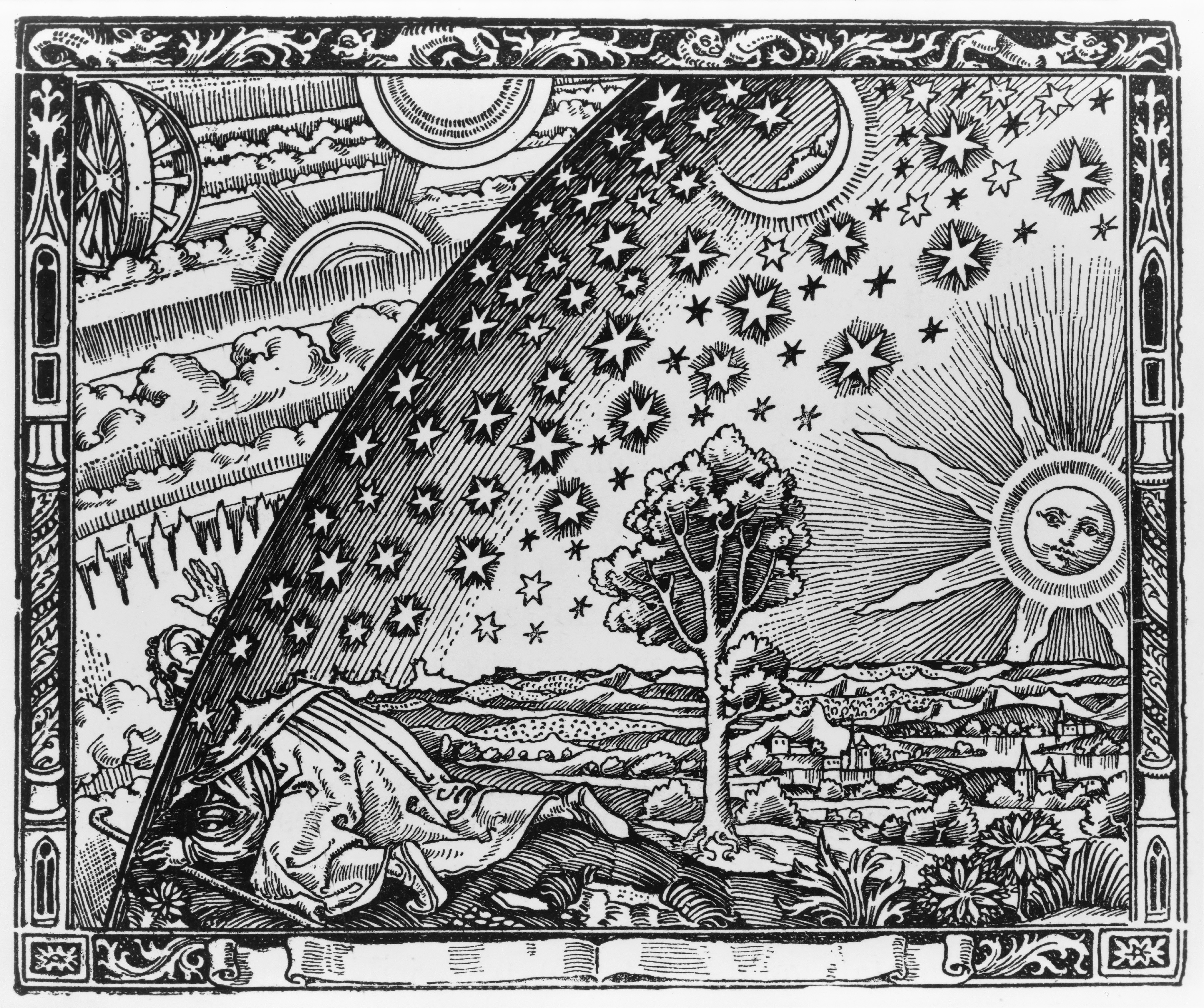






Du muss angemeldet sein, um einen Kommentar zu veröffentlichen.