Kategorie: Featured

Blog posts, which are presented current on the main page.

  • „Worship in spirit and truth“ – what does that mean?

    „Worship in spirit and truth“ – what does that mean?

    By Christian


    How should you worship God? You probably already have some thoughts running through your head. Perhaps this too? We should worship God „in spirit and truth“. That’s what it says in John 4:23, 24, and perhaps you’ve already asked yourself what that’s supposed to mean. Let’s first read the text and then look at the context:

    Yet a time is coming and has now come when the true worshipers will worship the Father in the Spirit and in truth, for they are the kind of worshipers the Father seeks. God is spirit, and his worshipers must worship in the Spirit and in truth.”

    John 4:23, 24 NIV

    The context of John 4:23, 24 and the meaning in the Greek text

    The context of this statement by Jesus according to the Gospel of John is clear from the context. A woman from Samaria had addressed him as follows:

    “Sir,” the woman said, “I can see that you are a prophet. Our ancestors worshiped on this mountain, but you Jews claim that the place where we must worship is in Jerusalem.”

    John 4:19,20 NIV

    In other words, she asks Jesus: As a prophet – someone who proclaims God’s messages – can you tell me which form of worship is the right one? It is not just about the place, but also the manner of worship. Jesus answers her as follows:

    Woman,” Jesus replied, “believe me, a time is coming when you will worship the Father neither on this mountain nor in Jerusalem. You Samaritans worship what you do not know; we worship what we do know, for salvation is from the Jews.

    John 4:21, 22 NIV

    Jesus announces a fundamental change in relation to worship. And then come verses 23 and 24, so what is it about Jesus then speaking of „spirit and truth“?

    First of all, we note that the original text does not contain a definite article:

    He therefore does not speak of „the spirit and the truth“, even if it is occasionally translated in this way. Some translate it as „truthfulness“ (v23 Neue Evangelistische Übersetzung). If you read through the various translations and commentaries, you will quickly realise that these brief words leave quite a lot of room for interpretation.

    „Spirit“

    Take Jehovah’s Witnesses, for example. In their New World Translation, the word explanations say:

    Therefore, “worship with spirit” apparently refers to worship that is guided by God’s spirit, which would help an individual to be attuned to God’s thinking through study and application of His Word. So Jesus’ statement about worshipping God “with spirit” involves far more than being sincere and having a spirited, or enthusiastic, mental disposition about serving God.

    New World Translation of Jehovah’s Witnesses, Word explanations John 4:23, 24

    Did you notice the word „apparently“? That is always used when they have no biblical evidence for such a claim. And the last sentence „so it’s about much more than serving God sincerely“ was only inserted because the text can certainly be understood in this sense. We will come back to this in a moment.

    So does „spirit“ here really mean the „Holy spirit“? Is the Holy Spirit supposed to guide us? Then let’s take another look at verse 24 in the Greek:

    At the beginning it says: „Spirit who is God“ and the same word Πνεῦμα (pneuma) is used as in the part „Spirit and truth“. So if it were so simple that „Spirit“ in this verse meant the „Holy Spirit“, then this would be a nice ‚proof text‘ for the Trinity, at least for the fact that God is the Holy Spirit. The authors of Jehovah’s Witnesses have probably also realised this and therefore mentioned it accordingly in their word explanations. HELPS Word-studies summarises:

    4151 pneúma – properly, spirit (Spirit), wind, or breath. The most frequent meaning (translation) of 4151 (pneúma) in the NT is „spirit“ („Spirit“). Only the context however determines which sense(s) is meant.

    HELPS Word-studies

    If you consider the context of this statement by Jesus or the Gospel of John, then ’spirit‘ here stands in contrast to ‚this place or Jerusalem‘. And Jesus answers that no physical place is important for worship, but that this is a mental or spiritual thing.

    In the text itself, however, there is even a direct indication that the Holy Spirit cannot be meant. Have you discovered it?

    John 4:23 and the ‚guidance of the Holy Spirit‘

    Let’s read the beginning of John 4:23 again carefully

    Yet a time is coming and has now come when the true worshipers will worship the Father in the Spirit and in truth, for they are the kind of worshipers the Father seeks.

    John 4:23 NIV

    So Jesus says that at that moment it is already the case that „people worship in spirit“. But wait a minute. The ‚Holy Spirit‘ was only poured out much later at Pentecost 33 AD! So this text John 4:23 has nothing to do with the idea that the Holy Spirit was poured out on the disciples and that he guided the disciples to understand ‚the truth‘.

    John 4:23,24 therefore says nothing about a connection between ‚holy spirit‘ and ‚truth‘ in the sense of ‚correct understanding of biblical truth‘, which one receives when one is guided by the holy spirit.

    So isn’t it rather the case that „spirit“ here refers to the human spirit? A worship that is not associated with a place, a temple, with rituals, but refers to a spiritual level?

    „Truth“

    And does „truth“ in John 4:23, 24 mean something like „correct doctrine, beliefs, dogmas“? Anyone who knows Jehovah’s Witnesses knows that the phrase „being in the truth“ was and is common there for decades. So it is not just about what is written in the Bible (even if the word explanation in the New World Translation of Jehovah’s Witnesses mentions this), but about precisely the teachings of Jehovah’s Witnesses. That only they recognise and „possess“ „the truth“. For example, in a recent article on the topic: Hold Fast to the Truth With Strong Conviction (German Are you convinced you have the truth?)

    Jesus loved the truth, that is, the truth about God and His purposes. Jesus lived in harmony with that truth, and he made that truth known to others. (John 18:37) Jesus’ true followers also deeply loved the truth. (John 4:23, 24)

    God’s people today do not claim to have perfect or complete knowledge of the truth.  … Jehovah reveals the truth gradually, and we must be willing to wait patiently for the light of truth to get brighter. (Prov. 4:18).

    Watchtower 2021 October, p. 22, par. 11, 12, Hold Fast to the Truth With Strong Conviction (German Are you convinced you have the truth?)

    There are many more quotes that show that ‚the truth‘ refers to the current teachings of Jehovah’s Witnesses. Is this really what Jesus meant? Let’s look at the meaning of the word ἀληθείᾳ (alētheia) in Greek :

    Truth, but not merely truth as spoken; truth of idea, reality, sincerity, truth in the moral sphere, divine truth revealed to man, straightforwardness.

    Strong’s Greek 225

    225 alḗtheia (from 227 /alēthḗs, „true to fact“) – properly, truth (true to fact), reality.

    [In ancient Greek culture, 225 (alḗtheia) was synonymous for „reality“ as the opposite of illusion, i.e. fact.]

    HELPS Word-studies

    Now you can look at the 109 usages of this word in the New Testament. Surprisingly, there are only 7 uses in the synoptic gospels. After that there are many more, namely 24 in the Gospel of John. Luke, for example, also uses it in this way: „But in truth, I tell you, :“ (Luke 4:25 ESV) In John 8:44,45, truth is contrasted with lies. And of course there are also texts in which truth means „divine truth revealed to man“, which is one of the possible meanings given in Strong’s Greek Lexicon.

    So once again, things are much more complicated than we perhaps thought.

    And so we also need to look at the extent to which the Holy Spirit should play a role in understanding the gospel. We can only look at a few aspects here, but that alone will be revealing.

    „The spirit of truth“

    Let’s start with the words of Jesus according to the Gospel of John:

    “I have much more to say to you, more than you can now bear. But when he, the Spirit of truth, comes, he will guide you into all the truth. He will not speak on his own; he will speak only what he hears, and he will tell you what is yet to come. He will glorify me because it is from me that he will receive what he will make known to you. All that belongs to the Father is mine. That is why I said the Spirit will receive from me what he will make known to you.”

    John 16:12-15 NIV

    We read here about the spirit of truth. The word Πνεῦμα (pneuma) is used for spirit. Exactly the word that was used for „God is a spirit“ and „in spirit and truth“ in John 4:23,24. However, the text is not that easy to understand, because the way Jesus speaks here of the Father and the Holy Spirit as a person is likely to irritate all those who doubt the doctrine of the Trinity. However, we had already noticed this in John 4:23 … but we are getting off the subject.

    It is interesting that the part „he will guide you into all the truth“ is already quite freely translated. And there are also two different traditional formulations in the manuscripts!

    But when he, the Spirit of truth, has come, he will guide you into all the truth; [other manuscripts: guide in all truth]; (Elberfelder)

    But when the Helper comes, the Spirit of Truth, he will lead you to the full understanding of the truth [Literally: „he will guide you in the whole“ ( aL(2) „into the whole“ ) truth.]. (NGÜ)

    But when he comes, the Spirit of truth, he will guide you in all truth; [Other textual tradition: „…, he will lead you into the whole truth; …“] (Züricher)

    Johannes 16:13

    So we cannot clearly decide here whether the Spirit will guide us to a full understanding of the truth, i.e. that we understand everything, or only guide us within the complete truth, i.e. there is no area that remains hidden to the Spirit. But we may not get all. If we look at the context in which Jesus says that everything belongs to him, there is a lot to be said in favour of the latter.

    Let’s look at another verse on this topic.

    1 Corinthians 2:10-13

    Does 1 Corinthians 2:10-13 explain the text from John 16:12-15?

    For to us God revealed them through the Spirit; for the Spirit searches all things, even the depths of God. For who among men knows the thoughts of a man except the spirit of the man which is in him? Even so the thoughts of God no one knows except the Spirit of God. Now we have received, not the spirit of the world, but the Spirit who is from God, so that we may know the things freely given to us by God, which things we also speak, not in words taught by human wisdom, but in those taught by the Spirit, combining spiritual thoughts with spiritual words.

    1 Corinthians 2:10-13 NASB 1995

    Here, too, we must first of all make it clear that when we read of ‚us‘ and ‚we‘, it is first of all referring to Paul, who wrote the letter, and those in the church in Corinth in the 1st century. The fact that this also applies to us today must be biblically proven!

    Can we deduce from this text that we receive the truth explained to us by the Holy Spirit when we read the Bible? Paul begins with the idea that he came to the Corinthians to „make known the mystery of God“ (v1, NET). But the message he came with did not fit in with any of the teachings of the known religions or philosophies. He arrived with something that no one would have thought of on their own: „For I had decided to know nothing among you except Jesus Christ and him crucified.“ (V2 NET). Now Paul did not simply speak to them and then the Holy Spirit explained everything to them. He says after verse 4: „My word and my preaching were not based on the persuasion of human wisdom, but on the demonstration of God’s Spirit and power.“ And how did others learn about the mystery of God? „No, we preach the mystery of God’s hidden wisdom. That this has now been revealed to us was ordained by God before all time, so that we might share in his glory.“ (v7 NET) So when Paul speaks of it being ‚revealed to us now‘, it does not mean that it was revealed to everyone by the Holy Spirit when they read the Scriptures. For some, like Paul, it may have been, but for most it was revealed through Paul’s preaching. So verse 10 is not to be understood as the Holy Spirit revealing the mysteries directly to everyone. This mostly happened indirectly through the teachings of Jesus, the preaching of Paul, etc.

    The fact that the matter is more complicated is shown in the very first verse of the next chapter: „But I have not yet been able to speak to you, brothers, as I would to spirit-filled people. I had to treat you like children who follow their own desires rather than Christ.“ (1 Corinthians 3:1 NEV). Were the Corinthians not led by the Holy Spirit? Were they not anointed? Or not anymore? Or is the idea wrong that one is either guided by the Holy Spirit and deciphers and recognises the truth or not? Is this even an all-or-nothing thing?

    1 John 2:27

    Then we have 1 John 2:27. Perhaps you have already noticed how often we have ended up here with the Gospel according to John or John’s letters. It is strange that it is only emphasised so late in the scriptures and then only from one source. But that is another topic. So what does 1 John 2:27 say?

    But Christ has blessed you with the Holy Spirit. Now the Spirit stays in you, and you don’t need any teachers. The Spirit is truthful and teaches you everything. So stay one in your heart with Christ, just as the Spirit has taught you to do.

    1 John 2:27 Contemporary English Version

    That’s what it says! „The Spirit teaches you everything“. Here too, of course, who is ‚you‘? Do you feel addressed? But the letter wasn’t addressed to you and me and others 2000 years later.

    But the text contains another surprise. Many German translations render this verse is a similar war. But there is a footnote in the German translation Neue Evangelistische Übersetzung: „Literally: the anointing oil. See footnote to verse 20.“ And it says there:

    Christ, the Holy One, has blessed you, and now all of you understand.

    1 John 2:20 Contemporary English Version

    Let’s compare with the German translation Neue Evangelistische Übersetzung:

    But you have the Holy Spirit from the Holy One himself [Literally: the anointing oil or anointing. In the Old Testament, kings and priests were anointed at their appointment. This symbolism was intended to remind us that God had called them and equipped them for their mission. And through this anointing you know.

    1 John 2:20 NEÜ

    So there is nothing here about the Holy Spirit but about the anointing oil or anointing! The word used is χρῖσμα (chrisma) and it occurs exactly 3 times in the Bible – in these two verses! So what does that mean? Did the Holy Spirit whisper it to them?

    So I am not writing to you because you do not know the truth, but because you know it and know that no lie can come from the truth.

    But you, hold on to the message that you have heard from the beginning! If you do this, you will remain united with the Son and the Father.

    1 John 2:21, 24 NEÜ

    So they had heard the truth as a message from the beginning when they believed and were anointed. If they held on to their anointing and this message, then of course they would not need anyone to teach them anything else. They had already recognised the ‚truth‘ back then.

    Therefore, most English Bibles translate 1 John 2:27 like this:

    As for you, the anointing you received from him remains in you, and you do not need anyone to teach you. But as his anointing teaches you about all things and as that anointing is real, not counterfeit—just as it has taught you, remain in him.

    1 John 2:27 NIV

    But somehow the Holy Spirit must have done something in the first century, didn’t he?

    Do not quench the Spirit. Do not treat prophecies with contempt, but test them all; hold on to what is good, reject every kind of evil.

    1 Thessalonians 5:19-23 NIV

    Were not all the prophetic utterances in the assembly good? Or were they not from the Holy Spirit? It seems to me that the Holy Spirit and the understanding of the Bible is more complicated than it may have seemed at first.

    We could analyse other texts on this topic – and possibly experience further surprises. But I think these important examples are enough for now.

    To what extent can we know God’s truths?

    To what extent did the Holy Spirit explain the „deep things“ in the first century? What does Paul have to say about writing this thought in 1 Corinthians?

    For we know in part and prophesy in part;

    For now we see in a mirror dimly, but then face to face; now I know in part, but then I will know fully, just as I also have been fully known. …

    1 Corinthians 13:9, 12 NASB

    So we should not expect too much. Even the first followers of Jesus should be aware of their limitations.

    But perhaps that should change over time. Yes, but in this way:

    Love never fails; but if there are gifts of prophecy, they will be done away with; if there are tongues, they will cease; if there is knowledge, it will be done away with.

    … but when the perfect comes, the partial will be done away with.

    For now we see in a mirror dimly, but then face to face; now I know in part, but then I will know fully, just as I also have been fully known. But now faith, hope, and love remain, these three; but the greatest of these is love. [Others translate: „What remains until the time comes“. Literally: „But what remains now“. NGÜ].

    1 Corinthians 13:8, 10, 13 NEÜ

    St Paul says that in his day, despite the Holy Spirit and miraculous gifts, they only understood many things in fragments. And it would become less: „‚the gift of‘ knowledge will no longer exist“. That would change when the ‚whole‘ or ‚perfect‘ would be there. When would that be? And what would be until then? In verse 13, Paul emphasises what we can expect: Faith, hope and love.

    If you believe that you are led by the Holy Spirit today, as mentioned in the 1st century scriptures, do you also accept that there are these other gifts of the Spirit? What else was there?

    For to one is given the word of wisdom through the Spirit, and to another the word of knowledge according to the same Spirit; to another faith by the same Spirit, and to another gifts of healing by the one Spirit, and to another the effecting of miracles, and to another prophecy, and to another the distinguishing of spirits, to another various kinds of tongues, and to another the interpretation of tongues. But one and the same Spirit works all these things, distributing to each one individually just as He wills.

    1. Korinther 12:8-11 NASB

    Is this still promised for our time? Or during the past 2000 years? That’s not what this text says. It only says that it was like that back then. And if you believe that today you are guided by the Holy Spirit when reading the Bible in order to recognise the truth, what about these other gifts? How do you justify on the basis of the New Testament that these are no longer made possible by the Holy Spirit?

    It would also be good to read these statements in the context of chapters 12-14. In it, Paul shows that not everyone had these gifts. Not even the ‚gift of knowledge‘. Did they then have to ask others about it when they heard what was read from the Scriptures or the new letters? Interestingly, Paul has this to say in chapter 14: „Did the word of God go out from you? Or did it only come to you?“ (NEÜ). Even if the disciples in Corinth had the Holy Spirit, he had not revealed the truth about the gospel to them independently. And it was no different in the other churches. Paul had preached the gospel to them – it was not revealed to everyone by the Holy Spirit as they read it.

    Perhaps you are now confused or see a contradiction: has the Holy Spirit now caused the holy secrets of God, the truth, to be fully recognised or not? If all this has already become too much for you, then I would like to say this:

    Important, central truths or secrets of God are not necessarily complicated. The good news that God, through the Messiah and the kingdom, restores the state of creation that he desires, that the Messiah had to die, that the Messiah’s death was not a defeat, but that through his resurrection all enemies and even the worst, death, were eliminated, that was a secret. Saving the world through the suffering and death of the Messiah – no one had even imagined that. But we can understand this – even without knowledge of the original languages, extensive studies, etc.. Just like those to whom Jesus, Paul and others preached.

    However, there are also a lot of topics, details and connections that can only be recognised through painstaking, time-consuming Bible study, study of the language and context, etc. And the Holy Spirit is not a shortcut for this.

    However, the idea that you only need to ask for the Holy Spirit when reading the Bible in order to understand the mysteries of God runs into problems in a completely different way.

    What do you read when you read the Bible?

    Most people will read the text of the Bible in their native language, i.e. not in the Greek, Aramaic or Hebrew of antiquity. Between the original text and us, therefore, lies the translation and the different context (see my series The Canon of the New Testament). Does the Holy Spirit supernaturally help you to correctly understand the meaning in the original text when you read a translation in your language? Or do we take falsified or forged Bible texts such as the Comma Johanneum? Would the Holy Spirit prevent you from understanding these Bible texts as „deep things of God“ in your translation? I think everyone can answer that for themselves and the answer is: No.

    But what about those who painstakingly tracked down, organised, compared and translated the manuscripts? Did they only pretend to be guided by the Holy Spirit? Could the Holy Spirit not have helped them? Are there really only ‚two classes of Christians‘, as some say? Those who are led by the Holy Spirit and all others who are not led by the Holy Spirit? That is actually a somewhat unfortunate choice of words. In the past, for example, Jehovah’s Witnesses have spoken of „the class of the faithful and discreet slave“, the „class of the anointed“ or the „class of the other sheep“. It only served to differentiate between ‚us‘ and ‚them‘. Can we lump all Christians of one denomination together – or one class? Both those who define and preach the doctrines and the ‚laity‘ who may think quite differently. Just because the Trinity is taught in a church – and we consider this to be a false doctrine? That would mean that there is no one in any of these churches in whom God’s Holy Spirit can work. Shouldn’t we think more carefully about whether the Holy Spirit of God can work in someone to a certain extent? Let us assume that the Bible translators of Christianity did not have the Holy Spirit and that he did not support them, then they nevertheless contributed a lot – actually even everything – to the basis of today’s Bibles and found a lot of ‚correct‘ teachings. So the Holy Spirit would not have played such a decisive role in understanding the Bible after all, as the translator’s difficult task could have been accomplished without him?

    So is it the case that someone has or does not have God’s spirit? This is perhaps a wrong formulation, because it sounds like possession. But the Holy Spirit ‚belongs‘ to God (or Jesus, depending on the text). Does the Spirit of God work in someone completely or not at all? That was already not the case in the Old Testament accounts. The temporal perspective is not even taken into account. The Spirit could work for a while and then no longer work. Take Solomon, for example. He had received God’s spirit in a special way. And according to the Bible, there are reports about him and wisdom from him in the Bible. But according to 1 Kings 11:4, this is what happened: „As he grew older, they made him worship other gods. Then his heart was no longer undividedly devoted to Yahweh his God, as was the heart of his father David.“ (NEV). Idolatry – that was the worst thing you could do in God’s eyes. Did he still have ‚God’s spirit‘? Did he allow himself to be led by God’s spirit? To what extent? Did God’s spirit still work in him? The results from the time before were nevertheless included in the biblical canon. And what about David, Abraham, Moses, the judges and the prophets?

    So can we judge whether someone was guided – and supported – by God’s Spirit when he researched and wrote about a particular biblical topic? And if he or she also believed in a ‚false teaching‘? None of us can claim that he or she has ‚the whole truth‘. But is there such a thing as false doctrine that prevents someone from writing or saying something that we would accept as ‚biblical truth‘? If we consider the doctrine of the Trinity to be false, can someone who believes in a variant of this doctrine not recognise any other ‚biblical truths‘? And can they not be guided by the Holy Spirit? Perhaps years of indoctrination still unconsciously influence how we think about it. The New Testament rather gives the impression that the disciples had the Holy Spirit and yet still had quite different and also ‚wrong‘ ideas.

    A word of caution

    But how should we imagine it when someone says that they have God’s Spirit and reads the Bible? Something like this?

    The Holy Spirit has helped us to understand previously unclear biblical truths. … Certainly it is not due to any human being that these „deep things of God“ can be discovered and explained. Paul wrote, „These things we also speak, not in words taught by human wisdom, but in words taught by the Spirit“ (1 Cor. 2:13).

    Does that sound right to you? It has also been formulated like this: „If we have God’s breath in us, his Holy Spirit, then we will understand the secret and hidden wisdom of God.“

    Now let’s compare the above formulation with the following text. I have emphasised what is identical to the previous formulation:

    Signs of the work of the Holy Spirit. The Holy Spirit has helped the Governing Body to understand previously unclear biblical truths.Certainly it is not due to any human being that these „deep things of God“ can be discovered and explained. (Read 1 Corinthians 2:10.) The Governing Body feels as Paul did when he wrote, „These things we also speak, not in words taught by human wisdom, but in words taught by the Spirit“ (1 Cor. 2:13). Can the rapid increase in spiritual understanding since 1919 after centuries of apostasy and spiritual darkness be due to anything other than the Holy Spirit?

    Watchtower 2017, February, p. 26-27, par. 13 Wer führt Gottes Volk heute? ,German (Who leads God’s people today?)

    Whether it is Jehovah’s Witnesses as in this quote or any other group, it is truly no surprise that for two thousand years Christians have claimed that they are guided by the Holy Spirit and therefore understand the Bible and the ‚holy secrets of God‘. The question is: can anyone prove this? However, we would not have to answer this question if we could no longer expect the Holy Spirit to guide us in this way.

    Can we simply apply these texts to ourselves?

    We have already addressed this point twice. Can we always apply the texts of the New Testament to ourselves? When ‚we‘ and ‚you‘ are mentioned, does that also mean you and me?

    Even in the first century, many people claimed to be led by God’s Spirit:

    Beloved, do not believe every spirit, but test the spirits to see whether they are from God, for many false prophets have gone out into the world.

    1 John 4:1 ESV

    Interestingly, we are asked to examine the source of the spirit. Belonging to a religion, church or group was not the criterion. Incidentally, in the next verse another criterion is given for recognising the work of the Holy Spirit:

    By this you know the Spirit of God: every spirit that confesses that Jesus Christ has come in the flesh is from God,

    1 John 4:2 ESV

    An extraordinary announcement that would lead us right into the discussions among the Christians of the first centuries. But not now.

    So let’s take a look at some of the texts that talk about the support of the Holy Spirit.

    And I will ask the Father, and he will give you another advocate to help you [o. intercessor; o. helper; literally: the one called] and be with you forever [Greek: aeon] – the Spirit of truth. The world cannot accept him, because it neither sees him nor knows him. But you know him, for he lives with you and will be in you..

    John 14:16,17 NIV with comments from Elberfelder

    Apart from the fact that aeon does not mean eternity but age, the paráklētos, the ‚helper‘, is mentioned here. Is this the ‚holy spirit‘? It says here: ‚Spirit of truth‘. We should not jump to conclusions here. And who does Jesus mean by ‚you‘? The context shows that the apostles are meant. Can we simply extend this to all followers of Jesus?

    I will not leave you as orphans; I will come to you. Before long, the world will not see me anymore, but you will see me. Because I live, you also will live.

    John 14:18, 19 NIV

    Well, who has seen Jesus? You and me? No! The apostles he addressed in this passage. Many apply such texts to themselves without hesitation, but this should be biblically justified!

    Just think back to 1 Corinthians 13:8, where Paul says that these special gifts will cease through the Holy Spirit. So before you tell yourself that you are guided by the Holy Spirit when reading the Bible, you should be able to prove from the Bible that this is still the case today! If you are now indignant in your conviction, then think about the millennia before Jesus Christ. Did the ‚Holy Spirit‘ help people to understand the ‚Bible‘ (what there was of it at all) in the way you assume? Think not only of an Abraham or Moses, but also of Hennoch or Job or those Israelites who tried their best? What if God and Jesus had not promised us that we would miraculously recognise ‚the truth‘ today through the Holy Spirit when reading the Bible? What if this had only been limited to the first century and a select few? What then?

    To you, He’s explained it, O man…
    All the things that are righteous.
    And all that Yahweh requires
    Is for you to be fair and love mercy,
    And to be ready to walk with your God!

    Micah 6:8 2001 Translation

    The real challenge for disciples of Jesus is not an exact understanding of the ’secrets of God‘, which we can only gain through the Holy Spirit. It is to think, be and do in our daily lives what God has always wanted us to do.

    Bible study and the Holy Spirit

    Understanding the Bible better and better is indeed hard work. Genuine Bible study is far more than just reading. So when Bible scholars painstakingly and carefully compare texts from the Old and New Testaments or carefully study the meaning of terms in antiquity, they often discover profound things of God that we have never noticed before. Nor do those who are convinced that they are guided by the Holy Spirit when reading the Bible. Considering the work of such scholars does not mean following the teachings of men. They help us to gain a more precise, deeper access to the text.

    I think the late scholar Dr Michel S. Heiser made a very important connection in his book The Bible Unfiltered: Approaching Scripture on Its Own Terms, Dr Michel S. Heiser explained a very important connection:

    One of my favorite scholarly quotations about the hard work of seriously engaging the biblical text—what we popularly call Bible study—is that of the renowned Greek lexicographer, Frederick W. Danker (the “D” in BDAG).1 Danker famously said that “scholars’ tasks are not for sissies.” He was right, and I’m grateful he was willing to say what needed to be said.

    The truth about serious Bible study is that it isn’t easy. It takes sustained time and effort, often measured in days, weeks, and months, to really grasp what a passage means (or probably means) and why. If Bible study doesn’t seem like work to you, you aren’t really doing it.

    All too often people who sincerely want the feeling of knowing Scripture aren’t willing to put in the time it takes to get there. Instead, they’ll take short cuts and then expect the Spirit to take up the slack. The assumption seems to be that the promise of the Spirit to guide us into truth means he’ll excuse a lack of effort and give us the answers we need. The third person of the Trinity isn’t the boy sitting next to you in high school that lets you cheat off his exam. Rather than substitute the Spirit for personal effort, ask the Spirit for insight to expose flawed thinking (your own and that of whomever you’re reading) when you’re engaged in Bible study. The more of God’s word you’ve devoted attention to, the more the Spirit has to work with.

    Michael S. Heiser, The Bible Unfiltered: Approaching Scripture on Its Own Terms, Chapter 1

  • „Don’t miss any meeting!“

    „Don’t miss any meeting!“

    Von Christian


    II can’t tell you how often I used to hear as a Jehovah’s Witness that I „must not miss a meeting“. As a former or active Jehovah’s Witness, I’m sure you can confirm that. I feel like I’ve heard and read this countless times. In the Watchtower ONLINE LIBRARY, I have already found 40 results for the German text „miss a meeting“ and 125 results for the German „miss meetings“. Then Hebrews 10:24, 25 is usually quoted (usually only excerpts) and Proverbs 18:1.

    And this pattern is not only found among Jehovah’s Witnesses. It is therefore a good idea for everyone to take a closer look at the methodology, arguments and biblical texts.

    I remember, for example, how the term ’Teffpunkt’ (‚meeting place‘), which was commonly used in German congregations, was no longer to be used, but the official term ‚meeting for the preaching service‘. A circuit overseer also emphasised this. After all, attending this ‚meeting‘ was compulsory! And that was exactly the point: Not loving care but compulsory attendance at meetings and conventions. Always coupled with the advice that otherwise you would become selfish and fall away from the faith, which of course scares you.

    You don’t believe that? Here are a few quotes:

    Isolating ourselves instead of enjoying regular Christian fellowship at meetings can be damaging to us. It can lead to our ‘seeking our own selfish longings.’ (Prov. 18:1) So we are wise to ask ourselves, ‘Is it my custom to attend all the meetings and benefit from them?’​—Heb. 10:24, 25.

    Wachttower 2013 2/15 p. 23 Beware of the Intentions of the Heart

    Peter showed genuine faith by gathering with his brothers despite his low spirits. When one is burdened by sadness or regret, isolation is tempting but dangerous. (Prov. 18:1) The wise course is to stay close to fellow believers and regain spiritual strength.​—Heb. 10:24, 25.

    Imitate Their Faith p. 202 par. 20

    True Christians are organized to support and encourage one another. A lone mountaineer can decide where he wants to climb, and he does not have to look after less experienced climbers. However, if he has an accident or gets into difficulty, he will be in serious danger, as there will be no one to assist him. Isolating oneself is truly unwise. (Proverbs 18:1) For Christians to carry out Jesus’ command, they must help and support one another. (Matthew 28:19, 20) The Christian congregation provides much-needed Biblical instruction, training, and encouragement for all to keep going and not to give up. Where would one go to be instructed in Jehovah’s ways if there were no organized Christian meetings for instruction and worship?​—Hebrews 10:24, 25.

    Wachttower 2011 6/1 p. 14-15 Does God Have an Organization?

    The last quote from the 2011 Watchtower is particularly interesting. The article is about God having an organisation. Why Proverbs 18:1 and Hebrews 10:24, 25 are applied in this way becomes clear from the concluding paragraph:

    Genuine love for God and love for Bible truth have drawn millions to an organization that meets these and other Biblical criteria. As an organized and unified body of people, Jehovah’s Witnesses worldwide endeavor to do God’s will. They are assured of his promise: “I shall reside among them and walk among them, and I shall be their God, and they will be my people.” (2 Corinthians 6:16) This wonderful blessing can be yours too if you worship Jehovah God with his organization.

    Wachttower 2011 6/1 p. 15 Does God Have an Organization?

    So it is always about the fact that there is only one organisation that is from God. The message is: ‚All the others are not of God. And so you have to go to these meetings because otherwise you are not where ‚God is‘. And where else are you going to get ’spiritual food‘? It’s not wise and even dangerous if you don’t go. Then you are isolating yourself and that will end badly for you. Because you will only follow your desires and reject wisdom.

    And this has been emphasised again and again for decades:

    How, then, can we individually build to greater maturity and become effective teachers? In addition to personal study of the Bible we need the rich association of fellow Christians at all congregational meetings.

    To profit regularly from the latest revealed truths from the Temple, flowing down through Jehovah’s channel-like organization, be sure to attend these meetings.

    Yes, for compelling reasons we should form the good habit of regular meeting attendance, if we have not already done so.

    Watchtower 1963 6/1 p. 336-337, par. 11

    The intention is very clear: only those who can be indoctrinated several times a week in the meetings remain in line with the Watchtower organisation:

    Do you ever feel spiritually weak? Examine yourself. Very likely you have not been going to meetings regularly. You lack association with your brothers. When one begins missing meetings one is withdrawing from Jehovah’s organization, and that is when one begins to become weak. He ceases to express himself or make a public declaration of his hope. In these last days of the Devil’s organization this is no time to take chances.

    Watchtower 1955 1/1 p. 19 p. 7

    Is this loving care or is a threatening backdrop being created here for other reasons? The answer is not difficult.

    But enough quotes from the Watchtower for now. Is it even true what the Watchtower keeps writing? Are these two Bible texts even applied correctly?

    Hebrews 10:24,25

    In the context of the meetings, Hebrews 10:24, 25 is often introduced in a certain way:

    In response to the Bible’s injunction [German Watchtower: biblical commandment] ‘not to forsake gathering together,’ the Witnesses came up with an ingenious solution​—Nicaragua’s first floating Kingdom Hall!​—Hebrews 10:25.

    Watchtower 2009 9/1 p. 26

    Now please read the verses and the chapter and ask yourself whether this is a commandment like the 10 commandments or the two that Jesus emphasised. No, of course it is not a biblical commandment. And apart from Hebrews 10:25, no other text is quoted. I wonder why?

    By the way: Have you noticed the often omitted second part of the verse? „and all the more so as you see the day drawing near.“ it says. What day? When was the letter to the Hebrews written? By the way, its author is unknown and not Paul (see my video The Canon of the New Testament – Part 17: The Writers of the New Testament). There are various interpretations of what is meant by the day. The letter was probably written in the years before the destruction of Jerusalem in 70 A.D. It is therefore worth thinking about whether the text was written for a specific time or is applicable to all times. In any case, it would be good to understand a text as a whole before applying it.

    Incidentally, the Greek here stands for coming together, which only occurs exactly twice in the New Testament:

    ἐπισυναγωγὴν (episynagōgēn) is also used in 2 Thessalonians 2:1

    We read:

    Concerning the coming of our Lord Jesus Christ and our being gathered [ἐπισυναγωγῆς (episynagōgēs)] to him, we ask you, brothers and sisters, not to become easily unsettled or alarmed by the teaching allegedly from us—whether by a prophecy or by word of mouth or by letter—asserting that the day of the Lord has already come.

    2 Thessalonians 2:1,2 NIV

    That’s interesting. The word is only used twice at all. In Hebrews 10:25, the reason for coming together is that they see the day approaching. And in 2 Thessalonians 2:1 the same word is used for the union with the Lord Jesus Christ at his return, with the warning in verse 2 that some claim that the day of the Lord is already here.

    How should we understand Proverbs 18:1?

    A few other quotes from the publications of Jehovah’s Witnesses.

    We can regain the proper viewpoint by joining our brothers in worship instead of isolating ourselves (Ps 73:17; Pr 18:1; w20.12 19 ¶15-16)

    Our Christian Life and Ministry—Meeting Workbook—2024, August 2024

    Those three examples teach us another important lesson​—we should not isolate ourselves from Jehovah and his people. (Prov. 18:1)

    Watchtower 2019, June p. 18, par. 16

    But is Proverbs 18:1 really about attending meetings, whether of Jehovah’s Witnesses or any other groups and churches? We should not read anything into the Bible (eisegesis), but let the Bible speak for itself (exegesis).

    However, this is not so easy with Proverbs 18:1, because the Hebrew text is short and quite obscure for us today. In fact, modern translators have always inserted words to make sense of the Hebrew. And since the King James Version, many have followed a rendering. This also suited all churches and is therefore still used.

    Are there any ancient sources that can help us here? Yes, namely the Greek Septuagint and the Aramaic text. And what does the Septuagint and the Aramaic text say?

    He who follows his desire separates himself, / he runs against all wisdom. (Einheitsübersetzung)

    An unfriendly person pursues selfish ends and against all sound judgment starts quarrels. (NIV)

    In his idleness one meditates on lust and mocks at good instruction. (Aramaic Bible in Plain English)

    A man who wishes to separate from friends seeks excuses; but at all times he will be liable to reproach.(Brenton Septuagint Translation und andere Übersetzungen der Septuaginta)

    Those making excuses are rejected by friends,And they’ll always be spoken of poorly. (2001 Translation, takes into account the Septuagint)

    Proverbs 18:1

    The ancient translators were much closer to it and had a completely different understanding of Proverbs 18:1 than today’s translators of the Masoretic Hebrew text. You are probably as surprised as I am. But we wouldn’t have had to be if we had read all the texts compiled in Proverbs. Let’s read the first 4 in context:

    Those who avoid other people think only of themselves and their own desires; they fiercely resist everything that is supposed to make them realise this.

    A fool doesn’t even try to understand anything. He just wants to show everyone how clever he is.

    Those who renounce God inevitably become guilty. But guilt brings shame and scorn.

    A person’s words can be a source from which wisdom gushes forth constantly; inexhaustible and of profound truth.

    Proverbs 18:1-4 Hoffnung für alle

    So Proverbs 18 is not at all about meetings and fellowship with a particular church, group or whatever.

    The application of Proverbs 18:1 by Jehovah’s Witnesses and others now not only appears to be questionable. It is wrong. And yet it is precisely this text that is used again and again. And no other text – also interesting, isn’t it?

    And what did Jesus say?

    Jesus also had something to say on the subject, but he is not quoted so often:

    For where two or three have gathered together in My name, I am there in their midst

    Matthew 18:20 NASB

    Incidentally, the text is only very rarely used in the Watchtower literature. Sometimes in connection with meetings with only a few people present. But I found this eisegesis surprising:

    In context, this statement applies to Christian elders who are meeting to handle serious problems between individuals, but in principle, it also applies to our meetings. (Matthew 18:20)

    Watchtower 2006 11/1 p. 28-29, par. 5

    Can’t we get together with other Christians?

    Of course, it also becomes problematic when people start to differentiate between Christians on the basis of their denomination. For example, if you deny that God’s Holy Spirit can work in them. Jehovah’s Witnesses sound like this:

    Further, you learn that this [Christ’s ransom sacrifice] is not an isolated action on your part but that you must faithfully and regularly assemble with God’s people, “not forsaking the gathering of ourselves together, as some have the custom, but encouraging one another, and all the more so as you behold the day [of the old world’s end] drawing near.” (Heb. 10:25, NW) Where can you assemble with such people to study such things? Certainly not in the majority of church organizations today where people have been members for forty or fifty years and still are unable to explain the elementary doctrines of Christianity. But you do meet people who can give you such encouragement, and you really do study God’s Word when you attend the regular meetings at the more than 14,000 Kingdom Halls of Jehovah’s witnesses throughout the world.

    Watchtower 1955 7/15 p. 423-424

    Conclusion

    If you once again hear the argument that you must obey the command in Hebrews 10:24,25 to attend the meetings because otherwise you are separating yourself according to Proverbs 18:1 just to follow your own desires and rejecting all wisdom, then remember our analysis of these Bible passages.

  • Surprised by Hope – Part 1

    Surprised by Hope – Part 1

    By Christian


    Can it even be the case that we can still be somehow surprised today with regard to the hope we are given in the Bible? Hasn’t everything already been understood, written and said about it? Does anyone here think they know better than the first Christians, the ‚Church Fathers‘, the great theological thinkers of the Middle Ages and the Reformation?

    We may have already noticed from the list in the last question that the focus here was strongly on the ‚Western Church‘. For example, the ‚Eastern Church‘, i.e. the Greek Orthodox Church and the churches of the Middle East, are missing from the list. Or the further development of Judaism. And all of their hopes are sometimes far apart.

    But can we today know any more about the Old Testament, the New Testament and the context in which they were written than even the Church Fathers? The answer here must be a resounding yes. Why is that the case?

    Because today we have many more sources from antiquity at our disposal and the languages used are better understood. What did the Church Fathers know? They had very few sources at their disposal. Many were part of a local persecuted group and not scholars with access to huge libraries and computers. And they were not even closer to the languages used than we are today. Excuse me? How many of the church fathers do you think could read the Old Testament in Hebrew, for example? Not even a handful! And why do you think Jerome was commissioned to produce a Latin translation of the Bible (later called the Vulgate) at the end of the fourth century? Not only because of the differences in the existing Latin translations. The fact that there were Latin translations shows that most of them did not even know Greek. And Jerome also translated the Old Testament from the Septuagint, i.e. the Greek translation, and his knowledge of Hebrew is unclear. (See the series Serie The canon of the New Testament).

    From the second century onwards, people had already moved far away from Paul’s letters and the texts of the first century in their thinking and reasoning. And the Old Testament was pushed aside as ‚outdated‘. (See the video The Canon of the New Testament – Part 13: Marcion and Other Vanished Christians)

    We should also not overlook the strong influence of Greek philosophy, especially Plato, on Christian doctrine and theology and even Judaism at the time of Christ. When were the doctrines of heaven, hell, purgatory and the immortal soul coined in their present form? Do we find them in the text of the Old or New Testament? With the Church Fathers? Or only from the Middle Ages onwards? We shall see.

    It is therefore a question of going back to the text of the Old and New Testaments with all the possibilities available to us today. What can a biblical scholar say today about what the apostle Paul wrote, for example? Or what can be found in the Gospels? What was the message that Christians heard and proclaimed in the first century? That’s what this video series will be about.

    Fortunately, the book Surprised by Hope: Rethinking Heaven, the Resurrection, and the Mission of the Church by Bible scholar N. T. Wright is also available in German translation: Von Hoffnung überrascht – Was die Bibel zu Auferstehung und ewigem Leben sagt.

    Therefore, in this series I would like to present only the main points and encourage everyone to read the book for themselves and check the arguments against the Bible.

    I read the book in the German translation. So the quotes are from the German translation and retranslated into English. The quotes will therefore differ from the English original.

    Firstly, I would like to briefly provide some information about N. T. Wright. Not because an argument becomes more important or more correct because a recognised scholar says so. „Nicholas Thomas Wright, better known as N. T. Wright or Tom Wright, was Professor of New Testament and Early Christianity at the University of St Andrews, Anglican Bishop Emeritus of Durham (England) and one of the leading New Testament theologians and Life of Jesus scholars in the English-speaking world. He has been a Senior Research Fellow at the University of Oxford since 2019. … Wright is an independent, unconventional thinker who challenges modern and classical interpretations and is difficult to categorise. He sets out complex theological issues in a clear and readable way to make the reader think.“ (Wikipedia) So let’s listen to what someone has to say who has devoted decades of academic research to the text of the New Testament and the Pauline letters in particular.

    Let’s start with an important note in the foreword (p. 14).

    All language about the future, as any economist or politician will tell you, is nothing more than a series of signs pointing into the fog. We are looking through a glass darkly, said St Paul as he looked at what is to come. All our language about future states of the world and of ourselves consists of complex images that correspond more or less well with the ultimate reality. But that doesn’t mean that things are completely unclear or that every opinion about these things is equally valid. And what if someone came out of the fog to meet us? This is, of course, the central, if often ignored, Christian belief.

    N. T. Wright, Von Hoffnung überrascht, S. 14,15

    In this respect, no one should claim to know exactly what the hope and future of a Christian will look like. After all, Paul says that he and his contemporaries could not do this even though they had the Holy Spirit. (1 Corinthians 13:12).

    What hope have you got?

    This brings us to the point where you should briefly consider what hope you have.

    As a Catholic, you probably believe that you will go to heaven after death. But not to hell for eternity. And only briefly in purgatory. Interestingly, heaven and hell were adopted in the Koran and thus the Isalm, although this is not found in either the Old or New Testament. As a Protestant, you probably also hope to go to heaven. But the hell thing … too cruel. Maybe everyone will go to heaven one day? For some, that sounds a lot like Asian religions and philosophies. To be reunited with God (or the universe?).

    I would particularly like to address the hope of Jehovah’s Witnesses and ex-Witnesses – not only because of my own experiences – because it often takes an interesting turn.

    When Jehovah’s Witnesses were still Bible Students, they also essentially believed that they would go to heaven like all Christians. When the hope proclaimed for years that „millions now living will never die“ was not fulfilled in 1925, the move to heaven simply had to be postponed. In the 1930s, the president of the Watchtower Bible & Tract Society, J. F. Rutherford, not only gave his followers the name Jehovah’s Witnesses, but also a new hope: only a small remnant of the literal 144,000 anointed Christians would go to heaven to reign with Jesus. All the others would be ‚other sheep‘ and would remain on earth. (See video Identifying True Worship, Part 8: The Jehovah’s Witnesses‘ Teaching on the ‚Other Sheep‘)

    However, many have now woken up and realised that J. F. Rutherford only justified this doctrine of the ‚other sheep‘ at the time on the basis of his own made-up type and anti-type comparisons. That is why these original articles from the 1930s have not been quoted in the Watchtower literature for a long time. Then everyone would notice.

    But this leads to the following: If there are no two hopes, as Jehovah’s Witnesses teach, but only one hope for all followers of Jesus, then it is the … heavenly one, isn’t it? So the ‚children of God‘ all go to heaven. Welcome to the bosom of the church, I would like to say. But not quite. What about the others? Do they go to purgatory and hell? Well, anyone who has preached for years and decades that the Bible shows that there is no hell and no immortal soul will probably not believe that. But what then? Will such people be ‚destroyed forever‘ at the final judgement? Doesn’t that still sound like something out of the Jehovah’s Witnesses‘ preaching toolbox? And what happens between death as a human being and the future? Are we then ‚in the memory of God‘? Sounds somehow familiar too …

    I wonder how many ‚proof texts‘ have already gone through your head for one thing or another. But we still draw our conclusions far too early. Because we unconsciously still have a lot of ideas as presuppositions in our thinking. And because reading the Bible is usually not enough. Not even with prayer and the Holy Spirit. He would have to perform true miracles because we can neither read the texts in the original languages nor with the context of that time. We do not understand the meaning of the words and phrases. Often we even miss the almost obvious reference to the Old Testament when reference is made to the Septuagint or linguistic images are used. Or the use of certain words and terms in the first century. What was perhaps clear to every follower of Christ at the time is not self-explanatory for us. And even worse: we read terms in the translations and associate them with ideas that the disciples of Jesus in the first century did not even have.

    So the motto now can only be: Back to the text! And back to the context!

    And that’s exactly where we start in the next part.

  • The Canon of the New Testament: Preface

    The Canon of the New Testament: Preface

    Von Christian


    Having completed this series on the canon of the New Testament in 2023, and unfortunately having to start again in 2024 with a new YouTube channel ‚Beroean Search‘ , I would like to take this opportunity to preface the series with a short foreword.

    When you watch the 18 episodes of the series, you’re embarking on a journey of discovery with me. You may well feel like you’re in the valley of tears at times, but don’t worry – it doesn’t end hopelessly.

    When you realise that you are losing familiar, cherished and seemingly important cornerstones of your faith, it is a difficult time. It was the same for me. But often a cornerstone is there – just not in the way we might have imagined.

    The question is whether you want to stick with a belief that feels good but is superficial and based on wishful thinking. This often leads to you isolating yourself from other opinions, being afraid of them or reacting with arrogance.

    Or you can face the facts and develop a mature, balanced faith. Sometimes you also have to listen to the ‚other side‘. And learn to deal with uncertainties.

    If we do not expect anything from the Bible – and especially the New Testament, which we are discussing here – that has never been promised to us, we will be much more grateful for what we have. Texts of faith for our faith.

  • Bearing God’s Name – Part 1

    Bearing God’s Name – Part 1

    By Christian / Carmen Joy Imes


    In this series, we will be looking at thoughts from the book Bearing God’s Name – Why Sinai still matters by Carmen Joy Imes. The book is a presentation of Professor Imes‘ doctoral thesis that is also easy to read for laypeople. As there is unfortunately no German translation, we will at least deal with excerpts from her presentation.

    But why is this of any interest to us today? In the foreword to her book, Imes describes the usual reservations very well: „The Old Testament has been given a bad rap for lots of reasons. Too violent. Too confusing. Too remote. Too legalistic. Too outdated.“ What many lack in the Old Testament is the grace that seems so essential in the New Testament. We will see that this is not the case at all and that Christians in particular need the Old Testament more than ever. And especially the Mosaic Law. Excuse me? The Mosaic Law of all things?

    We will also see what the text from Exodus 20:7 „You shall not make wrongful use of the name of the LORD your God“ (NRSV) actually means. The significance of the actual meaning is still the same today as it was then, as can be seen from the first words of the foreword by Christopher J. H. Wright: „“And you call yourself a Christian!” That was about the worst thing we feared hearing as young Christians in my Northern Ireland childhood. … whatever it was, the most stinging rebuke from other kids (or worst of all from a teacher) would be, “And you call yourself a Christian!”“

    Therefore, we will now not only look at Exodus 20:7 but also at the Mosaic Law and the events at Sinai at that time. I know what you’re thinking: that’s as dry as the desert at Sinai! But you’ll be surprised. With a good guide through these events, it will be very interesting.

    Just imagine what the Israelites had experienced until they reached Sinai. What do you need to live when you are on your way through the desert after all that? And what does Moses get from God? The law with all its rules. But how does Moses see it?

    ‘{Look} I’ve shown you all the rules and decisions, just as Yahweh gave them to me… So you must follow them in the land that you’re traveling to and which you’ll inherit. Obey them, and do them… Because this is what will brand you as a wise and understanding people to the nations! ‘For when they hear all these rules they’ll say:Look! They’re a great nation of wise and understanding people! ‘What other nation is there that’s so great that they have a God as close to them as our God Yahweh is [to us], and to whom we may call about anything? ‘And what other nation has rules and decisions that are as righteous as all these laws that I’m setting before you today?

    Deuteronomy 4:5-8 2001 Translation

    In other words, the Israelites have received something precious with the law that the other nations will be jealous of!

    But we will not be so much concerned with the 10 commandments or the many individual regulations, but with the overall picture. We will recognize that the five of the Pentateuch contain an interesting framework that we may never have consciously noticed when reading them because we have only seen the details. We will talk about the actual purpose of the law and the task of the Israelites. And how this is taken up again in the New Testament. Because God has not abandoned his plan, but gives all people the opportunity to fulfill the original mission.

    Becoming the people who bear God’s name

    Leaving Egypt

    Context is everything

    In the series The new perspective on Paul, which is based on the book „The New Perspective on Paul – An Introduction“ by Prof. Kent L. Yinger, we have already seen that many Christians have the following idea:

    • In Old Testament times, Israel was concerned with earning salvation by keeping the Sinai covenant.
    • Jesus did away with this idea and made salvation available without any personal action.

    In that series, however, we also saw that both statements are not based on the Holy Scriptures but on the reflections of later scholars and the Reformation. Carmen Imes also addresses this in her book and shows why the first statement cannot be true:

    Consider the context: Israel arrives at Sinai in Exodus 19 and receives the law from Yahweh. However, we find Israel’s rescue from Egypt both chronologically and in the text earlier in Exodus 3-14. The Law from Sinai cannot therefore have been the prerequisite for Israel’s rescue from Egypt.

    Hence we also read this in Exodus 6:6

    ‘So, go and tell the children of IsraEl that I am Jehovah and that I will lead them out of the tyranny of the Egyptians and free them from slavery. ‘I’ll pay their ransom with a hard pitch and a great judgment, …

    Exodus 6:6 2001 Translation

    God did not first check whether they perhaps still had idols at home or whether they complied with the law in terms of morality. Their salvation had nothing to do with their righteousness or their actions, but with his promise to their forefather Abraham.

    The following aspect of Exodus 12:13 is also interesting:

    The blood shall be a sign for you on the houses where you live; and when I see the blood I will pass over you, and no plague will come upon you to destroy you when I strike the land of Egypt.

    Exodus 12:13 NASB

    The Hebrew word pasakh, from which our Passover is derived, can be translated as ‚to pass over‘. In this context, however, another meaning makes more sense, as can also be found in Isaiah 31:5, for example.

    ‘Now, this blood will be the sign that you’re inside of each house; for when I see the blood, I’ll protect you, and you won’t be a part of the plague of destruction when I strike the land of Egypt.

    Exodus 12:13 2001 Translation

    In Exodus 12:13,23,27 Yahweh does not pass over Israel, but ‚protects‘ it.

    Framing Sinai: The wilderness journeys

    The account of Israel and Sinai contains another special feature that we may never have noticed before. In Exodus 33, the entire itinerary of Israel’s hike from Egypt to Canaan is described. There are forty-two camping spots on the itinerary. However, if we read the accounts in Exodus 12-18 and Numbers 11-32 carefully, we only come across six campsites before and after Sinai. And they all begin with the same Hebrew phrase: „and they set out.“ So we have found no contradiction in the books of Moses. Both accounts fulfill a different purpose. And the purpose of the accounts before and after Sinai is made clear in this illustration from Carmen Imes‘ book:

    [From Carmen Joy Imes, Bearing God’s Name]

    That this is no mere coincidence, but a common way of emphasizing something at that time and in that culture, becomes clear from the other symmetrical reports:

    Before SinaiAfter Sinai
    6 campsites, „and they set out“ (Exodus 12-18)6 campsites, „and they set out“ (Numbers 11-32)
    7 times „desert“ mentioned7 times „desert“ mentioned
    God’s provision of manna and quail (Exodus 16), as well as two requests for water satisfied by a gushing rock (Exodus 17:1-7).One story about manna and quail (Numbers 11) and two requests for water satisfied by a gushing rock (Numbers 20:1-16)
    God’s angelic messenger protects the Hebrews from a foreign king. (Exodus 14:19-20)God’s angelic messenger protects the Hebrews from a foreign king. (Numbers 22:21-35)
    Israel fights the Amalekites (Exodus 17:8-16)Israel fights the Amalekites (Numbers 14:39-45)
    Moses meets with a Midianite family member and receives guidance (Exodus 18)Moses meets with a Midianite family member and receives guidance (Numbers 10:29-32)
    Moses is weighed down with leadership responsibilities (Exodus 18:17-18)Moses is weighed down with leadership responsibilities (Numbers 11:10-15)
    Moses begins delegating responsibilities to others (Exodus 18:24-26)Moses begins delegating responsibilities to others (Numbers 11:16-17) Deliberate quotation from Exodus
    Israel laments why they left Egypt (Exodus 14:10-12)Israel laments due to the report of the scouts (Numbers 14)

    Why are the events at Sinai so emphasized by this framework? Because a great transformation had taken place there: the Israelites were in a state of liminality at Sinai. A phase of transition, of fundamental change in their status. They were no longer slaves of Egypt. But what would they become? What kind of God is Yahweh? What would he expect of them? What would their future look like?

    For Israel, the wilderness journey from Egypt to Canaan is liminal space. Far more than just a place to pass through, it is the workshop of Israel’s becoming. The wilderness is the temporary destination that makes them who they are. Liminal places always do this. They change us.

    God is not in a hurry to lead them out of liminal space and into the land he promised to give them. They’re not ready yet.

    Imes, Carmen Joy. Bearing God’s Name: Why Sinai Still Matters (English Edition)

    When we fully imagine the magnitude of the change, the unanswered questions and the uncertainty about the future and the nature of the God who had saved them, we also better understand why they were seemingly so quick to forget God’s power to save them. Who wouldn’t worry about water and food in a desert? Surrounded by hostile peoples? „Yahweh knows this. Remarkably, he does not chide the Israelites when they complain or panic as they travel toward Sinai. He simply provides for their needs. He utilizes this trek to demonstrate to them his trustworthiness.“

    Well, after PharaOh had sent the people away, God didn’t lead them towards the land of the Philistines (even though it wasn’t far away), because God said:‘[I’m doing this to keep] the people from having a change of heart when they see war, and from thereafter returning to Egypt.’ So God led them around the desert towards the Red Sea.

    God led them there using a tall column of clouds during the day (to show them the way) and a tall column of fire during the night… The column of clouds was there all day long, every day, and the column of fire was always there in front of the people all night long.

    Exodus 13:17-18,21,22 2001 Translation

    Trust is not automatic, and God does not expect it to be. He patiently works on Israel’s behalf until they can see that he is worthy of their confidence.

    Imes, Carmen Joy. Bearing God’s Name: Why Sinai Still Matters (English Edition)

    The Israelites ‚go to school‘, so to speak. They learn that they must and can trust in God every day. That they depend on him daily. On the way to Sinai, the Israelites find out what kind of God Yahweh is and how they can live in trust in him.

  • The new perspective on Paul – Part 1

    The new perspective on Paul – Part 1

    By Christian


    Is it possible that 2000 years after Paul, we can still say something new about his teachings? For example, about our hope of salvation? In short, we know this:

    • In the 1st century, the Jews, full of self-righteousness, believed that they could earn salvation through their works.
    • Jesus condemned them for this and abolished the Mosaic Law.
    • Paul also argued against their idea and explained that we are saved by faith and grace alone. Our works play no role at all.

    Correct? What if all three statements would be wrong? That they are not in the New Testament, that Paul did not say them that way, but that they are interpretations of the Reformation and that some of the reasons have only emerged in the last 200 years? I wouldn’t be surprised if some people now shake their heads. „Is he just trying to show that greats like Calvin or Luther were wrong?“ Or perhaps your reaction is more like this:

    At stake is nothing less than the gospel itself, the church’s proclamation of the good news of salvation in Christ. [ . . . ] The new perspective ultimately offers a different gospel than that to which the Reformation bore witness.

    The current revision of the doctrine of justification as formulated by the advocates of the so-called New Perspective on Paul is nothing less than a fundamental repudiation not just of that Protestantism which seeks to stand within the creedal and doctrinal trajectories of the Reformation but also of virtually the entire Western tradition on justification from at least as far back as Augustine.

    Rejection of the Reformation . . . is a big plank of the New Perspective.

    Chapter 7

    But there are also comments that say exactly the opposite:

    The Reformation tradition’s approach to Paul is fundamentally wrong.

    Chapter 7

    Let’s take a closer look at what the text of the New Testament itself says, taking into account the context and not 2000 years of theological considerations. You may be surprised which of your beliefs may not come from Paul but rather from Luther and others.

    This series is based on this very good overview of the state of scientific research on this topic in the three decades up to 2011: „The New Perspective on Paul – An Introduction“ by Prof. Kent L. Yinger.

    Instead of polemic, my desire is that this book be a place where all who genuinely seek to better understand Paul’s thought, the central message of this Jewish apostle of Jesus Christ to the Gentiles, can gather and reason together.

    Chapter 1

    The book is structured like this: When and how did the new perspective on Paul emerge? How did the discussion among scholars develop? What exegetical and theological concerns and objections are there to this new perspective? And finally, a chapter on the perspectives opened up by this new perspective.

    For the impatient among us: in this part, we will first discuss what this new perspective of Paul is supposed to be. In the next part, I will explain what it changes. Only then will I go into more detail and the pros and cons.

    Chapter 2: Where Did This All Begin?

    The change began when scholars increasingly recognized a discrepancy between the established perspective on Judaism in the Second Temple period and more recent historical findings.

    The established view of Judaism in the Second Temple period

    The view, which was developed by scholars in the 19th and 20th centuries in particular, can be summarized as follows:

    The Jew takes it for granted that this condition [for God’s acquitting decision] is keeping the Law, the accomplishing of “works” prescribed by the Law. In direct contrast to this view Paul’s thesis runs . . . “by, or from, faith.”.

    Chapter 2

    Yinger summarizes it like this:

    It is not hard to see how the gospel was perceived to contrast at nearly every point with this religion.
    • grace versus works
    • the Spirit’s enablement versus the Law’s hard yoke
    • joy versus toil
    • confidence versus fear, and
    • “God with us” versus a remote deity
    Scholars even called the Judaism of this period “late Judaism,” meaning it was in serious decline and on its last legs.

    Chapter 2

    Turning Point 1977

    Scholars increasingly contradicted this idea. The turning point came with the publication of E. P. Sanders‘ Paul and Palestinian Judaism in 1977.

    Rather than earning divine favor by their works of obedience to his Law, Jews emphasized God’s free election of Israel. They were made members of the elect people of God by grace alone. Salvation was a gift, not something they had to first earn.

    Rigorous obedience to the commandments was the expected response to God’s prior act of saving grace, not an attempt to earn it. Both the nation and individuals within the nation kept the commands not in order to be redeemed but because they had been redeemed or saved (think exodus from Egypt).

    Chapter 2

    Sanders coined the term covenantal nomism for this and summarized it in 8 points:

    1. God has chosen Israel. [Thus, election, or grace, not meritorious works, is the fundamental datum for salvation in Judaism.]
    2. And God has given the law. [Torah is a gift to Israel instructing her in the way of life with which God has already graced her; it is not a burden.]
    3. The law implies both God’s promise to maintain the election and
    4. the requirement to obey. [The maintaining of election does not depend solely on the efforts of Israel, but is enabled by God himself. Nevertheless, the importance of actual obedience may never be toned down.]
    5. God rewards obedience and punishes transgression.
    6. The law provides for means of atonement, and atonement results in
    7. maintenance or re-establishment of the covenantal relationship. [Through repentance and the sacrificial system provisions are in place should Israel sin.]
    8. All those who are maintained in the covenant by obedience, atonement and God’s mercy belong to the group which will be saved.

    Since then, there has been agreement among scholars on at least these points:

    • First-century Judaism was not the legalistic religion of past caricatures.
    • Covenantal nomism is a fair description of Jewish soteriology of the period.

    [Soteriology is the doctrine of the redemption of mankind in a Christian context.] And why did this make such a big splash?

    „One of the central building blocks of Protestant soteriology is salvation by grace not by works. This discovery of the unmerited grace of God in Jesus Christ has been seen as one of the great advances of the Christian gospel over Judaism. The gospel of free grace has replaced Judaism’s hard yoke of keeping the Law, its supposed typical legalism.“

    Let’s take just one statement from Paul: „“We know that a person is justified not by the works of the law but through faith in Jesus Christ” (Gal 2:16). Traditionally, “justified by the works of the law” points to Jewish legalism. But if Judaism was not particularly legalistic, what in the world is Paul talking about?“

    You may not have realized it yet, but this is not a small matter:

    If, in fact, Jewish theology of the first century was not particularly legalistic, we’re going to have to re-read these and other central passages, and possibly re-envision the Christian understanding of salvation.

    Chaptzer 2

    And that’s what we’ll be doing in the next parts of the series.

  • Is the earth flat and what does the Bible say?

    Is the earth flat and what does the Bible say?

    By Christian


    Is the earth flat and what does the Bible say? I know that this topic is a ‚hot potato‘, so to speak, which is better not to touch. And it’s a topic that can’t be covered comprehensively in a single video. Besides, there are already more than enough videos and reading material on the subject. So why another video? Because this isn’t about giving you an answer – enough people are already trying to do that. Instead, we’re looking at a few ways in which you can find answers and gain insights for yourself.

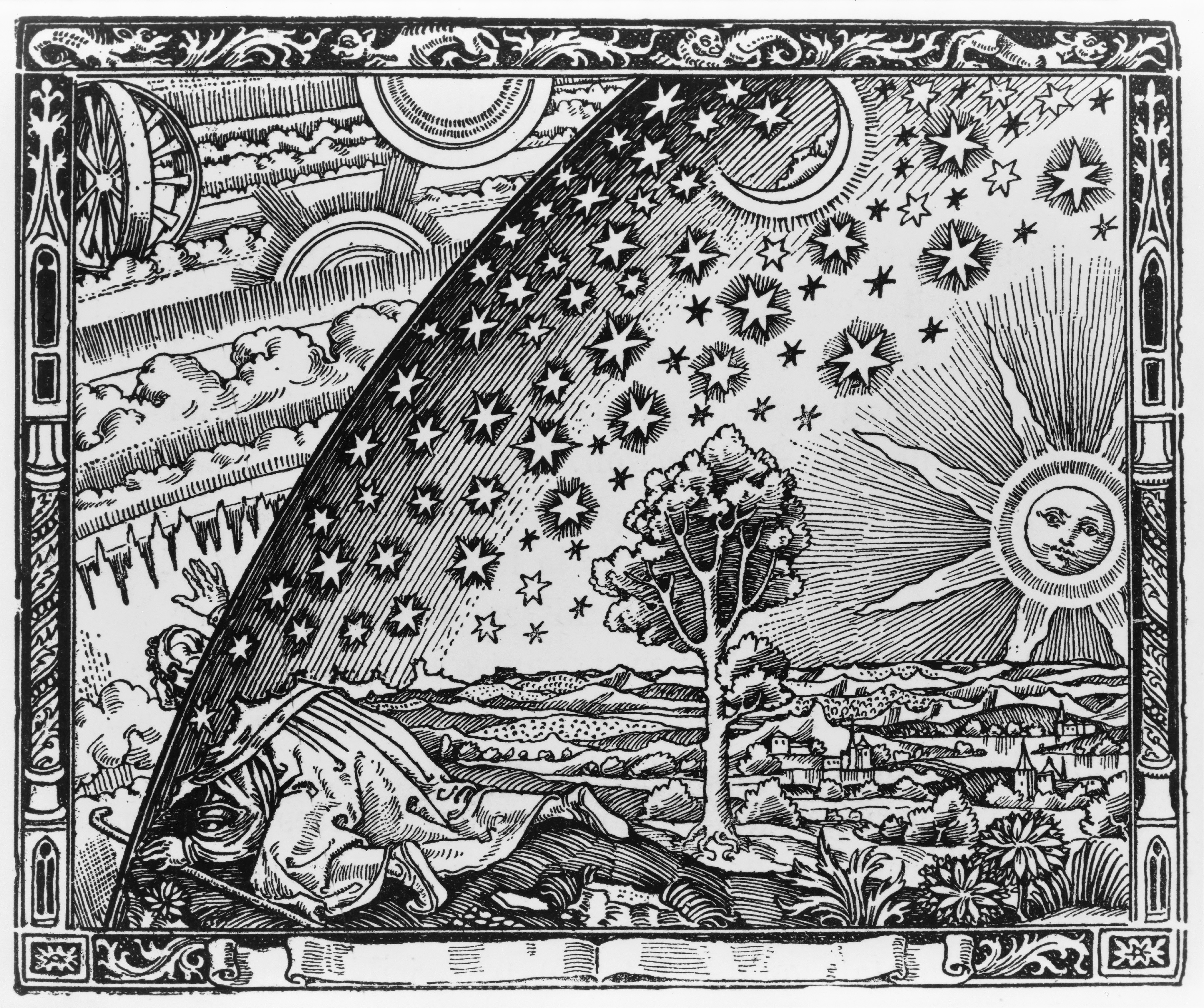
    Perhaps you have already seen this wood engraving, which is also called „Wanderer on the Edge of the World“.

    Flammarions Holzstich – erstmals erschienen in L’atmosphère, Paris 1888, als Illustration zu La forme du ciel im Kapitel Le jour
    Flammarions Holzstich – erstmals erschienen in L’atmosphère, Paris 1888, als Illustration zu La forme du ciel im Kapitel Le jour

    If you now think that this is a medieval representation and that people and scholars back then thought that the earth was flat, …, then you should find out for yourself whether this is correct. If you don’t have a large library with historical editions nearby, take a look at Wikipedia, for example. The picture is from 1888! But because of its style, many in the 20th century thought it was a medieval depiction of what people believed. So it’s good not to jump to conclusions.

    So again the question: Is the earth flat and does the Bible even say so? That’s actually two questions. And for the impatient, I’ll give you the answers: yes and no and yes and no. Excuse me? 🤷‍♂️ No, that’s not nonsense but an indication that there is no other way to answer the question. The context of the question is missing. And that is crucial for the answer, as we will see. We can already see that in the first part of the question..

    Is the earth flat? Yes and no, somehow it is and then again it isn’t

    Perhaps you live in an area with hills and mountains or a plain. Let’s take a look at the Rhine-Neckar region in Germany, because it has both: the Rhine Valley, which is around 40 km wide and framed on both sides by chains of hills. And on one edge lies Heidelberg with its famous castle at the transition from the plain to the hills:

    castle in heidelberg
    Photo by Masood Aslami on Pexels.com

    If you cycle in the Rhine valley, you won’t find it so strenuous because it’s a flat route. A flat route! If you look up and down the Rhine plain, the earth is flat. Flat as far as the eye can see! But if you run up the Philosophenweg, then down again, across the Neckar and then up to Heidelberg Castle, you won’t feel that way. But it’s on a hill on an otherwise flat earth. In fact, I’m sure that everyone in everyday life constantly assumes that the earth is flat. Why? Because everything you do is based on this experience – and it works!

    Let’s take the rooms in your home as an example. If you have four straight walls, you would expect the walls in the four corners to be at a right angle:

    If you place a device like this against the walls in one corner and then hold it in the other corners, it should always feel the same:

    But even if everything is not so straight, you will find that the sum of the angles is always 360°. Mathematicians prefer to deal with the area with the fewest corners. So let’s stretch a rope across the room and measure it:

    Then the sum of the angles in the corners is 180°. Always! Even if your room is crooked, as long as the walls are reasonably straight and there are only straight walls and corners. This was already known in ancient times and Euclid wrote it down in his textbook and today it is called Euclidean geometry:

    The sum of the angles of a triangle is always 180°. Always. No matter what you do, as long as the sides are straight.

    Euclidean geometry

    However, this not only works in your home, but also between buildings and even between towns. We have proven this:

    Is the earth flat? Yes! The earth is flat! [Context: As far as your eye can see …]
    And that’s what all the people on earth say! [Context: As far as their eyes can see …]
    And even if you travel far, your surroundings are flat. [Context: As far as your eye can see there …]

    If we now tell ourselves that we only have to rely on our sensory perceptions, which show that the earth around us is flat, then the whole earth is flat too. Mr. Melchior Dönni from Lucerne thought along similar lines and registered his „Weltall-Erd-Relief“ with the Office for Intellectual Property in Bern in 1902. If our eyesight were better, he believed, we could see from Mount Pilatus all the way to New York. He built his relief with a great deal of effort and clay:

    The North Pole is in the center of the disc, around it the continents known at the time and at the edge the South Pole. The Swiss flag at the North Pole was perhaps a little bold, but that’s another story. As for the South Pole, he certainly hadn’t seen it with his own eyes. In fact, no one had ever explored the South Pole! This is why Dönni predicted in 1902 that as soon as naturalists had reached the South Pole, they would come across the insurmountable masses of ice that formed the edge of the world. Roald Amundsen reached the South Pole in 1911. The ring of insurmountable ice masses had not been found. Dönni did not live to see it – he had died years earlier.

    But even in ancient times, some people were able to travel further than the next village. And over time, measuring instruments became more and more accurate. And if you measure entire countries or continents in this way … a problem arises. The measurement margins of the angles are always too large. No matter how you do it. And the further the distances are, the worse it gets! How can that be?

    Now it’s time to be creative. And there are a lot of creative ideas. If you have a certain idea, take it and test it under all possible circumstances. You should expect the same from anyone who has a different idea.

    I would like to introduce you to an idea that a clever Greek in ancient times and others since then have come up with. You can test the idea yourself if you have a ball at home, for example. Draw the lines on the ball like this and measure the angle at the corners:

    From one point to the ‚center‘ and further to the beginning, as in this picture. This does not result in 180° but 270°. But if the ball is large and the triangle is small, then you will always get closer to 180°. No matter how you draw it! Clever people have now called the ball a globe, entered all their measurements and found that it works pretty well!

    Is the earth flat? No! It’s a sphere [context: as far as your feet can carry you and you can walk quite far].

    Incidentally, the clever people have always measured better and realized that the explanation with a perfect sphere is not so perfect. But if you deform the globe a little, it fits quite well again. And then people from the coast ask you why the sea rises and falls regularly in their area. And not once every 24 hours, but twice! Twice low tide, twice high tide … But that’s another topic.

    In case that example was too abstract for you. Here is another one from real life that I have already experienced myself. As you know, an airplane consumes fuel. The longer it flies, the more it consumes. Until the tanks are empty. Of course, you want to avoid this if you want to take people from Frankfurt am Main to San Francisco, for example. If the weather cooperates, the pilot tries to fly the most direct route from Frankfurt to San Francisco in order to use as little fuel as possible. So I would have had to see France, the North Atlantic and the USA from the east to the west coast:

    What the pilot announced and what I saw was rather this route:

    I saw England, Scotland, Iceland, Greenland, Canada and the west of the USA. The route seems much longer, which means a longer flight time and higher fuel consumption. Was this due to a storm or did the pilot simply want to show us these beautiful areas? Again, there are a lot of other possibilities besides these explanations. How about this one? How about drawing the flight route on the globe that cartographers have come up with. Unfortunately, I don’t have such a spherical ball at home, but you can have it displayed on the computer as if you were looking at the globe. You are welcome to try it out yourself on a globe:

    Fascinating, isn’t it? If I extend my idea – we physicists would call it a model or theory – so that the earth appears flat to me when I’m traveling on foot, but draw it on a sphere (globe) for distances I can cover by plane, then the pilot really did fly the shortest route. As quickly as possible and with as little fuel as possible, because, as we all know, fuel costs money.

    Is the earth flat? No! It’s more round like a sphere. [Context: If you fly all over the continents and oceans in an airplane].

    As I said. There could have been other reasons. And you can choose a different model to explain the flight. But your model – your concept – should then be able to explain all flights on earth. And then compare this explanation with the rather simple one of a globe. This does not mean that the explanation with the globe is ‚correct‘ or ‚true‘ just because it is simpler or can explain more. But this brings us into the area known as epistemology.

    How can we know whether the idea we have is ‚real‘? Some people only accept what they can grasp with their own senses. The approach is somewhat radical, but you can decide for yourself. Some also start with this approach to show that the earth as a whole is flat. But now you should use your critical thinking and recognize the contradiction: If someone only accepts what you can perceive yourself, then your knowledge only extends as far as you can see. But then you shouldn’t make a claim about the whole earth if you can only see a fraction of it or have only seen it yourself.

    If you do it, should you also compare it with our environment? You form an idea – a model or hypothesis – from your experiences and assume that it applies always and everywhere. And now comes the crucial part: knowing full well that the hypothesis will probably no longer work if you measure in much larger or much smaller areas. And the idea should be so concrete and verifiable that others may have fun to break it if they extend the idea to areas beyond the original one. This is exactly what happens when we no longer travel on foot but by plane.

    A whole series of arguments for or against a flat earth also go in precisely this direction: How can I determine what the world around us is like?

    A good model or concept must be able to explain as much as possible as simply as possible. If we imagine a flat earth, there must also be a sun, moon and stars somewhere. So how do day and night come about in different parts of the world? And the different position of the sun during the seasons? And what about the phases of the moon? Or solar eclipses? Have it explained to you or make a flat earth and sun and moon out of cardboard and try it out. Once you have found a mechanism, add the planets and their observable orbits. At least some of them can be observed with the naked eye – the Babylonians already did this and kept very precise records of them, which are still preserved today.

    I deliberately spoke of observable orbits of the planets. Sunrise and sunset as well as their position in the sky can also be observed directly. The same observations can also be made directly of the moon. And then we also mentioned the ebb and flow of the tides. So this is all within the realm of what can be explained, even for those who only accept what can be perceived with their own senses.

    In principle, this is an empirical approach: Perceiving things with your own senses and checking your own ideas against the results of your observations. Sounds reasonable at first. It is then often stated that, according to everyone’s observations, the earth is flat in the surrounding area. We have already recognized this as correct. At least within the limits of the accuracy of our senses. And then other things are cited. But what is not cited – and this is where our critical thinking should start again – are the observations of the sun, moon and planets and stars and ebb and flow, etc. Everyone can still observe this for themselves with their own senses. But can this also be explained by a flat earth? Try it … And then try it with a globe.

    However, the idea of only accepting what everyone can perceive with their own senses has its limits. Has anyone ever seen the earth as a whole at once? If this is not the case, how can you claim on this basis that the whole earth is flat? You are then extrapolating from a small part to the whole earth – in contradiction to the idea that you only accept what you can perceive with your own senses.

    Is it a contradiction that everyone on earth perceives their surroundings as flat, but the whole earth is not flat? You can practically ask everyone on earth: In my environment, everyone speaks my language (I know there are exceptions). Does this mean that everyone on earth speaks the same language? You just have to go far enough away from your place and at some point they won’t speak your language anymore. And if you ask someone (assuming you can communicate with the person), they will tell you that everyone there speaks that language. But it’s even easier if you take a big ball and put a flat piece of cardboard on it and look closely.

    Does anyone live strictly according to the principle of only accepting what they can perceive with their senses? Does the sun also exist at night when you can’t see it? Strictly speaking, you can’t say that. If you talk to someone and the person then walks away, does they still exist? Telephoning doesn’t count, because there’s a lot of technology involved. And if someone has never been to the USA in person, then its existence and that of over 300 million people, as well as that of Mr. Trump and Mr. Biden, cannot be accepted.

    Ultimately, the discussion is often about whether you and I can trust the evidence that others have produced with or without technology. And there is a grain of truth in that too. Because even in today’s science, no explanation (theory) or observation (experiment) is accepted if only one person or group presents it. Others must be able to understand it and reproduce it. At least that is the ideal.

    We could talk about these aspects for a long time. But let’s get back to the actual topic. Why is the question of whether the earth is flat or not so hotly debated? In everyday life, you couldn’t care less. So it must be about something else. Could it be that the second part of the question is the reason for you: doesn’t the Bible say that the earth is flat? And if the Bible is God’s inspired book, then it must be true. So is it a question of whether you believe God and the Bible or secular science? We shall see. And again, recognize the importance of context.

    What does the text of the Bible say?

    To answer this question, we would need to understand the ancient Hebrew, Aramaic and Greek of the different eras and regions. And also the cultural context of the people by whom and for whom the text was primarily written. Who can do that? Even the experts have to reconstruct this information as best they can. The translation into our language therefore brings the text from its ancient context into our context and this can have a considerable influence on the message. Therefore, let us first try to better understand the text itself. Here are a few examples:

    They move to and fro as he directs them, / to work all that he commands them / to do on the circle of the earth.

    … over the surface of the earth’s circle.

    … on the whole earth.

    It changes direction, turning around by His guidance, That it may do whatever He commands it On the face of the inhabited earth.

    face of the world in the earth.

    Job 37:12 Einheitsübersetzung 2016, Elberfelder, NEÜ, NASB, KJV

    A number of German Bible translations render this text in the sense of a circle of the earth. Many English translations rather translate with ‚inhabited earth‘. And what does the Hebrew text say?

    So it says something like ‚the face of the whole earth‘. The word used for earth is אֶרֶץ erets (Strong’s 776), which according to this lexicon is used 2503 times and is translated as ‚earth‘ from Genesis 1:1 onwards. The Brown-Driver-Briggs lexicon shows the related words in other Semitic languages. If one analyzes the many other texts with this word, this meaning emerges:

    earth, whole earth (opposed to a part)
    earth, opposed to heaven, sky
    earth = inhabitants of earth
    land, country, territory
    etc.

    What do you conclude about its meaning from the use of the word in all these usages – I hope you have read all 2503 passages? You don’t have to be a linguist to realize that this word is not meant to describe a geometric shape. It’s about describing our living space as distinct from something else.

    Let’s take a look at other uses. So it’s best to use a passage that is often quoted in the context of this topic:

    He’s the One who holds fast the curve of the earth, …

    He sits enthroned above the circle of the earth, …

    It is he that sitteth upon the circle of the earth, …

    Isaiah 40:22 2001 Translation, NIV, KJB

    And in Hebrew?

    What are you reading? Firstly, the same word for earth. And then the addition ח֣וּג ḥūḡ, which is translated as circle. What does that mean? Again, you don’t have to be a linguist. If it was necessary to add the word for ‚circle‘ in this text, then it means that the word for earth אֶרֶץ erets says nothing about the shape. Otherwise the addition would be unnecessary. And what is the meaning of the word for circle? How often do you think it is used in the Bible? What do you mean? Exactly three times – including Isaiah 40:22, so it won’t be so easy to deduce the exact meaning from the usage. So let’s take a look at the other two texts:

    Thick clouds cover Him, so that He cannot see, And He walks above the circle of heaven.’

    Job 22:14 NKJV

    before he had made the earth with its fields, or the first of the dust of the world. When he established the heavens, I was there; when he drew a circle on the face of the deep, …

    Proverbs 8:26,27 ESV

    Does the Bible say that the earth is flat? Yes and no! At least we read about a circle of the earth [context: Book of Job]
    But also about the circle of the sky and the circle of the surface of the deep.

    Does that make it clear to you? If you say that these texts make a statement about the geometry of the earth (flat or spherical), then you must also do so with this text:

    He established the earth upon its foundations, So that it will not totter forever and ever.

    Psalm 104:5 NASB

    Again, the same word for earth אֶרֶץ erets (Strong’s 776). And if the earth has a solid foundation, then it can’t be a sphere in the void, can it? Then what about the context of this verse?

    Bless the LORD, my soul!
    LORD my God, You are very great;
    You are clothed with splendor and majesty,
    Covering Yourself with light as with a cloak,
    Stretching out heaven like a tent curtain.
    He lays the beams of His upper chambers in the waters;
    He makes the clouds His chariot;
    He walks on the wings of the wind;

    Psalm 104:1-3 NASB

    So heaven has the shape of a tent roof. Is it similar to the tabernacle?

    Wikipedia

    You can’t have it both ways. Take verse 5 literally as a statement about the shape of the earth and then not verse 2 in context. But then the heavens don’t fit with a round, circular earth, do they? But it goes even further in verse 3, here in the Interlinear translation:

    „With water, You’ve filled its ‘roof’ and ‘upper rooms,’ And as Your ‘chariot,’ You created the clouds, Which You ride on the wings of a breeze.“ (Psalm 104:3 2001 Translation) Yahweh makes the clouds his chariot! Do you really think that Yahweh is being told here that he is driving a chariot in the sky? „But that’s a vision!“ you might think. No, it’s not. The psalm is not a vision but a description. And everything is in the same context. So does the text make any sense at all? Yes, but you have to understand what the context is. The context is not our desire that there is a statement here about the geometry of the earth or Yahweh’s fleet of vehicles. The context was the worshippers of Yahweh at that time. And if you ask the Bible scholars about this, you can learn that this is a theological statement. Other nations were of the opinion that their god Baal rides in his chariot in the sky. In the text of the Bible, the Israelites at that time were assured that it was not Baal who was responsible for nature, rain and the fertility of the land. If anyone at all rides in a chariot in the sky, it was Yahweh. End of the metaphor.

    We could analyze many other texts in this way. But as I said, this video is not intended to draw conclusions for you, but to help you do it yourself. The important thing is not to pick out individual texts that fit your own ideas and ignore the others. Or to arbitrarily interpret texts as ‚literal‘ or ’symbolic‘ or ‚allegorical‘, especially not within a sentence or a passage.

    What we want to look at now is the context in which the texts were written down. So what is the context of the texts that deal with the earth?

    How is the text of the Bible to be understood in its historical context?

    What do we know about the historical and cultural context of the people who wrote down the text and heard it back then? Is it really so different from today?

    An example will perhaps convince you that there can be ‚worlds‘ in between. Please note what thoughts come to your mind in the first few seconds after you read or hear a word. What images then appeared in your mind? And now the word: Christmas!

    If you come from Europe or North America, you may have immediately thought of this: images of a winter landscape with snow, a decorated Christmas tree in the living room, the smell and taste of Christmas cookies. If you come from Australia, South Africa or South America, you probably didn’t have a snowy landscape in mind. And instead of contemplative Christmas carols, it’s more likely to be a festive parade with floats like the ones I know from carnival, including rhythmic dance music (I experienced this on Fuerteventura).

    Now you write this sentence in a novel: „It was a beautiful day, it felt like Christmas.“ And we send the novel 200 years back in time. People can read the sentence, but have no idea what you had in mind. Not even what you meant. Now the Bible has been handed down to us from the past. Can’t the meaning of words have changed or been lost? Take the English word gift, for example. This was also used in German a long time ago. After all, we still speak of a Mitgift (dowry) today. However, the meaning of the German word Gift, which Goethe still had as „gift, present, endowment“, has changed dramatically. Today, it means poison! And yet when we think of Mitgift (dowry), we don’t think of someone being killed.

    And what idea of the world did the Israelites of antiquity have? Based on the ideas of the peoples around them and according to the account in Genesis and many other texts of the Old Testament, approximately this one:

    Being God’s Image, Carmen Y. Imes

    As I said, we should not be too quick to dismiss this idea as ‚unscientific‘, primitive, naive and wrong, because people were concerned with completely different questions. Today’s scientific world view only answers part of the how and the why within the limited framework of the laws of nature. And even in the standard model in physics, there are laws and constants for which there is no further justification. The ancient worldview of the Israelites, on the other hand, contains everything that was known to them and the reason why it was like this: the why and wherefrom and the reason why everything is ordered in this way and not otherwise. Everything was described in such a way that even the last Israelite could understand why things are the way they are.

    Why is the creation account still formulated in this way? Because God did not want to make it clear to the Israelites how it was all ’scientifically correct‘ in contrast to the myths that had long been passed down among the peoples. We might welcome such an explanation, but it was the last thing the Israelites needed after their liberation from Egypt in the desert. God merely took up the idea they knew and corrected the important points: No pantheon of gods provided for the order of the world – only he alone. There were also no battles between gods before creation. Nor did he use the body of a slain god or goddess as a substance for the earth. This is the case, for example, in the Babylonian creation myth Enuma Elish. He alone is the Creator, the God who showed himself superior to all the gods of Egypt, who freed them from Egypt and made a covenant with them so that they would be his people – bearing his name (see the future video series Bearing God’s Name).

    Further arguments in favor of this understanding of Genesis can be found in many different scholars, including John H. Walton’s The Lost World of Genesis One. Jascha Schmitz has published a video series in German about this: Genesis – Creation account of the Bible critically scrutinized

    So before we examine biblical texts, whether they speak of a flat earth or not, we should consider what the original context of the texts is:

    Is the aim of the Bible to proclaim a statement about the geometry of the earth? No! [Context: The simple Israelite in the desert].
    The textual and historical context show that it is about the order of things and their purpose. Every being and thing has its place and purpose.

    It would also be good to think about what really constitutes a ‚literal‘ interpretation of the Bible. Let me make an assertion:

    Interpreting the Bible ‚literally‘ does not mean reading the Bible word-for-word and interpreting it word-for-word with our context and our concepts and ideas of today.

    This point could also unconsciously influence our understanding of what the Bible says about the earth. „If I don’t take the text of the Bible literally, am I not betraying the inspired word of God?“ No, we would rather do that if we use the texts in a way that God did not intend. So that’s what we need to find out. I showed more about this in the series The Canon of the New Testament.

    If you have followed my explanations up to this point, then I am quite confident that you are also prepared to rethink your views on this issue, to question them critically and to ask yourself the question: Why do I actually believe this? Why do I think this way? And I hope to have given you some food for thought here.